![[Guest Blog] From Fisheries Biologist to Technical Director and Microsoft MVP – My journey into IT](https://www.drware.com/wp-content/uploads/2020/10/large-1064)
by Contributed | Oct 23, 2020 | Technology
This article is contributed. See the original author and article here.
This article was written by Bob Cornelissen, a Cloud and Datacenter MVP from the Netherlands. He shares about his unique path as a wildlife and animal enthusiast, to a fisheries biologist working in the tropics, to ultimately becoming a Microsoft infrastructure generalist, a SCOM specialist and today, a business owner and MVP.
Let me start out by saying that everybody has their own path in life and that there are many possible paths someone can take. It is not about the path being right or wrong – these different paths will undoubtedly all provide you with opportunity. The good folks at the Humans of IT Community invited me to share my story after seeing how I followed an unconventional path to get where I am in IT today, and to tell a bit of my personal story. In this post, I will share about how I walked on different paths, and wound up doing what I do on the current trail I happen to be on. Perhaps that will inspire you to find your own path too. And people say I don’t walk enough!
Starting at the beginning…
When I was a child I was very interested in nature – the animals, plants and their surroundings. I was fortunate to have grown up around a large garden with animals and plants, vegetables and fruit and flowers and so on. After laying many days in the grass at the side of a pond with goldfish and other creatures, I learned about the pleasures of interactions with all the wonderful varieties of fish. I became an avid fisherman, using all kinds of techniques to catch fish for relaxation and leisure, and greatly enjoyed my time in nature.
 Picture of me catching my first 50 cm bream
Picture of me catching my first 50 cm bream
Study
When it was time to finish high school and go to university, there were two topics that were the most interesting to me: veterinary school or biology. I found Wageningen University in the Netherlands and its Zootechnics field, which is mostly animal husbandry and decided to follow this path. There was a direction within this main study for Fish Culture and Fisheries, which was appealing to me given my interests. I followed this path and learned all kinds of things around biology, water, the animals living in it and of course, fish. At this point I also started to keep more aquaria at home and elected to not just go for the pretty-colored ones, but also native species and watching nature as found outside through a glass window.
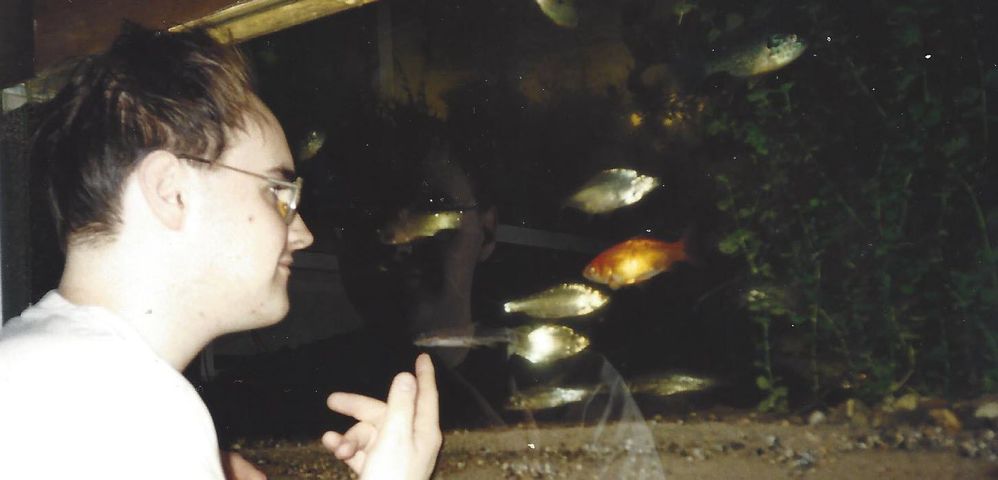 Picture of one of the aquaria at home
Picture of one of the aquaria at home
Being in this type of study introduced me a lot into international affairs, because a lot of our field of study was about feeding the world population through cultured or caught seafood. We got to work with a lot of international students, which expanded my world view a lot and got me an MSc. I had the chance to go to Costa Rica and Thailand for my study, which introduced me to different climates and possibilities. Around the same time, both during my study and right after graduating, I taught myself how to create websites with HTML, CSS, JavaScript and so on. I became involved in creating an early version of distance-learning courses (e-learning) to help enable students from several European universities to follow our Fish Culture and Fisheries courses from their own locations, without having to travel across Europe.
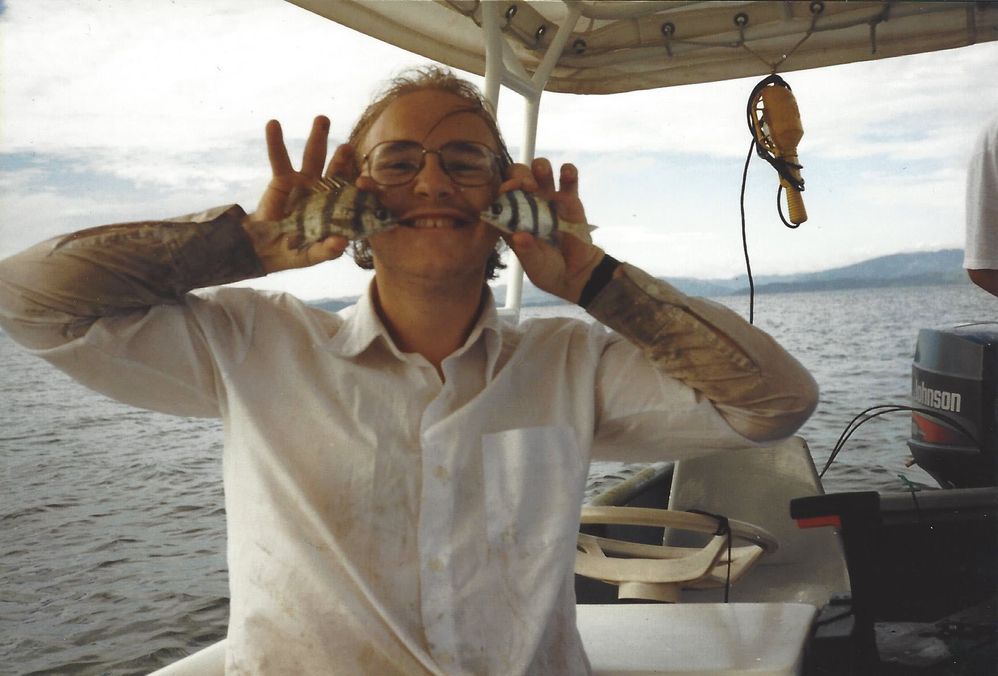 Picture taken on research boat in Costa Rica, Nicoya Gulf. Also the reason not to wear a white shirt for this work!
Picture taken on research boat in Costa Rica, Nicoya Gulf. Also the reason not to wear a white shirt for this work!
Professional Work
After graduating from university, I started working at the university shortly after and got a position in an organization based in Thailand, with locations all over Asia. I got involved in research and policy-making in the world of fish culture and fisheries. It was in Thailand where I met a wonderful lady who was working in the building next to ours. Our relationship got serious, and we planned to stay together and get married. However, at the same time, we found ourselves in the situation where my work position had changed, and I had to leave the country. Meanwhile I had to select my next path. Pursue a PhD in fisheries biology of some kind, or find a completely different path.
Becoming a student again in a different country outside Thailand would prohibit me from being with the one I loved due to the fact she did not have enough language and credentials to go abroad on her own. So I decided that I had to select a different path in the Netherlands, and find a way to bring my wife over. Thankfully, looking for work around the year 2001 with my background in exact sciences was an easy task to be recruited into the growing IT field. I had the options of getting into Cobol coding, testing, UNIX, Infrastructures and so on. I had the best feeling with the infrastructure direction based on servers. After working in IT for about a year, the opportunity arose to work on Windows server infrastructures and learn all about Windows 2000, applications around the datacenter infrastructures and how to manage and migrate from Windows NT up to Windows 2000 and later 2003. I decided that I liked this path and followed it.
Changes after changes
After this first year and having decided the path I wanted to follow, my wife finally joined me in the Netherlands and we could finally begin our life together. I am so proud of my wife’s courage – remember that she left a path where she had a steady government job at a ministry with its advantages, and had to uproot her life in Thailand to live in a completely foreign country, learn a new language and had to build up a life very different from all she had known!
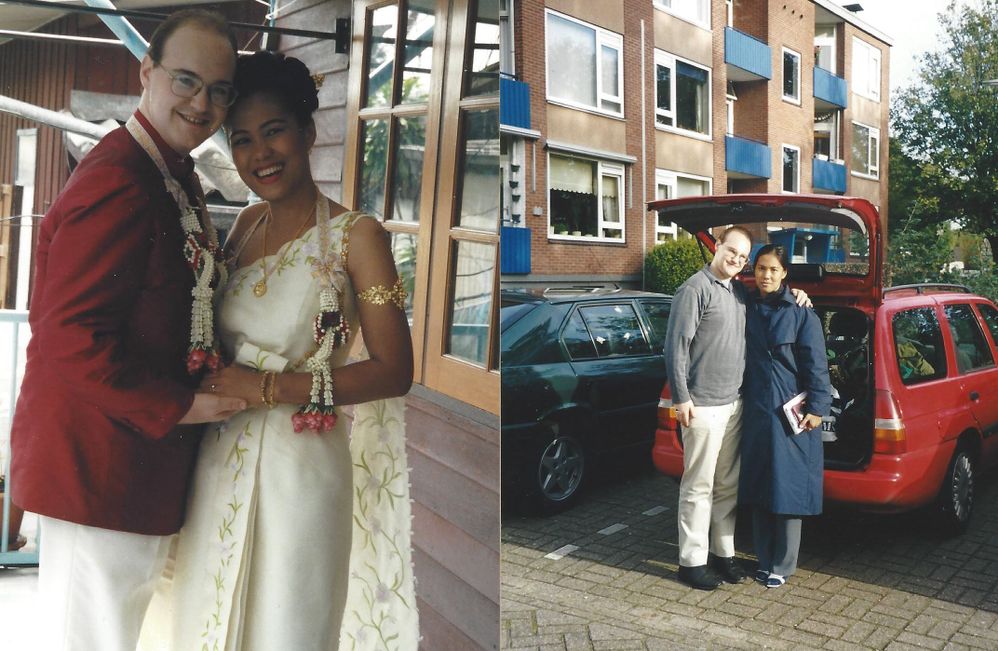 Pictures show Thai wedding day and the first day my wife arrived in the Netherlands
Pictures show our Thai wedding day and the first day my wife arrived in the Netherlands
As the years went by, I switched to working for a more Microsoft-specialized company and learned more about Microsoft infrastructure technologies for large sized companies. It was then that I decided I wanted to change my path again. I had gotten pretty good at learning new technologies and was getting every Microsoft certificate I could get, very often as a charter member (from beta exams when the technologies were very fresh).
I decided that my path could go two ways: in outsourcing, or into consultancy. Since the first was not gaining a foothold for me, I focused more on consultancy. I was already working with a product called Microsoft Operations Manager (MOM, now called SCOM), and was getting recognized as one of the experts in this field. Also, I was raised and schooled to be somebody who works for some company, and not be a business owner/entrepreneur. Yet, now I found myself on the path of running a small IT business (first called BICTT, now TopQore) with some employees and needing to learn about finance, business and many other things outside of my direct comfort zones.
After a few years of consultancy, I discovered online forums for this technology and generic Windows Server technologies, and started actively helping others working on the same technology by answering questions and writing down common cases in my blog. This was how my community involvement path started, and I loved it. I was awarded the Microsoft MVP title 9 years ago till now – this was a great honor that I’m proud to say continues to this day. At this point, I was on a path already deep into the technologies via certifications and was learning a LOT. Eventually I discovered that I was on the path of doing work internationally. So, after becoming an MVP in my community path, I got to explore side trails of writing a book, being a reviewer of books and training courses, giving presentations both nationally and internationally. This gave me the wonderful opportunities to share more of what I know and what I learned with people from all over the world, and help to mentor others who are interested in learning something and finding their own path.
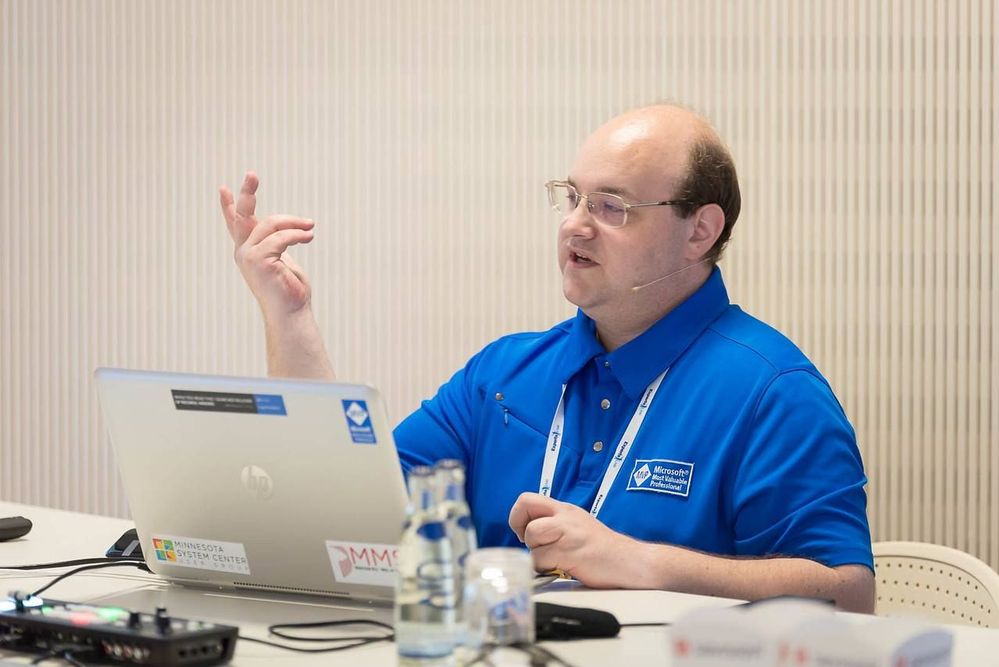 Picture presenting at Experts Live Europe a few years ago
Picture presenting at Experts Live Europe in Germany a few years ago
Conclusion
It’s been a journey for me – from a kid interested in nature and animals, to becoming adept at fishing, to learning animal husbandry and fisheries and the natural world under the water surface, to building websites. Moving from the Netherlands to other countries and Thailand. From being alone to being in an international, cross-cultural marriage. And from knowing little about Windows server to diving deep into infrastructure and into a specific product and field of work I believe adds value to a company. And from having little community involvement to becoming a recognized Microsoft MVP, writing and presenting everywhere. From student to working for a company to owning my own company.
So many things happen over the course of our lives, and they happen in everybody’s lives. No two paths are the same – our lives are charted by the all paths that we choose to take in one way or another. Not every cross-roads presents an easy or clear choice, or a visible path to the future. Yet we still need to make a choice, and each could lead somewhere else. Like what the previous guest blogger said, never compare your journey with others – you are on a unique path filled with your own adventures!
I hope that you see there are many choices you can make, and hope you follow your heart via the trails and paths that appeal to you. I am not saying I took the right path or direction, because we never know what the other choice would have brought us. For now, I am grateful to be in IT and in a position where I can share and help others.
And finally…
I want to finish up with one last thing from our personal life. I grew up around animals, studied about them and initially, made my work out of it. My wife also grew up caring for street dogs and cats when she was younger. About 8 years ago, we found ourselves on a path where we had a choice to help a group of street dogs in Thailand, and we did. We ended up running an animal shelter in Thailand with initially just a small group of dogs, which grew to over 70 dogs and even a few cats! We eventually set up a foundation called House of Tails to care for these lovely animals. My wife often spends months at this shelter, away from her second home country and husband, to take care of these animals who have nobody else to take care of them. This is a very difficult path to follow, but she does it because she has such a big heart to care for others who are unable to take care of themselves. Talk about taking the difficult road, but from the heart!
Luckily, she does not have to deal with wondering why the printer does not work AGAIN, like us IT people do, huh?
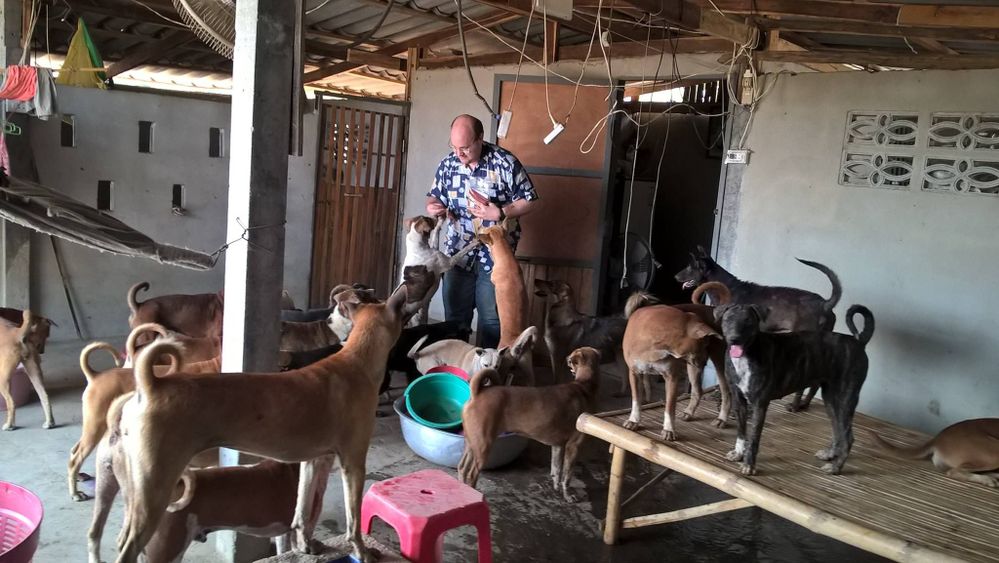 Picture at House of Tails shelter Thailand
Picture at House of Tails shelter in Thailand
Tell us about your path, and if you need advice on how to follow one of the many IT-related paths, keep following the Humans of IT program and the mentoring program. We hope it helps and inspires you!
Wishing you the best,
Bob Cornelissen
Technical Director TopQore, Microsoft MVP, proud husband and foster dad to a lot of dogs
by Contributed | Oct 23, 2020 | Technology
This article is contributed. See the original author and article here.
The need for more data scientists, machine learning experts, and AI engineers in every industry is rapidly growing. These roles required a broad set of skills from data analysis with no-code and low-code solutions to designing and writing intricate machine learning models that solve some of our planets most difficult problems. Microsoft has dedicated to providing high quality, free content to help you develop your skills depending on your professional goals and personal interests.
One such endeavor in creating an opportunity for you to learn and upskill is through unique partnerships. In the summer of 2020 we launched a set of Microsoft Learn modules inspired by real NASA scientists and engineers at https://aka.ms/LearnInSpace. And this Fall we are excited to bring you three more Microsoft Learn modules inspired by the new Netflix Original Over the Moon.

Fei Fei is a young girl who builds a rocket to the Moon on a mission to prove the existence of a legendary Moon Goddess. Fei Fei is fueled by the memories and love of her mother to use her creativity, resourcefulness, determination, and imagination to accomplish something beyond this world: reach the Moon. While the story takes place in a beautifully drawn universe, it is directly related to the types of problems real-life engineers face as they prepare and execute missions to the Moon and beyond. These lessons are also on our Over the Moon InCulture site, where you can also find videos from the voice actors of the film and even a drawing tutorial from director Glen Keane!
And with these new resources you can start your journey of using fiction to inspire solutions to real-world problems. I’m not a NASA scientist or engineer, and I’ve never personally been to the Moon, but I have skilled up in coding and data wrangling, allowing me to take what I *do* know about space exploration and make predictions and new discoveries through basic data science practices.
So if you’re like me, and you are interested in:
- Space travel
- Moon missions
- Rockets
- Moon rocks
- Animated films
- Fiction
- Coding
- Python
- Data Science
- AI
- Problem solving
- All of the above
Then, I invite you to not only check out these new Learn modules, but also join me on my new show, Learn with Dr G, where I will dive into these modules and do some live coding! You can find all the details below on all of the new learning resources and opportunities related to space!

Microsoft Learn Modules
Like Fei Fei, use data to plan your own mission to the Moon. Ensure your rocket can not only get you there, but also bring you and all your Moon rocks safely back to Earth. Analyze and visualize datasets with common data cleansing practices with Python in Visual Studio Code.
Build a Machine Learning prediction model after cleansing a space-themed data set on meteor showers. Incorporate Chang’e’s potential affects on meteor showers for an added complexity.
Repurposing the camera on the Lunar Rover, search through the Moon’s surface for Fei Fei’s buddy Bungee before it’s time to head back to Earth. Use Azure Custom Vision to Classify pictures of animals (like Bungee, main character Fei Fei’s pet) without ever writing code.
Learn with Dr G Live Streams and Episodes
Completing a successful Moon Mission doesn’t only involve getting to the moon, but also returning safely to Earth – ideally with some rocks to learn from! Join Dr. G as she draws inspiration from the new Netflix Original Over the Moon and the ingenuity of the NASA Apollo missions to analyze and clean data to predict how much moon rock astronauts might be able to bring back as part of the Artemis Program in 2024. No coding experience required, and you can follow along with the free Microsoft Learn lessons at https://aka.ms/LearnWithDrG/OverTheMoon.
Completing a successful Moon Mission doesn’t only involve getting to the moon, but also returning safely to Earth – ideally with some rocks to learn from! Join Dr. G as she draws inspiration from the film and the ingenuity of the NASA Apollo missions to analyze and clean data to predict how much moon rock astronauts might be able to bring back as part of the Artemis Program in 2024.
Predicting Meteor Showers Using Python and Visual Studio Code
(Sign up for Live Stream on October 27th here, Available on-demand on October 30th here)
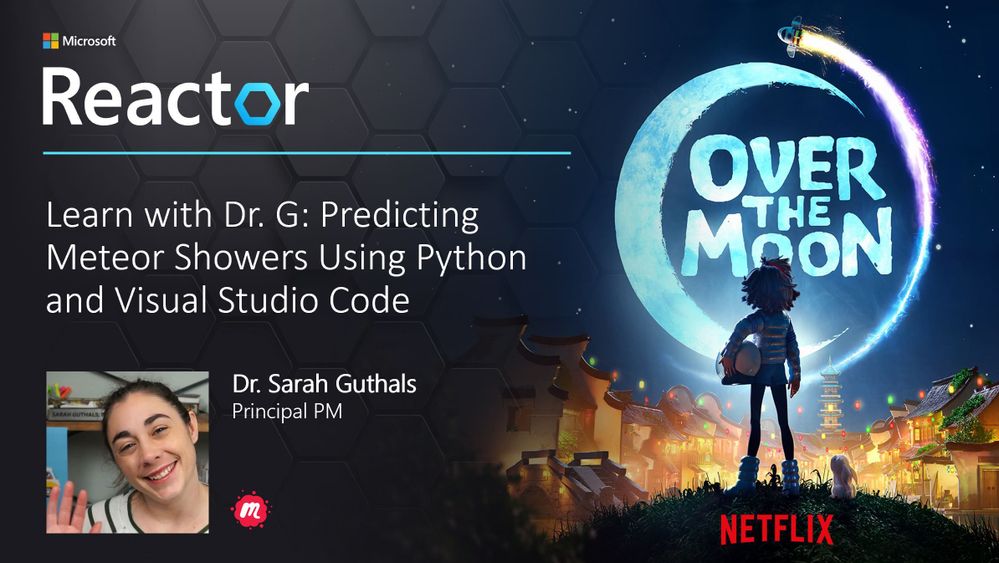
In the film, Fei Fei builds a rocket to fly to the Moon to meet the Moon Goddess Chang’e. It is said that when Chang’e cries, her tears are the shooting starts we see in our night sky. This inspired Dr G to deep dive into what meteor showers actually are and how they are predicted. Join this live stream as Dr G explores how data science plays a role in predicting celestial events, and even brings in a little magic from the film to predict when we could have seen the meteor shower caused by Chang’e from Fei Fei’s visit.
Use Azure Custom Vision to Repurpose the Lunar Rover
(Available on-demand on October 30th here)
The Lunar rover has been instrumental in helping us advance our understanding of the Moon and our Universe, and in the new film it even makes an appearance when Fei Fei lands on the moon with her buddy Bungee and brother Chin! This inspired Dr G. to think about a scenario where Fei Fei brought her own Lunar rover to the Moon to take pictures and send them back to her once she returned to Earth. In this video, Dr. G will build an image classifier using Azure Custom Vision to identify Bungee so that if Bungee is ever on the Moon without Fei Fei, her Lunar Rover can send down pics of Bungee exploring the surface, and avoid sending pictures of rocks.
by Contributed | Oct 23, 2020 | Technology
This article is contributed. See the original author and article here.
If you need to restore a database that was encrypted with a TDE (transparent data encryption) customer-managed key into a server that is encrypted with a different key, you can follow the steps below:
- If necessary, restore the TDE customer-managed key that was used to encrypt the database you will restore into the Azure Key Vault (AKV) you intend to use.
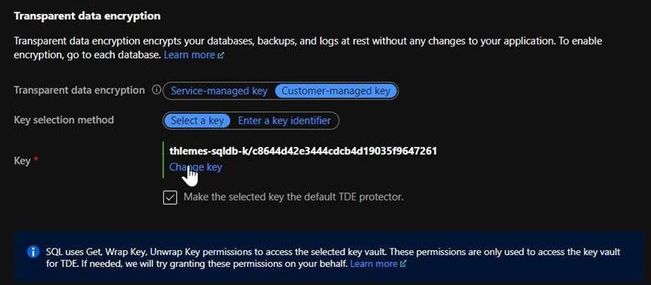
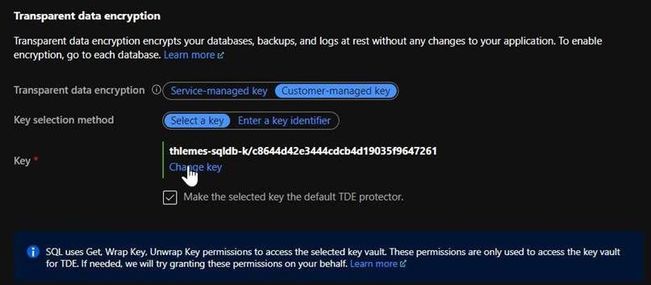
- On the “Transparent data encryption” blade of the target server/instance, click on “change key” and select the key with which the source backup was encrypted:
- Uncheck the “Make the selected key the default TDE protector” and save. By unchecking the key as TDE Protector, you will add the key to the server/instance without changing the encryption key of Its databases:
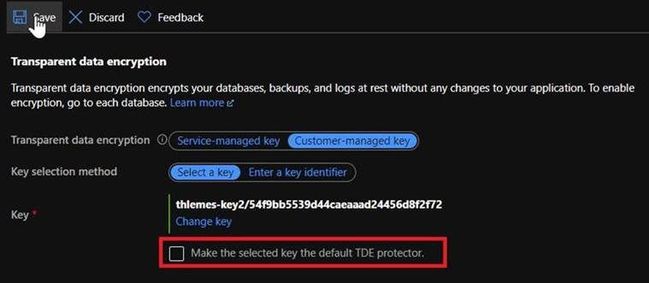
Note: They key was changed from thlemes-sqldb-k to thlemes-key2
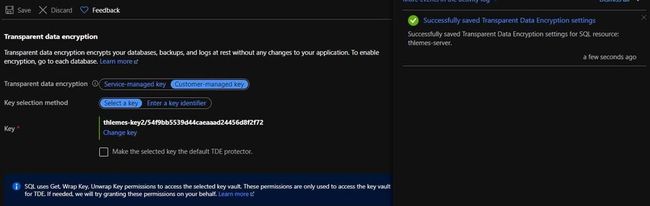
- After the operation completes, you will see the key you selected in ‘Key’, but with the ‘Make the selected key the default TDE protector’ unchecked:
- However, if you refresh the page, It will show again the TDE Protector key:
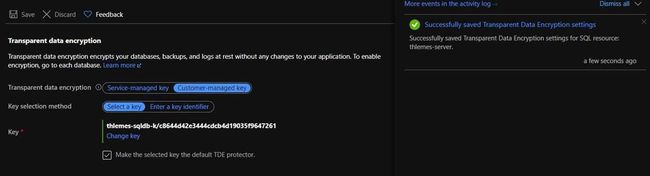
This is because the TDE Protector key wasn’t changed and It’s shown by default in the Portal. However, after adding the source key as non-TDE Protector, you will be able to successfully perform the restore from the source backup into the target server/instance.
Although you can’t see the keys that are not the TDE Protector in the Portal, you can list them using REST API:
SQL Managed Instance: https://docs.microsoft.com/en-us/rest/api/sql/managedinstancekeys
SQL Server: https://docs.microsoft.com/en-us/rest/api/sql/serverkeys
There is also a REST API command to delete the key if you need to, as you can see in the links above.
by Contributed | Oct 23, 2020 | Technology
This article is contributed. See the original author and article here.
 This post was written by Sagar Chandra Reddy Lankala in collaboration with Ji Eun Kwon. Sagar and Ji Eun currently serve as the Program Managers for Azure Lab Services at Microsoft.
We are excited to announce that the integration of Azure Lab Services with Microsoft Teams is now generally available. With this new integration, you can now create labs within a team and provision VM’s to everyone on the team membership list.
Creation of a lab within a team simplifies the entire workflow and provides the following benefits –
- Educators can set up labs and students can access their VMs within Teams, without having to navigate to the Azure Lab Services website.
- Single Sign-on (SSO) from Teams to Azure Lab Services.
- Team and Lab owners need not maintain class rosters in two different systems – Lab user list is auto-populated from the team membership and a sync is performed every 24 hours automatically.
- After the initial publish of the template VM, Lab Capacity (that is, number of VMs in the lab) would be automatically adjusted based on the addition/deletion of users from the team membership.
- Team and Lab owners will view only the labs related to the team and students will view only the VMs, which are provisioned for the specific team.
- Users will be auto registered to the lab and VMs will be automatically assigned upon first login after the lab is published. Educators don’t need to send invitations and students don’t need to register for the lab separately.
We hope that the ability to create a lab within Teams and provision VM’s to all the team members will be helpful to you as educators continue to work in remote/hybrid learning environments.
Please take a look at our documentation on how to create a lab within Teams.
by Contributed | Oct 23, 2020 | Technology
This article is contributed. See the original author and article here.
Issue: After enabling the Storage Account firewall, Azure SQL Database audit logs are not being written.
Mitigation steps:
If your storage account meets all this pre-requisites in this documentation and the audit is still not being written, please follow the steps below:
- Configure the Storage Account firewall to “Allow access from: Selected networks” and “Allow trusted Microsoft services to access this storage account”
- Disable the audit in the Azure SQL Database server and save
- Wait for the deploy to finish
- Wait 5 minutes
- Enable the audit again and save
- Wait for the deploy to finish
- Check if now the audit is being successfully written to the Storage Account.
By turning the audit on the Azure SQL Server ON after the Storage Account firewall is enabled, if the user has appropriate permissions, it should perform the necessary configurations in terms of permissions to the service.
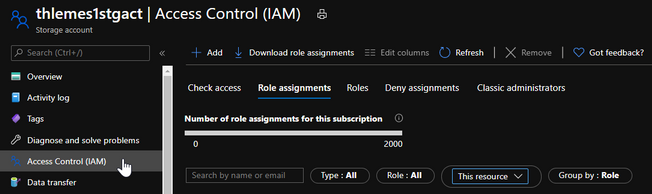
If the audit is still failing, please open a support request and let us know if you have received any error messages during the steps above and what permissions the server has in the Storage Account IAM, with the scope filtered by ‘This resource’:
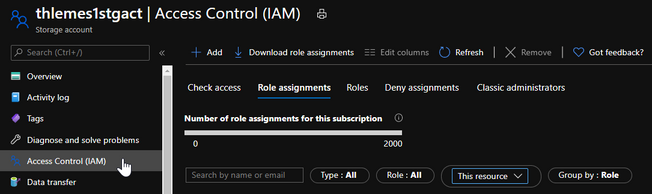
Note: After performing the steps above, the Server should normally have the permission “Storage Blob Data Contributor” in the Storage Account

by Contributed | Oct 23, 2020 | Technology
This article is contributed. See the original author and article here.
Azure Kubernetes Service (AKS) Deep Dive Free Course
Mohamed Radwan is Azure DevOps MVP who focuses on providing solutions for the various roles involved in software development and delivery. Over the course of 17 years, Mohamed has worked with more than 50 enterprise companies around the globe. Currently, Mohamed is working as a Principal DevOps consultant at Avanade UK. Mohamed holds a number of Microsoft certificates include Azure DevOps, Azure Architect, MCT, MCPD, MCITP in EPM, MCTS (7), MCSD, MCAD, and CIW among others. For more, check out Mohamed’s Twitter @mradwan06

Power Series Episode #034: Building Power BI and Power Apps all in one occasion.
Samuel Segbornya Kodzo Adranyi is an Azure MVP with extensive experience and knowledge in most areas of application development, data analytics, Internet of Things, Artificial Intelligence, mixed reality and Machine Learning. Based in Accra, Ghana, Samuel runs three live streams and a podcast every week and is always happy to serve the tech community. For more, check out Samuel’s Twitter @sadranyi
Azure Custom Vision: Run multiple models simultaneously in real-time
Alibek Jakupov an AI MVP. After having finished the IITU International Information Technologies University in Kazakhstan, he won the French Government Scholarship in 2016 and started his studies at the EISTI Graduate School in Computer Science and Mathematics Engineering in France. In 2017, he joined Expertime as a software engineer intern. The work implemented during this internship has provided the foundation to the brand new project called What Do They Think. He is a regular contributor to stackoverflow and his personal blog where he shares his experiences of performing data science on Azure. Check him out on Twitter @Ajakupov1
Does Microsoft Teams Replace SharePoint Online?
Sharon Sumner is a Business Applications MVP and the creator and leader of the Cambridge (UK) Power Platform User Group. Sharon is a regular speaker at Microsoft events and provided the Keynote at the Dublin Power Platform world tour along with Microsoft speakers. She can also be found at Microsoft Ignite, Community Summit, the European SharePoint Conference and Collab Summit as well as following her passion for Microsoft Teams with on line European Teams User Group virtual events speaking sessions. You can find Sharon on Twitter @Sharon__Sumner
First Look at Azure Backup Center
Kasun Rajapakse is a cloud enthusiast based in Sri Lanka. Currently working as a Senior System/Automation Engineer, Kasun has more than 8 years of experience in cloud technologies and is well versed in multiple cloud technologies. Kusan actively contributes to the community by speaking in user groups, conferences, and content creating. For more on Kusan, see his blog.
by Contributed | Oct 23, 2020 | Technology
This article is contributed. See the original author and article here.
We see usage of ADX dashboards rising steadily and we hope you’re enjoy the public preview and able to leverage it effectively for your use cases.
Please keep the useful feedback coming. We’re waiting for issues, feature requests and any other thought you have around dashboards.
You can use the Feedback button on the top right corner of the app to provide your feedback.
ADX dashboards keeps evolving constantly. Below you can find the latest new features released since our August update.
Cascading filters
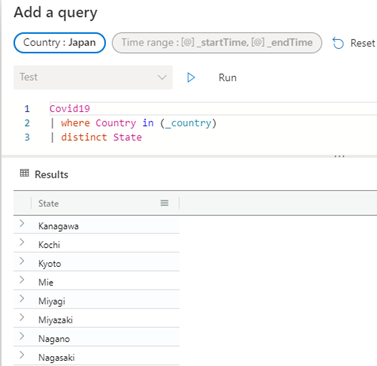
Cascading filters allows customers to use parameters to filter not only the dashboard visuals but also the other filters on the dashboard. This is very useful in high cardinality filters since it allows showing just the relevant values in the filter per other filter selections.
The example below shows a State parameter which is dependent on the value in the Country parameter.
To create the cascading affect you add the parameter to the query of a query based parameter (within the parameter edit experience).
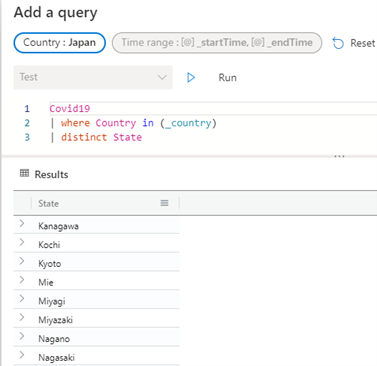
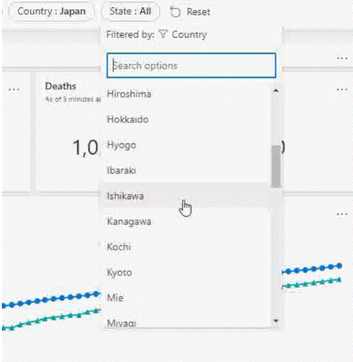
In the example below only the states in Japan are available in the state filter once Japan is selected as country.
Clickable URLs in tables
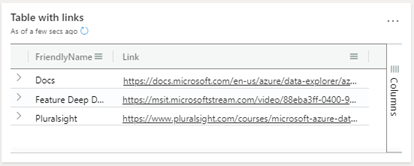
URL strings (starting with “https://”) in tables can be clickable now. This is very helpful when users want to create quick navigation from their data to other data sources.
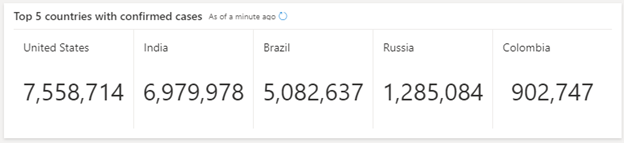
Multi-stat card
Multi-stats cards provides an easy way to create visuals with groups of multiple stats using one query. In addition to being more convenient, this will reduce cluster load by sending a single query to visualize a few stats.
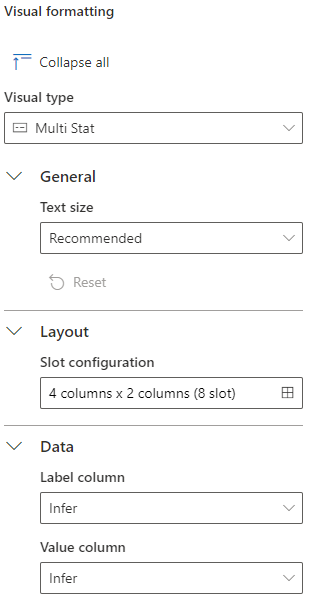
The visual provides formatting options to define the number and layout of the multi stat matrix –
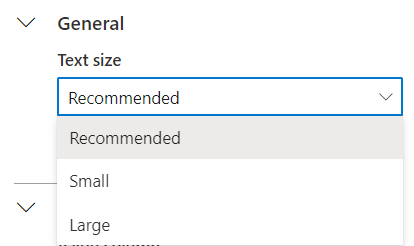
Text size support for stat visuals
You can now select your stat text size, using the recommended, small or large options.
All of this is now in public preview and we’re looking forward for your feedback.
Kusto team

by Contributed | Oct 23, 2020 | Technology
This article is contributed. See the original author and article here.
Another plethora of news stories to share on this week’s AzUpdate show. News includes: What’s new for IT Pros in Windows 10 version 20H2, Designing Azure Modular Datacenters, Azure AD provisioning updates that include attribute mapping and improved performance, newly announced plans for Microsoft to establish its first cloud region in Austria and as always, the Microsoft Learn module of the week.
What’s new for the System Administrator in Windows 10 version 20H2
The Windows team has been busy to say the least to further evolve Windows 10 to meet the demands of working remotely through the pandemic. Officially referred to as the Windows 10 October 2020 update, devices running Windows 10 version 2004 will receive the update via an enablement package. As mentioned at Microsoft Ignite, a ton of new features have been added to address the management and security needs of IT Professionals. Some of these features include:
More information surrounding a summary of some of the Windows 10 version 20H2 IT Pro enhancements can be found here: What’s new for IT pros in Windows 10, version 20H2
Microsoft Introduces the Azure Modular Datacenter
Microsoft has designed the Azure Modular Datacenter (MDC) for customers who need cloud computing capabilities in hybrid or challenging environments and remote areas. Scenarios requiring mobile command centers such as humanitarian assistance, mineral exploration, and other use cases requiring high intensity secure cloud computing can benefit from this offering. As in all hybrid offerings, this solution provides a path to migrate apps to Azure while still running workloads on-premises with low-latency connections to their own datacenter. Further details regarding this offering can be found here: Microsoft Azure Modular Datacenter
New Attribute Mapping and Improved Performance in Azure AD Provisioning
Several recent changes have been made to identity provisioning in Azure AD based on feedback provided by you. These changes include:
- Manage provisioning logs and receive alerts via Azure monitor
- Map attributes between on-premises AD and Azure AD with ease
- Significantly improved Azure AD connect sync performance
- On-demand user provisioning to Azure AD including SaaS apps
An overview of each change can be found here: New Azure AD Provisioning Changes
Microsoft announces plans to accelerate local innovation and growth in Austria by establishing its first Datacenter in the region
Microsoft will bring its global-scale and trusted cloud to Austria’s broad ecosystem of startups, SMBs, enterprises and government. The investment will also see a continued investment in new community resources to boost innovation and digital skilling for approximately 120,000 Austrians by 2024. Additional details surrounding Microsoft’s latest datacenter investment can be seen here: Accelerating local innovation and growth in Austria
MS Learn Module of the Week
Azure Resource Manager (ARM) templates use a declarative code syntax
enable you to define the infrastructure requirements for your deployments. Treating your infrastructure as code enables better tracking of changes to your infrastructure requirements and makes your deployments more consistent and repeatable. This MS Learn module will provide the foundations on harnessing this methodology. Complete the MS Learn module here: Deploy and manage resources in Azure by using ARM templates
Let us know in the comments below if there are any news items you would like to see covered in next week show. Az Update streams live every Friday so be sure to catch the next episode and join us in the live chat.
by Contributed | Oct 23, 2020 | Technology
This article is contributed. See the original author and article here.
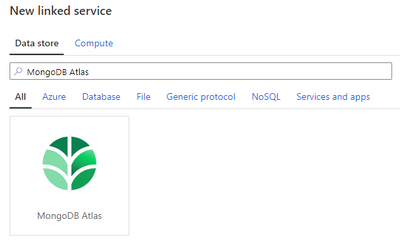
Azure Data Factory keeps enriching the connectivity to enable you to easily integrate with diverse data stores. We recently enable a new MongoDB Atlas connector, with which you can seamlessly bring data from MongoDB Atlas to any supported sink data store for downstream analysis and consumption. For a full list of data stores that are supported in ADF, see the connector overview article.
You can now find the MongoDB Atlas connector from ADF connector gallery as follows.
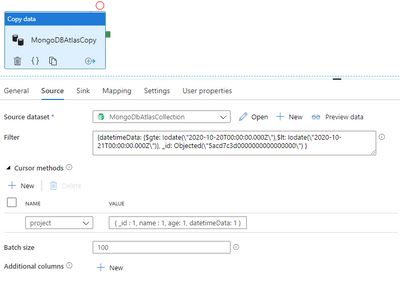
To copy data from MongoDB Atlas, you can configure the MongoDB filter and cursor methods to define the query condition, projection, and more. Additionally, you can choose to copy the hierarchical data as-is, for example, to JSON files on ADLS Gen2, or in “Mapping” tab specify the schema mapping to flatten/map the fields as needed.
Learn more from ADF MongoDB Atlas connector documentation.
by Contributed | Oct 23, 2020 | Technology
This article is contributed. See the original author and article here.
You may have already seen this message from the Azure team, but given this impacts customers who use the Exchange Hybrid Agent, we just wanted to make sure those following this blog also were aware of this news.
Microsoft is updating Azure services to use TLS certificates from a different set of Root Certificate Authorities (CAs). This change is being made because the current CA certificates do not comply with one of the CA/Browser Forum Baseline requirements.
This change will ONLY impact Azure AD hybrid agents installed on-premises that have hardened environments with a fixed list of root certificates and will need to be updated to trust the new certificate issuers.
This change will result in disruption of service if proper action is not taken.
These agents include Application Proxy connectors (which includes the Exchange Hybrid Agent) for remote access to on-premises, Passthrough Authentication agents that allows your users to sign in to applications using the same passwords, Cloud Provisioning Preview agents that perform AD to Azure AD sync.
Required Action
If you have an environment where firewall rules are set to allow outbound calls to only specific Certificate Revocation List (CRL) download and/or Online Certificate Status Protocol (OCSP) verification locations, you will need to allow the following CRL and OCSP URLs;
If your environment allows access to the URLs above, no action is needed.
If you already completed the required actions based on prior instructions , no further action is needed.
If your environment doesn’t allow access to the URLs, consider allowing temporary access. This enables the Site Recovery configuration server/process server (VMware/physical machine replication), or Hyper-V host servers/VMM servers, to automatically update certificates once the update is available in your region. After the update you can turn off access to the URLs.
If your environment doesn’t allow access and you don’t want to enable temporary access, then follow these steps to manually install certificates on the relevant servers. You don’t need to do anything on replicated machines.
We recommend you make these changes as soon as possible to avoid service disruption.
For full details on the change and steps to take, Azure TLS certificate changes.
The Exchange Team


Recent Comments