by Contributed | Apr 13, 2021 | Technology
This article is contributed. See the original author and article here.
In this blog post, we are excited to share how Microsoft Forms powers Approvals templates in Microsoft Teams, an important product for frontline workers to do their job. With Hannover Messe 2021 Digital Edition taking place this week, we shared our outlook on the future of hybrid work and the frontline in manufacturing, in which Approvals templates plays a part. We are grateful to contribute to Microsoft’s work with digital transformation in industries like manufacturing.
Microsoft Forms in Approvals Templates
In the past year, many organizations across the world have had to digitize workflows, including their approvals processes. With the Approvals app in Teams, you can create, manage, and share approvals directly from your workflow. To better support the your Approvals processes, we announced last month at Ignite that we are bringing Approvals templates to you starting at the end of April.
As a joint effort between Forms and the Modern Workplace Transformation team, Approvals templates enable you to customize your approvals processes easily. From time off requests to overtime requests, templates provide a repeatable structure for common approvals—which includes a form.
How does it work?
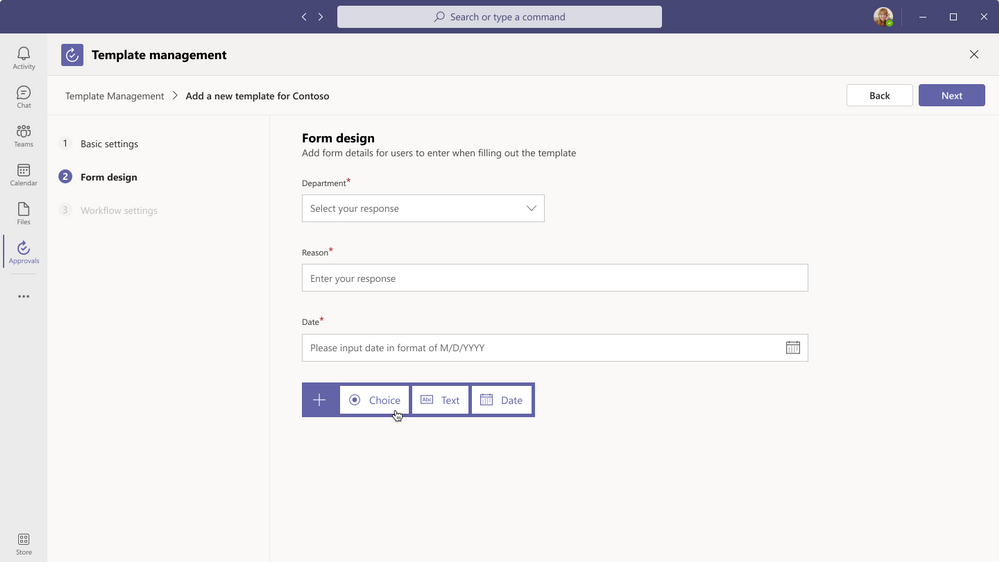
Create Approvals Template – Form Design
As an administrator or Teams channel owner, you can create and manage organization-wide Approvals templates on your desktop or tablet. Microsoft Forms is embedded in these templates as a white-label solution. As seen above, the forms authoring under step 2, “Form design,” is entirely powered by Forms.
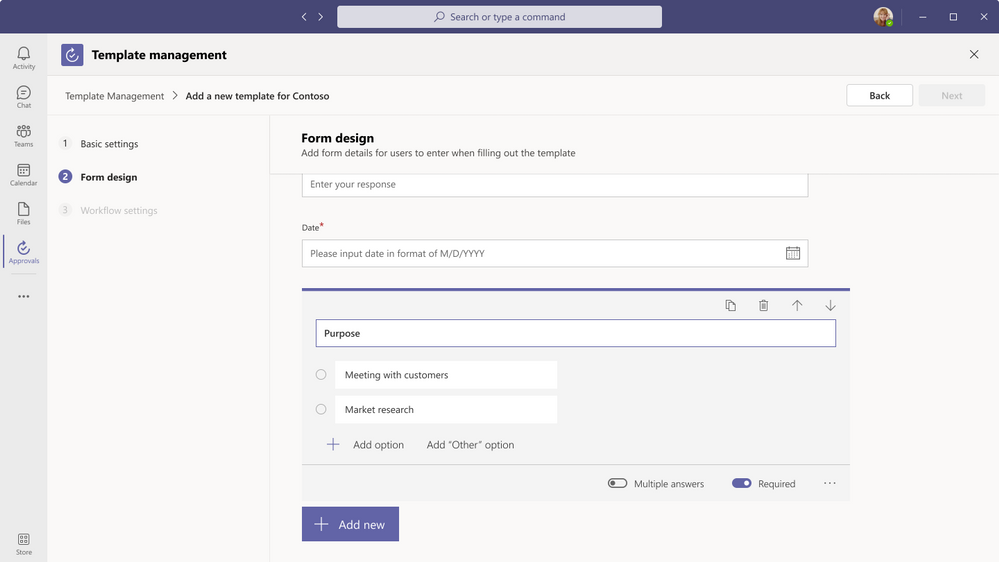 Form Design – Question Types
Currently, you can choose from three question types for your form: multiple-choice, open-text, and date. The experience of designing your form should feel familiar, as it is as simple as your typical form creation experience with Microsoft Forms.
Forms also powers the interface through which your team members fill out the approval request, as seen above. Using the template you created, they can quickly fill in their request on any-sized device.
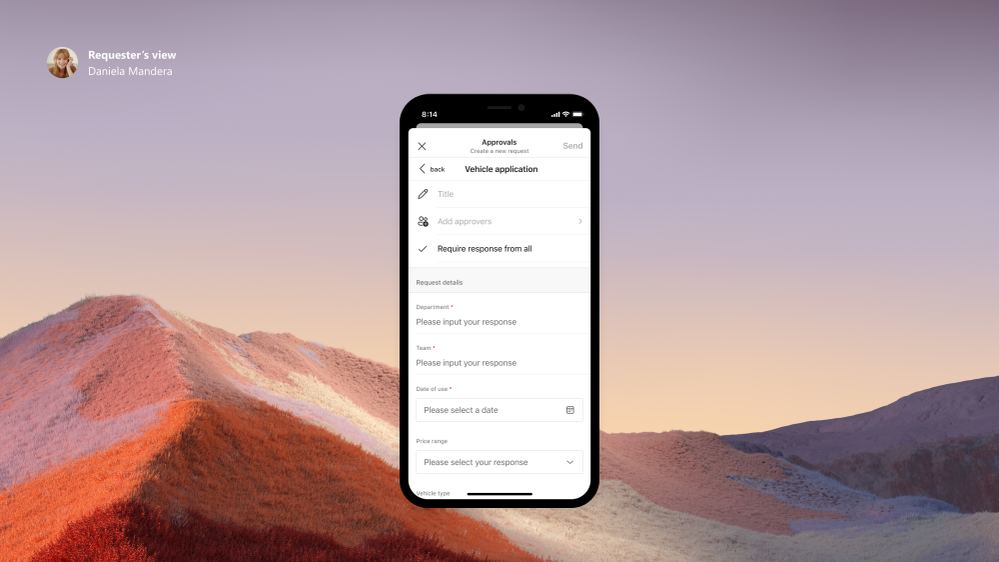 Submit Approval Request on Teams mobile
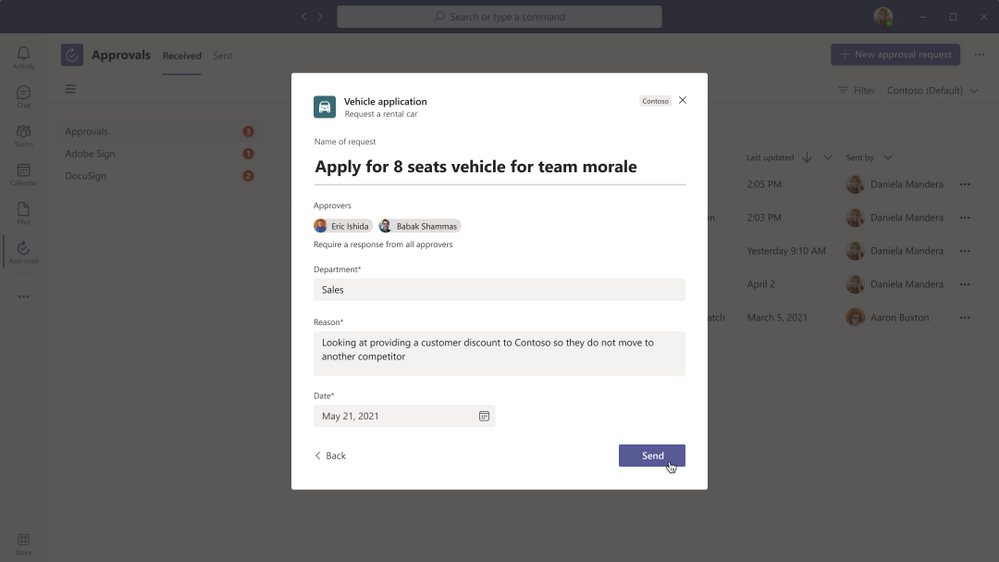 Submit Approval Request on Teams desktop
Forms’ anti-phishing protection, data validation, and user validation also help to ensure a safe and quality request.
After their submission, you, or the relevant approver on your team, can approve the request. At any point, you can view the aggregate information collected from these approvals, as well as export in a CSV file for further analysis in Excel.
We are delighted to contribute to a core part of Approvals templates and, more broadly, Microsoft’s vision to offer a simple, unified experience for essential workflows.
Additional Updates in Microsoft Forms
Enable Forms in PowerPoint Without Having to Deploy Office Add-Ins
Inserting a form or quiz into your PowerPoint on the desktop application has been an integration enjoyed by users in the Enterprise and Education worlds alike. However, if an organization did not want to enable all Office add-ins, its users were unable to add surveys or polls to their PowerPoint decks.
Thus, we are delighted to announce that IT administrators can now use Centralized Deployment to enable only the Forms add-in for PowerPoint, without enabling all Office add-ins. With this improvement, we believe this integration will become more widely accessible to you and your colleagues in your organization.
Send a Form Using a Shortened URL
Now, you can use a shorter URL when collecting responses to your form. A shortened link allows respondents to easily type and access the link; it also looks more shareable and professional.
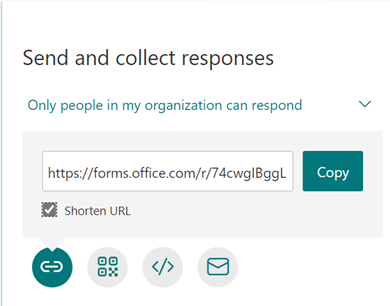 Shortened URL for Sharing Forms to Respondents
Next Steps
We hope you explore these latest updates as they become available to you. To learn more about Approvals in Teams, please see these quick introduction videos. If you have additional questions on Forms surveys, quizzes, or polls, please visit our Support page. You can also join discussions in the Microsoft Forms Tech Community and follow the Forms Blog to stay updated in the future.
by Contributed | Apr 13, 2021 | Technology
This article is contributed. See the original author and article here.
Microsoft 365 Patterns and Practices (PnP) Community April 2021 update is out with a summary of the latest guidance, samples, and solutions from Microsoft or from the community for the community. This article is a summary of all the different areas and topics around the community work we do around Microsoft 365 ecosystem during the past month. Thank you for being part of this success. Sharing is caring!
What is Microsoft 365 Community (PnP)
Microsoft 365 PnP is a nick-name for Microsoft 365 platform community activities coordinated by numerous teams inside of the Microsoft 365 engineering organizations. PnP is a community-driven open source initiative where Microsoft and external community members are sharing their learning’s around implementation practices for Microsoft 365.
Topics vary from Microsoft Viva, Microsoft Graph, Microsoft Teams, OneDrive and SharePoint. Active development and contributions happen in GitHub by providing contributions to the samples, reusable components, and documentation for different areas. PnP is owned and coordinated by Microsoft engineering, but this is work done by the community for the community.
The initiative is facilitated by Microsoft, but we have multiple community members as part of the PnP team (see team details in end of the article) and we are always looking to extend the PnP team with more community members. Notice that since this is open source community initiative, so there’s no SLAs for the support for the samples provided through GitHub. Obviously, all officially released components and libraries are under official support from Microsoft.
Some key statistics around Microsoft 365 PnP initiative from March 2021:
- Unique visitors during the past 2 weeks in PnP, OneDrive, Microsoft-Search, OfficeDev and SharePoint GitHub organization repositories – 72,290
- Overall unique contributors in the PnP, OneDrive, Microsoft-Search, OfficeDev and SharePoint GitHub organizations – 1,799
- Microsoft 365 Community (PnP) YouTube channel had 92,953 views with 6,835 hours of watch time and 21,597 subscribers
- Microsoft 365 Developer YouTube channel had 50,060 views with 3,628 hours of watch time and 13,111 subscribers
Most viewed videos in the Microsoft 365 Community (PnP) YouTube channel during March 2021:
- Working with Microsoft Lists (webinar) – Harini Saladi, Miceile Barrett, Chakkaradeep Chandran and Mark Kashman | 4,207
- Getting started with Site Designs in SharePoint Online – Laura Kokkarinen (Sulava) | 3,974
- Architecting Your Intranet | Melissa Torres (Microsoft) | 2,659
- Building a beautifully designed Intranet with SharePoint – latest design and branding capabilities | Cathy Dew (Microsoft) & Katie Swanson (Microsoft) | 2,431
- SharePoint App Bar – Global navigation and wayfinding | Melissa Torres (Microsoft) | 2,263
- Introducing: New Employee Onboarding – a Microsoft Teams app template | Nidhi Sharma (Microsoft) | 2,227
- SharePoint Framework Tutorial 1 – HelloWorld WebPart | 1,764
- SharePoint at 20 :birthday_cake: | 1,731
- Migration to SharePoint, OneDrive, and Microsoft Teams in Microsoft 365, free and easy – Hani Loza (Microsoft) & Eric Warnke (Microsoft) | 1,718
- Latest on Power Automate integration within SharePoint Online | Chakkaradeep Chandran (Microsoft) | 1,678
Most viewed videos in the Microsoft 365 Developer YouTube channel during March 2021:
- Microsoft Teams community call – March 2021 | 3,817
- Authenticate and connect with Microsoft Graph – June 2019 | 1,639
- Build Outlook Add-ins that integrate your solution seamlessly into your users’ Outlook experience | Juan Balmori, Hitesh Manwar – 1,321
- An introduction to Microsoft Graph for developers – Part I – Getting started – October 2019 | 1,218
- Getting Started with Microsoft Graph and Application Registration | 1,020
- Create interactive conversational bots for Microsoft Teams | 954
- Build and Office add-in using modern JavaScript tools and technologies | 924
- Accessing Files with Microsoft Graph | 772
- Getting Started with Microsoft Graph | 767
- Develop multi-tenant applications with Microsoft Identity Platform – April 2020 | 743
Main resources around Microsoft 365 Community:
Latest Dev Blog posts
Here are the latest blog posts and announcements around Microsoft 365 development topics from https://developer.microsoft.com/en-us/microsoft-365/blogs.
Latest community posts at https://aka.ms/m365pnp/community/blog
Community call recording blog posts:
PnP Weekly video blog / podcast shows:
We highly recommend also subscribing on the Microsoft 365 Developer Podcast show, which is a great show covering also latest development in the Microsoft 365 platform from developer and extensibility perspective.
Community Calls
There are numerous different community calls on different areas. All calls are being recorded and published either from Microsoft 365 Developer or Microsoft 365 Community (PnP) YouTube channels. Recordings are typically released within the following 24 hours after the call. You can find a detailed agenda and links to specific covered topics on blog post articles at the Microsoft 365 developer blog when the videos are published.
If you are interested in doing a live demo of your solution or sample in these calls, please do reach out to the PnP Team members (contacts later in this post) and they are able to help with the right setup. These are great opportunities to gain visibility for example for existing MVPs, for community members who would like to be MVPs in the future or any community member who’d like to share some of their learnings.
Microsoft 365 Community (PnP) Ecosystem in GitHub
Most of the community driven repositories are in the PnP GitHub organization as samples are not product specifics as they can contain numerous different solutions or the solution works in multiple different applications.
- PnPjs – PnPjs Framework repository
- CLI Microsoft 365 – Cross-OS command line interface to manage Office 365 tenant settings
- generator-spfx – Open-source Yeoman generator which extends the out-of-the-box Yeoman generator for SharePoint with additional capabilities
- generator-teams – Open-source Microsoft Teams Yeoman generator – Bots, Messaging Extensions, Tabs, Connectors, Outgoing Web hooks and more
- teams-dev-samples – Microsoft Teams targeted samples from community and Microsoft engineering
- Sharing is Caring – Getting started on learning how to contribute and be active on the community from GitHub perspective.
- pnpcore – The PnP Core SDK is an SDK designed to work against Microsoft 365 with Microsoft Graph API first approach
- powershell – PnP PowerShell module which is PowerShell Core module targeted for Microsoft 365
- pnpframework – PnP Framework is a .Net Standard 2.0 library targeting Microsoft 365 containing the PnP Provisioning engine and a ton of other useful extensions
- https://github.com/pnp/teams-dev-samples – Samples around the Microsoft Teams development models from Microsoft and from the community
- sp-dev-fx-webparts – Client-side web part samples from community and Microsoft engineering
- sp-dev-fx-extensions – Samples and tutorial code around SharePoint Framework Extensions
- sp-dev-fx-library-components – Samples and tutorial code around the SharePoint Framework library components
- sp-starter-kit – Starter kit solution for SharePoint modern experiences
- sp-dev-fx-vs-extension – Open source Visual Studio IDE extension for creating SharePoint Framework solutions in the Visual Studio 2015 or 2017
- sp-dev-build-extensions – Different build extensions like gulp tasks and gulp plugins from the community and engineering around SharePoint development
- sp-dev-solutions – Repository for more polished and fine-tuned reusable solutions build with SharePoint Framework
- sp-dev-samples – Repository for other samples related on the SharePoint development topics – WebHooks etc.
- sp-dev-fx-controls-react – Reusable content controls for SharePoint Framework solutions build with React
- sp-dev-fx-property-controls – Reusable property pane controls to be used in web parts
- sp-dev-list-formatting – Open-source community-driven repository for the column and view formatting JSON definitions
- sp-dev-site-scripts – Open-source community-driven repository for community Site Designs and Site Scripts
- sp-dev-modernization – Tooling and guidance around modernizing SharePoint from classic to modern
- sp-power-platform-solutions – Solution and sample code for SharePoint Power Platform solutions
- powerfx-samples – Samples that demonstrate different usage patterns for the Power Fx low-code programming language
All SharePoint specific repositories or services supported directly by Microsoft are located in the SharePoint GitHub organization
PnP specific repositories – solution designs and tooling
- PnP – Main repository for SP add-in, Microsoft Graph etc. samples
- PnP-Sites-Core – Office Dev PnP Core component
- PnP-PowerShell – Office Dev PnP PowerShell Cmdlets
- PnP-Tools – Tools and scripts targeted more for IT Pro’s and for on-premises for SP2013 and SP2016
- PnP-Provisioning-Schema – PnP Provisioning engine schema repository
- PnP-IdentityModel – Open source replacement of Microsoft.IdentityModel.Extensions.dll
Repositories in the GitHub Microsoft Search organization controlled by the PnP initiative
Other related resources from GitHub
What’s supportability story around the community tooling and assets?
Following statements apply across all of the community lead and contributed samples and solutions, including samples, core component(s) and solutions, like SharePoint Starter Kit, yo teams or PnP PowerShell. All Microsoft released SDKs and tools are supported based on the specific tool policies.
- PnP guidance and samples are created by Microsoft & by the Community
- PnP guidance and samples are maintained by Microsoft & community
- PnP uses supported and recommended techniques
- PnP is an open-source initiative by the community – people who work on the initiative for the benefit of others, have their normal day job as well
- PnP is NOT a product and therefore it’s not supported by Premier Support or other official support channels
- PnP is supported in similar ways as other open source projects done by Microsoft with support from the community by the community
- There are numerous partners that utilize PnP within their solutions for customers. Support for this is provided by the Partner. When PnP material is used in deployments, we recommend being clear with your customer/deployment owner on the support model
Please see the specifics on the supportability on the tool, SDK or component repository or download page.
Microsoft 365 PnP team model
In April 2020 we announced our new Microsoft 365 PnP team model and grew the MVP team quite significantly. PnP model exists for having more efficient engagement between Microsoft engineering and community members. Let’s build things together. Your contributions and feedback is always welcome! During August, we also crew the team with 5 new members. PnP Team coordinates and leads the different open-source and community efforts we execute in the Microsoft 365 platform.
We welcome all community members to get involved on the community and open-source efforts. Your input do matter!
Got feedback, suggestions or ideas? – Please let us know. Everything we do in this program is for your benefit. Feedback and ideas are more than welcome so that we can adjust the process for benefitting you even more.
Area-specific updates
These are different areas which are closely involved on the community work across the PnP initiative. Some are lead and coordinated by engineering organizations, some are coordinated by the community and MVPs.
Microsoft Graph Toolkit
Microsoft Graph Toolkit is engineering lead initiative, which works closely with the community on the open-source areas. The Microsoft Graph Toolkit is a collection of reusable, framework-agnostic web components and helpers for accessing and working with Microsoft Graph. The components are fully functional right of out of the box, with built in providers that authenticate with and fetch data from Microsoft Graph.
All the latest updates on the Microsoft Graph Toolkit is being presented in our bi-weekly Microsoft 365 Generic Dev community call, including the latest community contributors.
Microsoft 365 Community docs
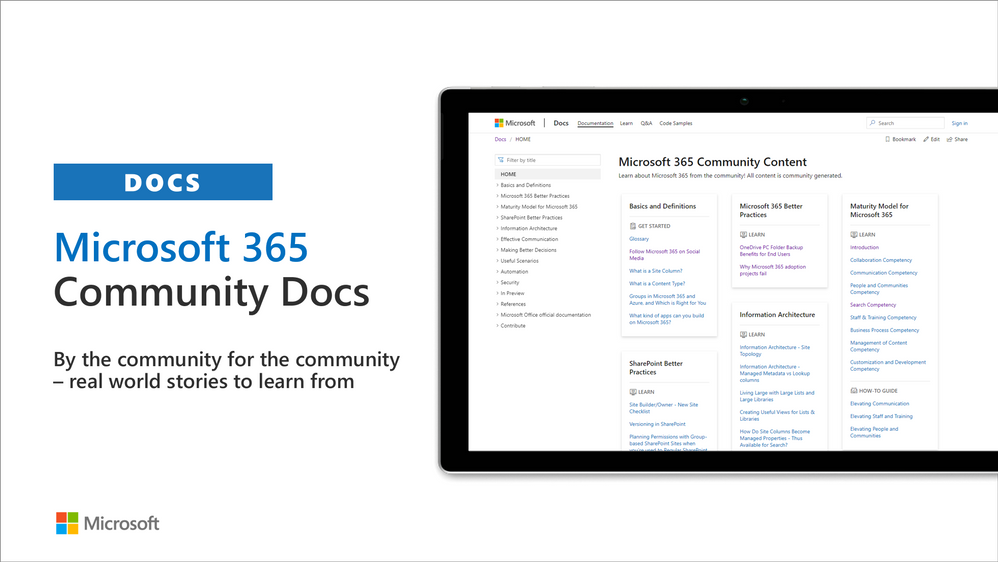
Community docs model was announced in the April 2020 and it’s great to see the interest for community to help each other by providing new guidance on the non-dev areas. See more on the announcement from the SharePoint blog – Announcing the Microsoft 365 Community Docs. We do welcome contributions from the community – our objective is to build a valuable location for articles from Microsoft and community together.
Latest updates on this area as follows:
Have ideas for articles or want to contribute yourself? – Get involved! Here are also some additional resources explaining the model more detailed.
SharePoint Framework development samples
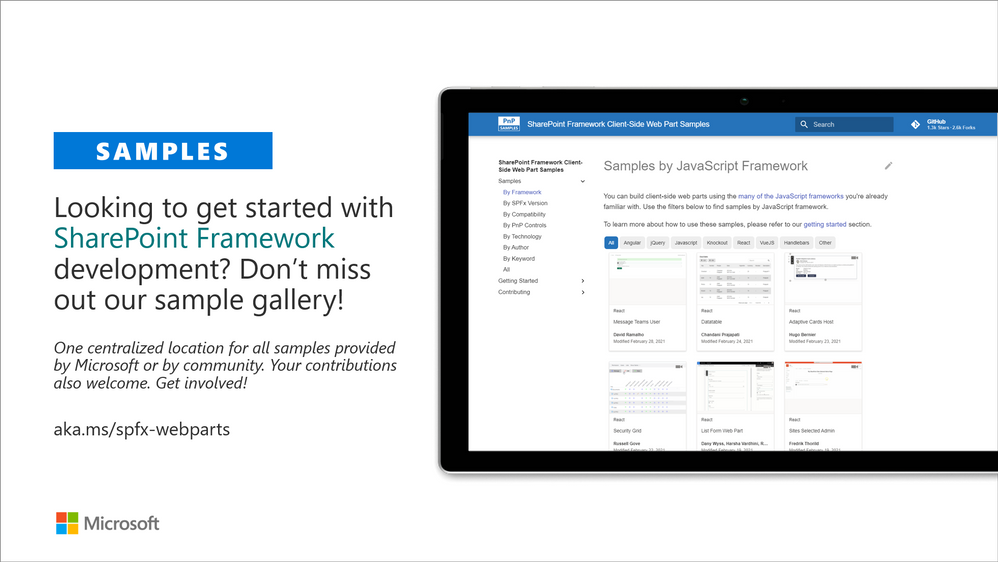
These are the updated SharePoint Framework samples which are available from the the different repositories.
How to find what’s relevant for you? Take advantage of our SharePoint Framework web part and extension sample galleries – includes also solutions which work in Microsoft Teams
Microsoft Teams community samples
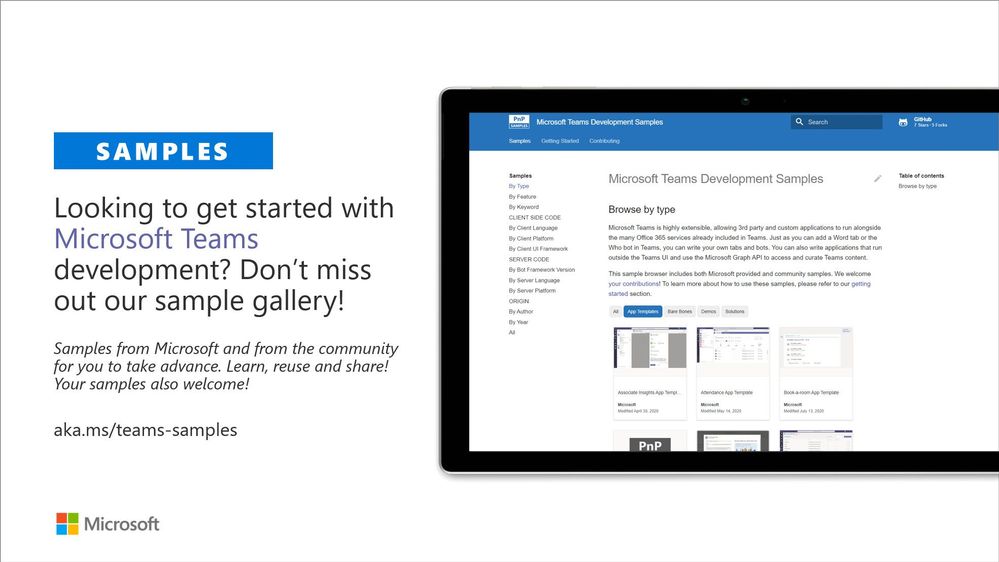
These are samples which have been contributed on the community samples since last summary. We do welcome all Microsoft Teams samples to this gallery. They can be implemented using in any technology.
- Numerous updates on the existing samples provided by community and Microsoft
If you are interested on Microsoft Teams samples, we have just released also new Microsoft Teams sample gallery. Contributions to Microsoft Teams samples is also more than welcome. This gallery already surfaces all Microsoft samples, Microsoft Teams app templates and community samples.
Sharing is Caring initiative
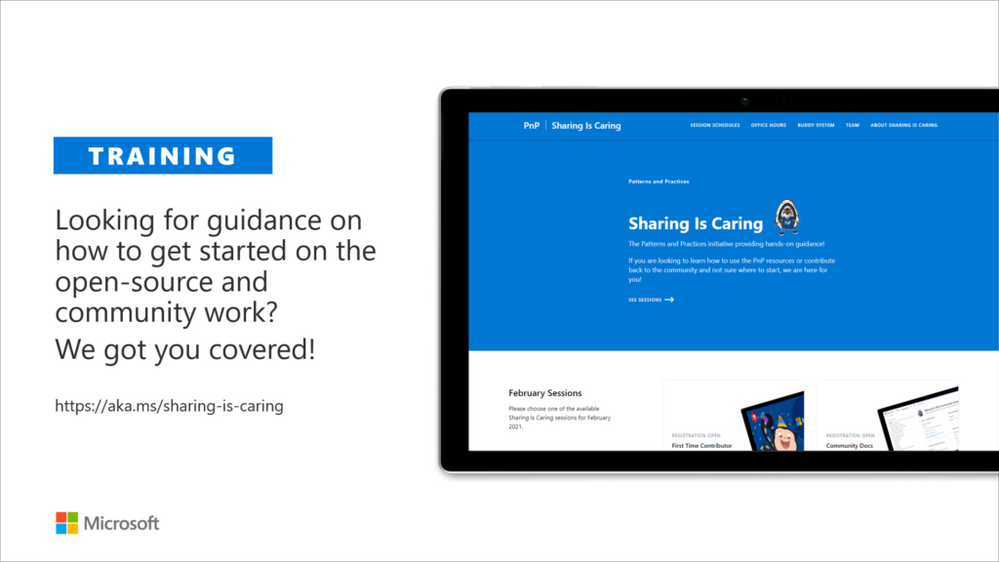
The “Sharing Is Caring” imitative is targeted for learning the basics around making changes in Microsoft Docs, in GitHub, submitting pull requests to the PnP repositories and in GitHub in general. Take advantage of this instructor lead training for learning how to contribute to docs or to open-source solutions. Everyone is welcome to learn how to get started on contributing to open-source docs or code!
- See more from the guidance documentation – including all upcoming instructor lead sessions which you can participate!
Different Microsoft 365 related open-source initiatives build together with the community
See exact details on the latest updates from the specific open-source project release notes. You can also follow up on the project updates from our community calls. There are numerous active projects which are releasing new versions with the community even on weekly basis. Get involved!
- Microsoft Look Book – Discover the modern experiences you can build with SharePoint in Microsoft 365. Look book provides design examples for SharePoint Online which can be automatically provisioned to any tenant in the world. See more from https://lookbook.microsoft.com. This service is also provided as open-source solution sample from GitHub.
- yo teams – Open-source Yeoman generator for Microsoft Teams extensibility. Supports creation of bots, messaging extensions, tabs (with SSO), connectors and outgoing Webhooks. See more from https://aka.ms/yoteams.
- PnP Framework – .NET Standard 2.0 SDK containing the classic PnP Sites Core features for SharePoint Online. More around this package from GitHub.
- PnP Core SDK – The PnP Core SDK is an SDK designed to work for Microsoft 365 with Graph API first approach. It provides a unified object model for working with SharePoint Online and Teams which is agnostic to the underlying API’s being called. See more around the SDK from documentation.
- PnP PowerShell – PnP PowerShell is a .NET Core 3.1 / .NET Framework 4.6.1 based PowerShell Module providing over 400 cmdlets that work with Microsoft 365 environments and more specifically SharePoint Online and Microsoft Teams. See more details from documentation.
- Reusable SharePoint Framework controls – Reusable controls for SharePoint Framework web part and extension development. Separate projects for React content controls and Property Pane controls for web parts. These controls are using Office UI Fabric React controls under the covers and they are SharePoint aware to increase the productivity of developers.
- Office 365 CLI – Using the Office 365 CLI, you can manage your Microsoft Office 365 tenant and SharePoint Framework projects on any platform. See release notes for the latest updates.
- PnPJs – PnPJs encapsulates SharePoint REST APIs and provides a fluent and easily usable interface for querying data from SharePoint sites. It’s a replacement of already deprecated pnp-js-core library. See changelog for the latest updates.
- PnP Provisioning Engine and PnP CSOM Core – PnP provisioning engine is part of the PnP CSOM extension. They encapsulate complex business driven operations behind easily usable API surface, which extends out-of-the-box CSOM NuGet packages. See changelog for the latest updates.
- PnP PowerShell – PnP PowerShell cmdlets are open-source complement for the SharePoint Online cmdlets. There are more than 300 different cmdlets to use and you can use them to manage tenant settings or to manipulate actual SharePoint sites. They See changelog for the latest updates.
- PnP Modern Search solution – The PnP ‘Modern Search’ solution is a set of SharePoint Online modern Web Parts allowing SharePoint super users, webmasters and developers to create highly flexible and personalized search based experiences in minutes. See more details on the different supported capabilities from https://aka.ms/pnp-search.
- Modernization tooling – All tools and guidance on helping you to transform you SharePoint to modern experiences from http://aka.ms/sppnp-modernize.
- SharePoint Starter Kit v2 – Building modern experiences with Microsoft Teams flavors for SharePoint Online and SharePoint 2019 – reference solution in GitHub.
- List formatting definitions – Community contributed samples around the column and view formatting in GitHub.
- Site Designs and Site Scripts – Community contributed samples around SharePoint Site Designs and Site Scripts in GitHub.
- DevOps tooling and scripts – Community contributed scripts and tooling automation around DevOps topics (CI/CD) in GitHub.
- Teams provisioning solution – Set of open-source Azure Functions for Microsoft Teams provisioning. See more details from GitHub.
Documentation updates
Please see all the Microsoft 365 development documentation updates from the related documentation sets and repositories as listed below:
Microsoft 365 Dev and Microsoft 365 Community (PnP) YouTube video channels
You can find all Microsoft 365 related videos on our YouTube Channel at http://aka.ms/m365pnp-videos or at Microsoft 365 Dev. These channels contains already a significant amount of detailed training material, demo videos, and community call recordings.
Here are the new Microsoft demo or guidance videos released since the last monthly summary:
Community demos as following:
PnP Weekly sessions – Community visitors and latest articles from Microsoft and community on Microsoft 365 topics.
Key contributors to the April 2021 update
Here’s the list of active contributors (in alphabetical order) since last release details in GitHub repositories or community channels. PnP is really about building tooling and knowledge together with the community for the community, so your contributions are highly valued across the Microsoft 365 customers, partners and obviously also at Microsoft.
Thank you for your assistance and contributions on behalf of the community. You are truly making a difference! If we missed someone, please let us know.
Companies: Here’s the companies, which provided support for PnP initiative for this month by allowing their employees working for the benefit of others in the community. There were also people who contributed from other companies during last month, but we did not get their logos and approval to show them in time for these communications. If you still want your logo for this month’s release, please let us know and share the logo with us. Thx.
Microsoft people: Here’s the list of Microsoft people who have been closely involved with the PnP work during last month.
PnP Team
PnP Team manages the PnP community work in the GitHub and also coordinates different open-source projects around Microsoft 365 topics. PnP Team members have a significant impact on driving adoption of Microsoft 365 topics. They have shown their commitment to the open-source and community-driven work by constantly contributing to the benefit of the others in the community.
Thank you for all that you do!
Here are the Microsoft Internal PnP Core team members:
Next steps
See all of the available community calls, tools, components and other assets from https://aka.ms/m365pnp. Get involved!
Got ideas or feedback on the topics to cover, additional partnerships, product feature capabilities? – let us know. Your input is important for us, so that we can support your journey in Microsoft 365.
“Sharing is caring”
Microsoft 365 Community (PnP) – April 13th 2021

by Contributed | Apr 13, 2021 | Technology
This article is contributed. See the original author and article here.
Today we are excited to announce the latest Surface Laptop, now in its fourth generation. Surface Laptop 4 welcomes the challenges of hybrid work by providing the performance needed for multitasking, meetings, and more. From video calls at home to virtual collaboration in the office, Surface Laptop 4 keeps up with your business tasks while offering the cameras, mics, and speakers to help you look and sound your best.
To learn more, get a tour from the latest episode of Microsoft Mechanics:
A defining history
 |
Surface began almost 20 years ago as an exploration of the power of touchscreens and tablets. In 2012, we introduced the product line to the world with Surface Pro, creating the 2-in-1 category.
|
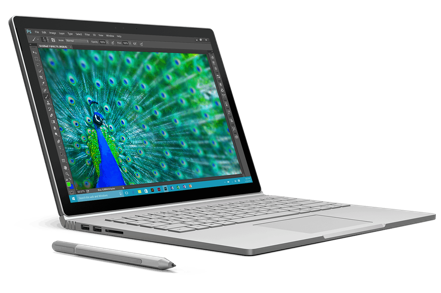
In 2015, Surface Book brought a detachable display to laptops. Breakthroughs like Surface Studio’s unique hinge and Surface Hub added further to Surface’s growing reputation for design and innovation.
|
|

|
In 2017, Surface Laptop was a bold new statement on the classic clamshell. Ultra-slim, beautiful devices that balance power, speed, performance, and style, Surface laptops have been validated by the highest customer satisfaction in the Surface product line.1
|
In 2020, we launched our lightest clamshell ever with Surface Laptop Go, delivering the design and innovation Surface is known for at an exceptional value.
|

|

|
Now, Surface Laptop 4 gives you more multitasking power than before and better graphics, fueled by your choice of latest gen Intel® or AMD Ryzen™ processors. 2
Immersive sound, and longer battery life3 keep you in the flow—all within our signature ultra-slim design.
|
This history of innovation inspires us to keep improving—to continue to anticipate needs and listen to our customers. Surface Laptop 4 represents a new level of power and choice in an ultra-slim laptop.
More power, more choice
Your choice between two great processors4, providing exceptional laptop performance. Learn more about the Surface Laptop 4 processors.

|
Quad Core 11th Gen Intel® Core™ processor – Exceptional performance, connectivity, and entertainment
New Quad Core 11th Gen Intel® Core™ processors and Intel® Iris® Xe graphics work together to help you edit photos and videos up to 90% faster7 than Surface Laptop 3. Intelligent performance that adapts to you for faster responsiveness across apps.
|
Custom AMD Ryzen™ Microsoft Surface® Edition processor – A perfect balance of portability, speed, and performance
Up to 8 CPU cores, delivering uniquely powerful performance in an ultra-thin and light design. Outstanding speed with high-endurance, all-day battery life3
|

|
Surface for Business unlocks more value
Save time and money with streamlined deployment, modern device management, and built-in, cloud-powered security.
Make the most of your investment in Microsoft 365*, with Windows 10 Pro, the protection of Microsoft Enterprise Mobility + Security, and the Office 365* productivity apps you rely on. AMD models now benefit from the same enterprise deployment and management tools as Intel models. Both can be personalized with required apps and policies using zero touch deployment with Windows Autopilot. This allows you to direct ship Surface devices from the factory to users. Equally, Microsoft Endpoint Manager with the Device Firmware Configuration Interface5 (DFCI) policies also extend to Surface Laptop 4 AMD models, allowing you to deploy and manage policies down to the firmware layer, all through the power of the cloud.
As described in a recent Surface IT Pro Blog around firmware security, endpoint security is core to the design of every Surface device. We achieve this through our own unique UEFI5 Firmware protection, implemented through a Microsoft developed open-source UEFI. Surface adds to this core level security through a defense in-depth approach that utilizes virtualization-based security (VBS) protection out of the box, which guards against escalation of privilege attacks targeting sensitive information stored in memory. These layered protections mitigate security risks and simplify the end-user experience in configuring the device.
In addition, we’re excited to announce that AMD models are the first to ship as certified Windows 10 Secured-core PCs. These devices offer comprehensive security out-of-the-box with tightly integrated hardware, software, firmware, and identity protection layers. Learn more about our Secured-core PCs to include Surface Pro X.
Serviceability and Support
Surface Laptop 4 hardware is designed to be serviceable. The SDD is removable and replaceable by skilled on-site technicians. Additionally, the display cover, and the keyboard cover can be replaced by authorized service centers.

Surface Laptop 4 for Business includes Advanced Exchange, an expedited replacement service, at no additional cost.6
Find the perfect balance
Need a little more help deciding? Compare Surface Laptop 4 to Surface Laptop Go to help decide which laptop device best meets the needs of your organization. See Surface Laptop 4 for Business
*Sold separately.
1 98% of Surface Laptop users are satisfied with their device. Customer Usage & Satisfaction program, study of device users weighted across 5 countries (US/UK/DE/CH/JP), conducted by independent research company IPSOS, recruited through online panel vendors, commissioned by Microsoft, around 30.7K demographically representative device users, collected March/April 2020, measuring top-2 box on a 4-pt scale from very dissatisfied to very satisfied, significant at a 90% confidence level.
2 Colors available on selected models only. Available colors, sizes, finishes, and processors may vary by store, market, and configuration.
3 Surface Laptop 4 battery life: Up to 19 hours on Surface Laptop 4 13.5” AMD Ryzen™ r5; up to 17.5 hours on Surface Laptop 4 15” AMD Ryzen™ r7; up to 17 hours on Surface Laptop 4 13.5” Intel® Core™ i5; up to 16.5 hours on Surface Laptop 4 15” Intel® Core™ i7. Battery life based on typical Surface device usage. Testing conducted by Microsoft in February 2021 using preproduction software and preproduction devices. Testing consisted of full battery discharge with a mixture of active use and modern standby. The active use portion consists of (1) a web browsing test accessing 8 popular websites over multiple open tabs, (2) a productivity test utilizing Microsoft Word, PowerPoint, Excel and Outlook, and (3) a portion of time with the device in use with idle applications. All settings were default except screen brightness was set to 150nits with Auto-Brightness disabled. Wi-Fi was connected to a network. Battery life varies significantly with settings, usage and other factors.
4 Colors available on selected models only. Available colors, sizes, finishes, and processors may vary by store, market, and configuration.
5 Surface Go and Surface Go 2 use a third-party UEFI and do not support DFCI. DFCI is currently available for Surface Laptop 4, Surface Camano, Laptop Go, Surface Book 3, Surface Laptop 3, Surface Pro 7, and Surface Pro X. Find out more about managing Surface UEFI settings.
6 Advanced Exchange Service is available at no additional charge with the following Surface for Business products: Surface Laptop 4, Surface Pro 7+, Surface Laptop Go, Surface Book 3, Surface Go 2, Surface Laptop 3, Surface Pro 7, Surface Pro X, Surface Pro 6, and Surface Laptop 2. Advanced Exchange is only available in supported markets. Restrictions apply. See Surface for Business warranty page for AES terms and conditions and list of supported markets.
7 Surface Laptop 4 13.5” with 11th Gen Intel® Core™ i7 is up to 90% faster than Laptop 3 with 10th Gen Intel ® Core™ i7.
by Contributed | Apr 13, 2021 | Technology
This article is contributed. See the original author and article here.
In this series on DevOps for Data Science, I’ve explained the concept of a DevOps “Maturity Model” – a list of things you can do, in order, which will set you on the path for implementing DevOps in Data Science. The first thing you can do in your projects is to implement Infrastructure as Code (IaC) , and the second thing to focus on is Continuous Integration (CI). However, to set up CI, you need to have as much automated testing as you can – and in the case of Data Science programs, that’s difficult to do. You can, however, mitigate this problem a great deal, and get your part of the solution as automated as possible.
The next step in the DevOps Maturity Model is Continuous Delivery (CD). There’s some discussion we need to cover here, since the definitions of DevOps and Continuous Delivery are quite similar, and to some, CD doesn’t belong “under” DevOps. Both DevOps and CD involve an agile mindset of releasing smaller, faster, and automated bits of code into the process rather than waiting for several changes to integrate at once. But DevOps is more a philosophy of teams working together to that end, and CD is a guided process involving all of the steps of design, coding, tracking, testing and release. CD is often more tool-aligned than DevOps is (or at least DevOps shouldn’t be tool oriented). If you look at a standard workflow in Visual Studio Team Services, you’re effectively looking at CD, but not necessarily DevOps.
Just to confuse things a bit further, some DevOps references define the “CD” acronym as Continuous Deployment – which is another implementation function. Continuous Deployment means automating the build so that changes happen automatically, all the way out to the deployment process of the end user’s software. Imagine a smartphone app that can take a picture of a plant and identity it. The Data Science function within this application is a trained model using custom vision API’s, and perhaps you make a change that improves the recognition score. Once tested, your change would not only be placed into the build, but pushed all the way out to the user automatically – perhaps within minutes of the test completing. That’s Continuous Deployment – then mechanisms that make that push possible.
So I’ve included Continuous Delivery as the third maturity of DevOps, which I’m certain will annoy the purists on both sides. However, I think it belongs there because until your teams have a DevOps mindset, it will be harder to effectively implement a true Continuous Delivery system. And I think that starting with IaC and CI is essential to start the CD journey.
With those explanations in mind, how does the Data Science team fit in to CD? It’s here that we face another change in your day-to-day routine. You’ll need to learn, understand and use whatever CD system your company uses. Here at Microsoft we use Azure Devops, which includes CD and the ability to implement a DevOps foundation. And yes, some of the Data Scientists have had to go back to school on it. Learning these systems – the “plumbing” – isn’t often desirable to a bona-fide Data Scientist, but it’s essential to being part of a team, and having a DevOps mindset. Underneath VSTS we use git and github, which has other implications. Most Data Scientists I’ve worked with do understand git commands, so there’s less pushback there.
See you in the next installment on the DevOps for Data Science series, where I’ll cover the next level in your DevOps Maturity Model for Data Science teams.
For Data Science, I find this progression works best – taking these one step at a time, and building on the previous step – the entire series is here:
- Infrastructure as Code (IaC)
- Continuous Integration (CI) and Automated Testing
- Continuous Delivery (CD) (This article)
- Release Management (RM)
- Application Performance Monitoring
- Load Testing and Auto-Scale
In the articles in this series that follows, I’ll help you implement each of these in turn.
If you’d like to implement DevOps, Microsoft has a site to assist. You can even get a free offering for Open-Source and other projects: https://azure.microsoft.com/en-us/pricing/details/devops/azure-devops-services/

by Scott Muniz | Apr 13, 2021 | Security
This article was originally posted by the FTC. See the original article here.
Government imposters may have hit a new low with a scheme that targets the grieving survivors of people who died of COVID-19 by offering them help paying for their loved one’s funeral expenses.
A real government relief program will pay up to $9,000 for funeral expenses that people have paid since January 20, 2020 for loved ones who died of COVID-19. Survivors can apply for benefits by contacting the Federal Emergency Management Agency (FEMA) at 844-684-6333. The number is toll-free and multi-lingual services are available.
The program is open to American citizens, nationals of U.S. territories, and non-citizens legally admitted to the United States, regardless of income. If you apply, you’ll need to show documents including receipts for your expenses and a death certificate that says the death happened in the United States or its territories and was likely caused by COVID-19.
The program just began yesterday, but even before it started, FEMA said it had reports of scammers contacting people and “offering” to register them for assistance.
Here’s what you need to know:
- FEMA will not contact you until you have called FEMA or have applied for assistance. Anyone who contacts you out of the blue and claims to be a federal employee or from FEMA is a scammer.
- The government won’t ask you to pay anything to get this financial help. Anyone who does is a scammer.
- The government won’t call, text, email, or contact you on social media and ask for your Social Security, bank account, or credit card number. Anyone who does is a scammer.
- Don’t give your own or your deceased loved one’s personal or financial information to anyone who contacts you out of the blue. Anyone who does that and asks for that information is a scammer.
FEMA’s Funeral Assistance FAQs have information about the documents you need to apply for funeral expenses. The FAQs also tell you what to do if the death certificate didn’t identify COVID-19 as the likely cause of death, as sometimes happened early in the pandemic.
If you doubt a caller claiming to be from FEMA is telling the truth, hang up and report it to the FEMA Helpline at 800-621-3362 or the National Center for Fraud Hotline at 866-720-5721. Tell us too, at ReportFraud.ftc.gov.
Brought to you by Dr. Ware, Microsoft Office 365 Silver Partner, Charleston SC.
by Contributed | Apr 13, 2021 | Technology
This article is contributed. See the original author and article here.
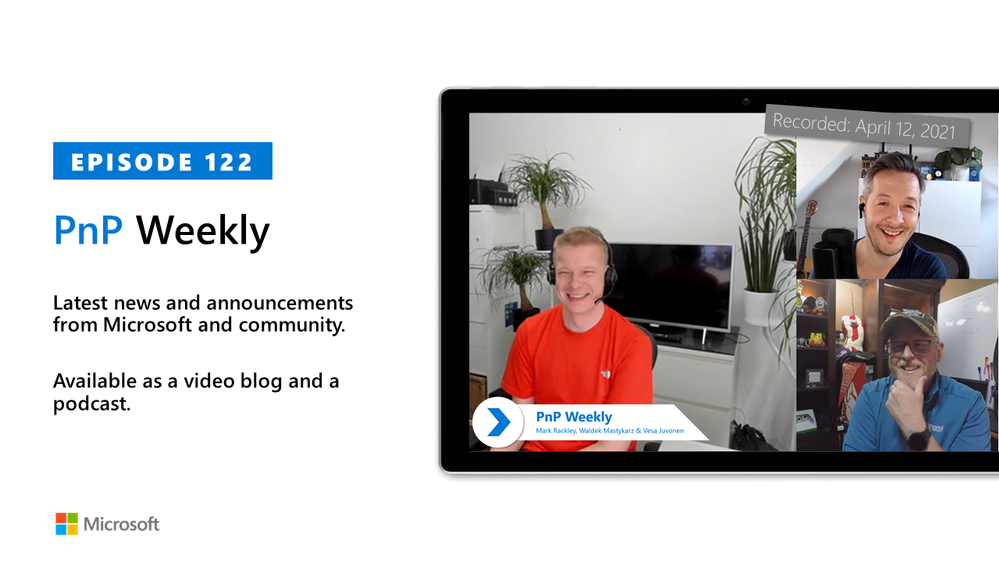
In this installment of the weekly discussion revolving around the latest news and topics on Microsoft 365, hosts – Vesa Juvonen (Microsoft) | @vesajuvonen, Waldek Mastykarz (Microsoft) | @waldekm are joined by a Partner at the US-based consultancy PAIT Group and Microsoft 365 MVP Mark Rackley | @mrackley.
Topics discussed in this session include: Hillbilly tabs, North American Collaboration Summit, how the transition from on-Prem to Cloud along with a talented PnP community has impacted the need to customize applications. Hiring based on who’s available, managing the pace of change and customer expectations, deployment planning, and the business unit customer’s interest in Microsoft Viva experience.
Covering also 20 articles from Microsoft and the Community.
This episode was recorded on Monday, April 12, 2021.
These videos and podcasts are published each week and are intended to be roughly 45 – 60 minutes in length. Please do give us feedback on this video and podcast series and also do let us know if you have done something cool/useful so that we can cover that in the next weekly summary! The easiest way to let us know is to share your work on Twitter and add the hashtag #PnPWeekly. We are always on the lookout for refreshingly new content. “Sharing is caring!”
Here are all the links and people mentioned in this recording. Thanks, everyone for your contributions to the community!
Events:
Microsoft articles:
Community articles:
Additional resources:
If you’d like to hear from a specific community member in an upcoming recording and/or have specific questions for Microsoft 365 engineering or visitors – please let us know. We will do our best to address your requests or questions.
“Sharing is caring!”

by Contributed | Apr 13, 2021 | Technology
This article is contributed. See the original author and article here.
All Around Azure is the amazing show you may already know to learn everything about Azure services and how they can be utilized with different technologies, operating systems, and devices. Now, the show is expanding! We’re excited to bring you All Around Azure: DevOps with GitHub.
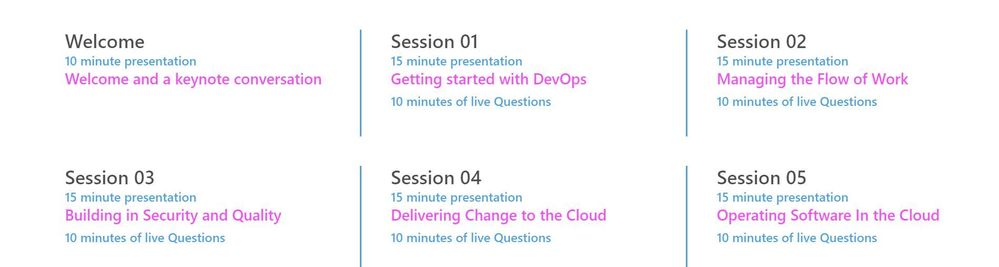
When Developers and IT operations teams work together, organizations win. Learn the patterns, practices, and tooling that bring out the DevOps capabilities in your organization
Agenda
World Wide Event
07:30 – 10:00 IST
12:00 – 14:30 AEST
03:00 – 05:30 GMT
19:00 – 21:30 PDT
|
11:00 – 13:30 GMT
15:30 – 18:00 IST
20:00 – 22:30 AEST
03:00 – 05:30 PDT
|
12:00 – 14:30 PDT
20:00 – 22:30 GMT
12:30 – 03:00 IST
05:00 – 07:30 AEST
|
Register Now
https://aaa-devopsgitub.splashthat.com/
The DevOps Learning Path is designed for those who develop and operate software and need to increase collaboration, performance, and reliability. The content is comprised of 5 modules that approach topics ranging from getting started with DevOps, to delivering change, to operating software in the cloud.
Each session includes a curated selection of associated modules from Microsoft Learn that can provide an interactive learning experience for the topics covered and may also contribute toward preparedness for the official AZ-400 Designing and Implementing Microsoft DevOps Solutions Certification.
by Contributed | Apr 13, 2021 | Technology
This article is contributed. See the original author and article here.
In this latest episode of Azure Unblogged, I am chatting to Vijay Nagarajan from the Azure Update Management team.
I’ve long been a fan and user of Azure Update Management both in my own environments and encouraging customers to adopt it, chatting to Vijay I ask about where Azure Update Management fits in on a customer’s cloud adoption journey and how it can be leveraged.
Patching servers and applications is a bit part of an IT department’s “business as usual (BAU)” activities and there are well established method’s for patching Windows and Linux servers but I raise the question about third party product patching and where Microsoft’s WSUS or Azure Update Management solutions can help in this area.
Vijay and I delve into the cost of implementing Azure Update Management (spoiler alert, Azure Update Management is a free solution) and explain how to look at that in a wider context when pricing up your Azure environment.
And lastly Vijay shares some information about the roadmap features he and the team are working on and the current private preview.
So grab a comfy seat and your favourite drink and join Vijay & I here or on Channel 9.
Resources:
– Azure Update Management Overview
– MS Learn: Manage Azure Updates
– WSUS Package Publisher
by Contributed | Apr 12, 2021 | Technology
This article is contributed. See the original author and article here.
Several customers have approached me on how to configure Splunk antivirus exclusions for processes, folders, and files within Microsoft Defender for Endpoint on RedHat Enterprise Linux. This quick reference article has been created to address this common question.
Note: This blog is in support of Microsoft Defender for Endpoint on Red Hat Enterprise Linux 7.9.
Disclaimer: This may not work on all versions of Linux. Linux is a third-party entity with its own potential licensing restrictions. This content is provided to assist our customers to better navigate integration with a 3rd party component or operating system, and as such, no guarantees are implied. Process and folder exclusions could potentially be harmful because such exclusions increase your organizational exposure to security risks.
- First let’s check if any file or folder exclusions are already configured on your RedHat Enterprise Linux clients by running the following command
mdatp exclusion list
- In the following example, we see that we do not have any exclusions configured for the device
[azureuser@redhat /]$ mdatp exclusion list
=====================================
No exclusions
=====================================
[azureuser@redhat /]$
- To review Microsoft Defender for Endpoint on Linux exclusions information, visit our public documentation.
- Splunk exclusions list is noted in their respective documentation.
- Here is a simplified list of the recommended exclusion from the link above:
version:
|
Directories to exclude:
|
Processes to exclude:
|
Splunk Enterprise (*nix)
|
/opt/splunk ($SPLUNK_HOME) and all sub-directories
/opt/splunk/var/lib/splunk ($SPLUNK_DB) and all sub-directories
|
· bloom
· btool
· btprobe
· bzip2
· cherryd
· classify
· exporttool
· locktest
· locktool
· node
· python*
· splunk
· splunkd
· splunkmon
· tsidxprobe
· tsidxprobe_plo
· walklex
|
Splunk universal forwarder (*nix)
|
/opt/splunkforwarder ($SPLUNK_HOME) and all subdirectories
|
· Same as Splunk Enterprise (*nix)
|
- To add an exclusion manually for a process running on RHEL 7.9, you need to run the following command:
mdatp exclusion process add –name [nameofprocess]
- Since we have 17 processes to exclude, we will have to run the command 17 times, one for each process.
sudo mdatp exclusion process add –name bloom
sudo mdatp exclusion process add –name btool
sudo mdatp exclusion process add –name btprobe
sudo mdatp exclusion process add –name bzip2
sudo mdatp exclusion process add –name cherryd
sudo mdatp exclusion process add –name classify
sudo mdatp exclusion process add –name exporttool
sudo mdatp exclusion process add –name locktest
sudo mdatp exclusion process add –name locktool
sudo mdatp exclusion process add –name node
sudo mdatp exclusion process add –name python*
sudo mdatp exclusion process add –name splunk
sudo mdatp exclusion process add –name splunkd
sudo mdatp exclusion process add –name splunkmon
sudo mdatp exclusion process add –name tsidxprobe
sudo mdatp exclusion process add –name tsidxprobe_plo
sudo mdatp exclusion process add –name walklex
[azureuser@redhat /]$ sudo mdatp exclusion process add –name bloom
Process exclusion added successfully
- Once we run through the 17 processes, we can check the exclusions list again.
[azureuser@redhat /]$ mdatp exclusion list
=====================================
Excluded process
Process name: bloom
—
Excluded process
Process name: btool
—
Excluded process
Process name: btprobe
—
Excluded process
Process name: bzip2
—
Excluded process
Process name: cherryd
—
Excluded process
Process name: classify
—
Excluded process
Process name: exporttool
—
Excluded process
Process name: locktest
—
Excluded process
Process name: locktool
—
Excluded process
Process name: node
—
Excluded process
Process name: python*
—
Excluded process
Process name: splunk
—
Excluded process
Process name: splunkd
—
Excluded process
Process name: splunkmon
—
Excluded process
Process name: tsidxprobe
—
Excluded process
Process name: tsidxprobe_plo
—
Excluded process
Process name: walklex
=====================================
[azureuser@redhat /]$
Note: Now that we have all 17 processes excluded. We can move on to the folder exclusions.
- To add folder exclusions manually for RedHat Enterprise Linux 7.9, you need to run the following commands:
sudo mdatp exclusion folder add –path “/opt/splunk/”
Note: This will exclude all paths and all sub directories under /opt/splunk.
[azureuser@redhat /]$ sudo mdatp exclusion folder add –path “/opt/splunk/”
Folder exclusion configured successfully
- We can check the folder exclusions list again and verify the folders are excluded.
[azureuser@redhat /]$ mdatp exclusion list
=====================================
[azureuser@redhat /]$ mdatp exclusion list
=====================================
Excluded folder
Path: “/opt/splunk/”
—
- Now that we have added the folder exclusions for the application and verified it with mdatp exclusion list we are good to go.
Hopefully this article provides you with added clarity around the common task of adding Splunk exclusions on Linux clients protected by Microsoft Defender for Endpoint on Linux.
Disclaimer
The sample scripts are not supported under any Microsoft standard support program or service. The sample scripts are provided AS IS without warranty of any kind. Microsoft further disclaims all implied warranties including, without limitation, any implied warranties of merchantability or of fitness for a particular purpose. The entire risk arising out of the use or performance of the sample scripts and documentation remains with you. In no event shall Microsoft, its authors, or anyone else involved in the creation, production, or delivery of the scripts be liable for any damages whatsoever (including, without limitation, damages for loss of business profits, business interruption, loss of business information, or other pecuniary loss) arising out of the use of or inability to use the sample scripts or documentation, even if Microsoft has been advised of the possibility of such damages.
by Contributed | Apr 12, 2021 | Technology
This article is contributed. See the original author and article here.
In the last blog we discussed how to deploy AKS fully integrated with AAD. Also we discussed deploying add-on for Azure Pod Identity and Azure CSI driver. In the article we will discuss how to create an application that using Pod Identity to access Azure Resources.
What is Pod Identity?
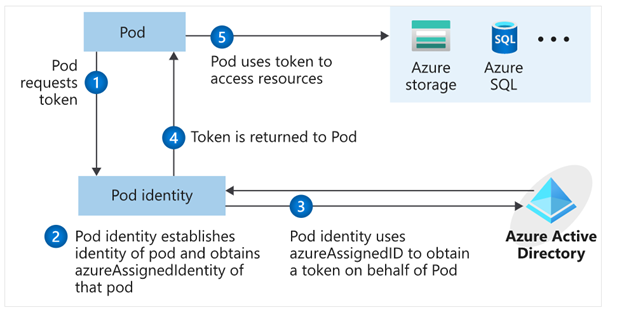
Pod Identity is a feature allows applications deployed to communicate with AAD, request a token then use the token to access Azure resources. The simplified workflow for pod managed identity is shown in the following diagram:
You can review Microsoft docs about pod identity best practice here
How to Create an application using Pod Identity?
In order to use pod identity in our code we will need AKS cluster to be configured with Azure AAD and Pod Identity deployed as we discussed in our pervious post.
Depending on the application, we will need to use an authentication MSI library to request a token from AAD. You can review example here
In our pervious post we show after deploying Pod Identity addon, terraform script deployed a managed Identity to namespace “demo” and updated the Key Vault access policy to include this managed identity.
In our demo today, we will show how to build application access Azure Key Vault to retrieve secrets using Pod Identity. Sample code exists here. The repo contains sample codes using C#, Java and Python.
Before staring we need to double check out environment to make sure all necessary deployment are deployed
- AAD Azure Identity Pods under Kube-System namespace:
kubectl get pods -n kube-system| grep aad”
- Azure Identity resource under target namespace
kubectl get azureIdentity -n demo
- Azure Identity Binding resource under target namespace
kubectl get azureIdentity -n demo
Once we confirm the resources then we are ready to start coding.
Java Demo
Source Code Review
The Java demo is a sample java spring boot RestAPI application. Here are few points about the code
Helm Chart Review
The helm chart will be the same chart for all demos (java/C#/Python) we will override the values.yaml during the pipeline run to fit every demo needs. The chart will deploy the following:
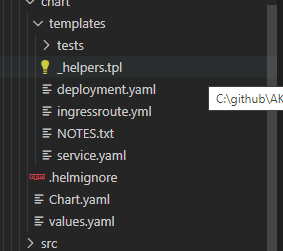
- Applications pods deployment: we can control how many replica from values.yaml
- Service deployment:
- Ingress deployment: map incoming request to app services
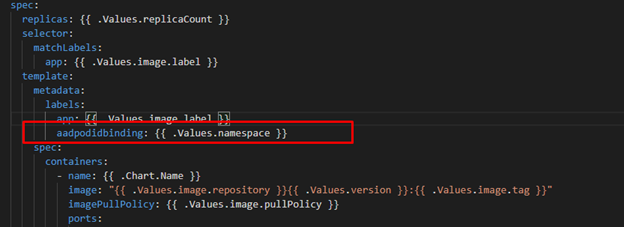
The main area we point here will be the metadata label aadpodbinding. The pod deployment file MUST have this label. In our environment we deployed the AzureIdentity and AzureIdentityBinding with same name like environment namespace hence we passing the namespace as value for aadpodbinding
Pipeline Review
The pipeline “azure-pipelines-java-kv.yml” has 3 stages as shows in the following figure
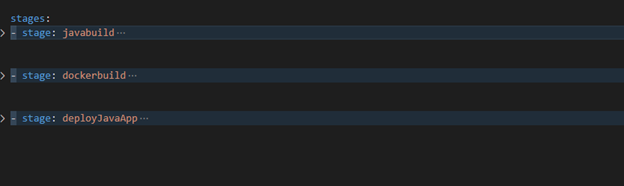
- Java Build: using Maven will package the app and publish it with chart
- Docker Build: using docker will build an image and publish it to ACR
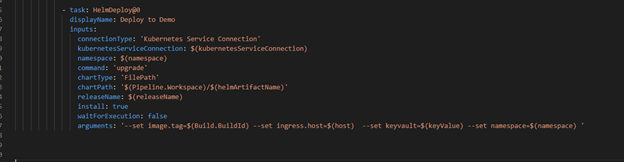
- Helm Deployment: using helm will connect to AKS then install helm chart under namespace “demo”. Please notice how we passing new chart values as argument
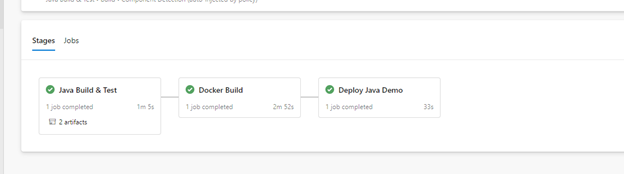
Once it runs, we should see the following:
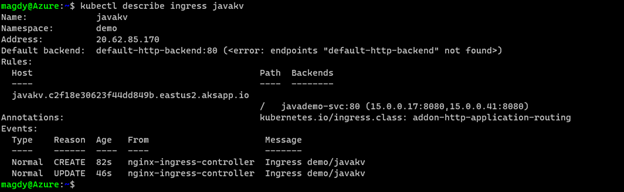
Check our work:



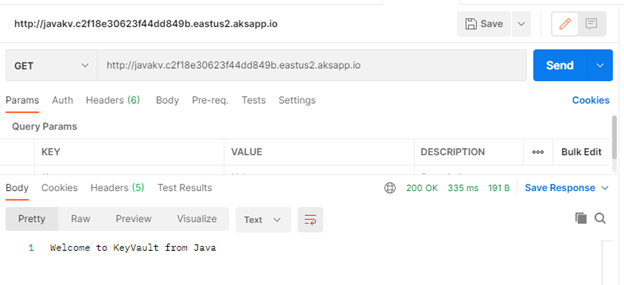
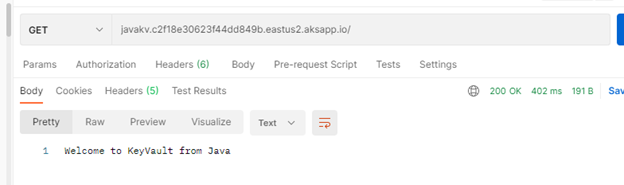
Finally Use Postman and query the Java app.
C# Demo
Source Code Review
Demo is identical to Java code. Rest API service that shows secret from KV. The API class is under controller folder and it expect KV URL to pass as environment variable exactly like Java example.
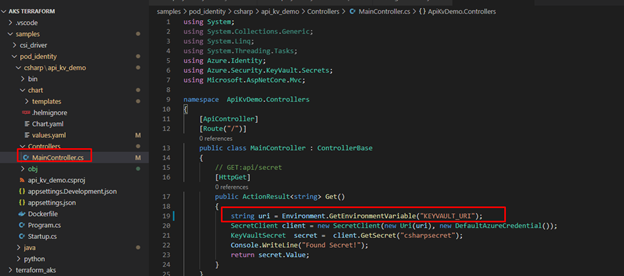
The pipeline for “azure-pipelines-csharp-kv.yml” is follow same structure of 3 stages
- CSharp Build: using dotnet will package the app and publish it with chart
- Docker Build: using docker will build an image and publish it to ACR
- Helm Deployment: using helm will connect to AKS then install helm chart under namespace “demo”. Please notice how we are passing new chart values as arguments
Python Demo
Source Code Review
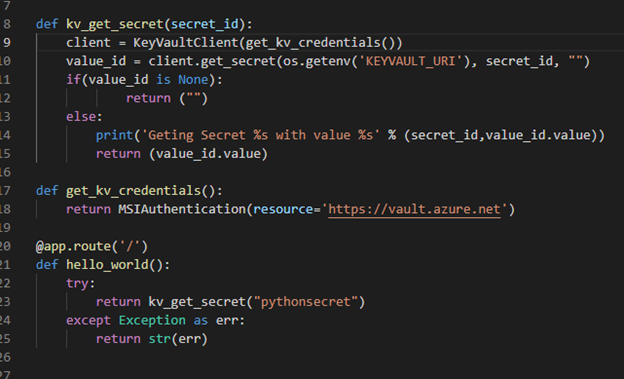
Python code is a FlaskRest API example.
The pipeline for “azure-pipelines-python-kv.yml” is follow same structure of 2 stages.
- Docker Build: using docker will build an image and publish it to ACR
- Helm Deployment: using helm will connect to AKS then install helm chart under namespace “demo”. Please notice how we are passing new chart values as arguments.
Check our work:
Once we get pipelines deployed for all application, we can review the deployed resources.
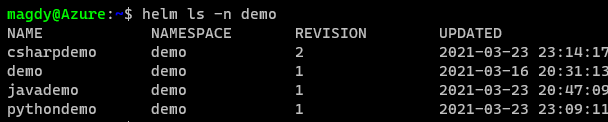
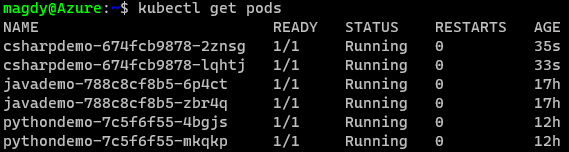
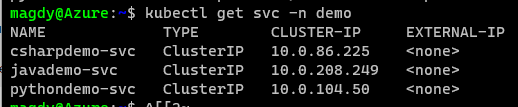

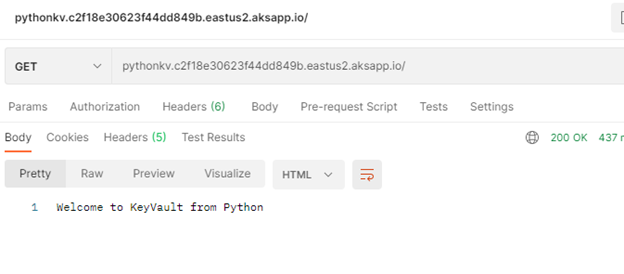
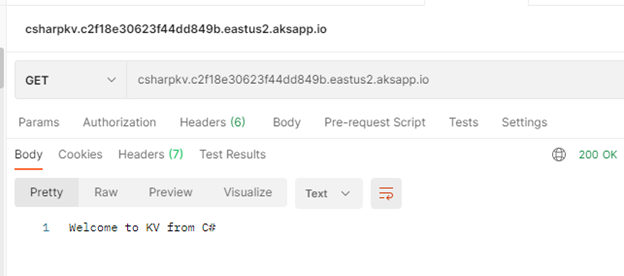
Use Postman to call apps using ingress host.
Java Demo
Python Demo
C# Demo
Summary
We discussed in detail how to setup and configure your application to use Pod Identity. It is great feature to utilize Azure Managed Identity to access Azure resources. In our next blog will discuss Azure secret store provider for csi driver





Recent Comments