
by Contributed | Mar 12, 2021 | Technology
This article is contributed. See the original author and article here.
SharePoint Framework Special Interest Group (SIG) bi-weekly community call recording from March 11th is now available from the Microsoft 365 Community YouTube channel at http://aka.ms/m365pnp-videos. You can use SharePoint Framework for building solutions for Microsoft Teams and for SharePoint Online.
Call summary:
New Microsoft 365 Extensibility look book gallery preview released. Work continues on Microsoft Viva Connections – an extensibility model to be previewed in weeks. Register now for March trainings on Sharing-is-caring. Latest project updates include: SPFx v1.12 release – ETA – in days. PnPjs Client-Side Libraries v2.3.0 release scheduled for March 12th, v3.0 Hub planning and discussion issues posted – issue #1636. CLI for Microsoft 365 Beta v3.7 delivered. Reusable SPFx React Controls – v2.5.0 and Reusable SPFx React Property Controls – v2.4.0 delivered. PnP Modern Search v3.18.0 released March 9th, v4.1 in progress. There were five PnP SPFx web part samples delivered last week. So useful! The host of this call is Patrick Rodgers (Microsoft) @mediocrebowler. Q&A takes place in chat throughout the call.
Actions:
- Register for Sharing is Caring Events
- First Time Contributor Session – March 22nd (EMEA, APAC & US friendly times available)
- Community Docs Session – March
- PnP – SPFx Developer Workstation Setup – April TBD
- PnP SPFx Samples – Solving SPFx version differences using Node Version Manager – April TBD
- PnP – AMA (Ask Me Anything) – SPFx Samples Edition – April 13
- First Time Presenter – March 24th
- More than Code with VSCode – March 23rd
- Maturity Model Practitioners – March 16th
- PnP Office Hours – 1:1 session – Register
- Download the recurrent invite for this call – https://aka.ms/spdev-spfx-call
Demos:
DataTable web part for rendering data from lists with advance features – this web part provides an easy way to render an interactive SharePoint custom list in DataTable view with many configuration options in the property pane. Provides all the important table formatting features like: Search & exclude from search, filter, pagination, column selection, column ordering, alternative row formatting, etc. Export the selected table data to CSV or PDF. Uses PnPjs, React property controls.
Building List Search web part for showing data flexibly from lists or libraries – this React list search web part allows the user to show data that’s pulled from different lists or libraries on multiple sites into a searchable summary list. Presenter steps through extensive, appropriate configuration options. Functionally – Select source data – sites, lists and fields, and Set up destination (summary) list columns, formatting, filtering, and on-click dynamic data functionality. Full documentation with sample.
Using a web part to control which Sites have been granted permissions in Azure AD application – the Sites Selected Admin SPFx web part enables Site Collection Admins to check which in scope apps have been added to a SharePoint site, to list Azure AD registered apps using Microsoft Graph API scope, and to add SharePoint sites to the Azure AD listed Apps. Uses functional components to granularly control apps accessing their SharePoint sites using Microsoft Graph APIs.
- No new or updated extensions last week
SPFx web part samples: (https://aka.ms/spfx-webparts)
As is the case this week, samples are often showcased in Demos. Thank you for your great work.
Agenda items:
Demos :
- DataTable web part for rendering data from lists with advance features – Chandani Prajapati | @Chandani_SPD & David Warner | @DavidWarnerII – 16:45
- Building List Search web part for showing data flexibly from lists or libraries – Alberto Gutierrez Perez (Minsait) | @albertogperez – 28:00
- Using a web part to control which Sites have been granted permissions in Azure AD application – Fredrik Thorild (Sogeti) | @taxonomythorild – 35:50
Resources:
Additional resources around the covered topics and links from the slides.
General Resources:
Other mentioned topics
Upcoming calls | Recurrent invites:
PnP SharePoint Framework Special Interest Group bi-weekly calls are targeted at anyone who is interested in the JavaScript-based development towards Microsoft Teams, SharePoint Online, and also on-premises. SIG calls are used for the following objectives.
- SharePoint Framework engineering update from Microsoft
- Talk about PnP JavaScript Core libraries
- Office 365 CLI Updates
- SPFx reusable controls
- PnP SPFx Yeoman generator
- Share code samples and best practices
- Possible engineering asks for the field – input, feedback, and suggestions
- Cover any open questions on the client-side development
- Demonstrate SharePoint Framework in practice in Microsoft Teams or SharePoint context
- You can download a recurrent invite from https://aka.ms/spdev-spfx-call. Welcome and join the discussion!
“Sharing is caring”
Microsoft 365 Patterns and Practices team – 12th of March, 2021
by Contributed | Mar 12, 2021 | Technology
This article is contributed. See the original author and article here.
With Python application, you can use OpenCensus to send the telemetry data. However, if your requirement is to use custom dimensions, you can use as below:
import logging
from opencensus.ext.azure.log_exporter import AzureLogHandler
logger = logging.getLogger(__name__)
# TODO: replace the all-zero GUID with your instrumentation key.
logger.addHandler(AzureLogHandler(
connection_string=’InstrumentationKey=00000000-0000-0000-0000-000000000000′)
)
properties = {‘custom_dimensions’: {‘key_1’: ‘value_1’, ‘key_2’: ‘value_2’}}
# Use properties in logging statements
logger.warning(‘action’, extra=properties)
|
In case, your requirement is to use correlation ID with custom dimensions, Function App does not have the feature available yet. The team is working on a solution to light up this feature.
Until then, use the example below and initialize the OpenCensus component with the correlation id in your function’s trigger.
import json
import logging
import requests
import azure.functions as func
from opencensus.ext.azure.trace_exporter import AzureExporter
from opencensus.trace import config_integration
from opencensus.trace.samplers import ProbabilitySampler
from opencensus.trace.tracer import Tracer
from opencensus.trace import execution_context
from opencensus.trace.propagation.trace_context_http_header_format import TraceContextPropagator
config_integration.trace_integrations([‘requests’])
exporter = AzureExporter(instrumentation_key=”aaaaaaaa-bbbb-cccc-dddd-eeeeeeeeeeee”)
def main(req: func.HttpRequest, context: func.Context) -> func.HttpResponse:
## these below four lines
span_context = TraceContextPropagator().from_headers({“traceparent”: context.trace_context.Traceparent, “tracestate”: context.trace_context.Tracestate})
tracer = Tracer(span_context=span_context, exporter=exporter, sampler=ProbabilitySampler(1.0))
execution_context.set_opencensus_tracer(tracer) # < — sets the passed in tracer as the current tracer
with tracer.span(“parent”):
return json.dumps({
‘method’: req.method,
‘ctx_func_name’: context.function_name,
‘ctx_func_dir’: context.function_directory,
‘ctx_invocation_id’: context.invocation_id,
‘ctx_trace_context_Traceparent’: context.trace_context.Traceparent,
‘ctx_trace_context_Tracestate’: context.trace_context.Tracestate,
})
Hope this helps!
Shashank Ranjan
Azure App Services Support Engineering
by Contributed | Mar 12, 2021 | Technology
This article is contributed. See the original author and article here.
Lots to talk about this week including: Project Narya, Azure VMware Solution now in Southeast Asia, Windows Server 2019 Datacenter: Azure Edition with Hot Patching support, PowerPoint Live in Microsoft Teams, Azure monitor for containers now supports Pods & Replica set live logs in AKS resource view and the Microsoft Learn Module of the week is all about Windows Server.
Advancing failure prediction and mitigation— Microsoft introduces Narya
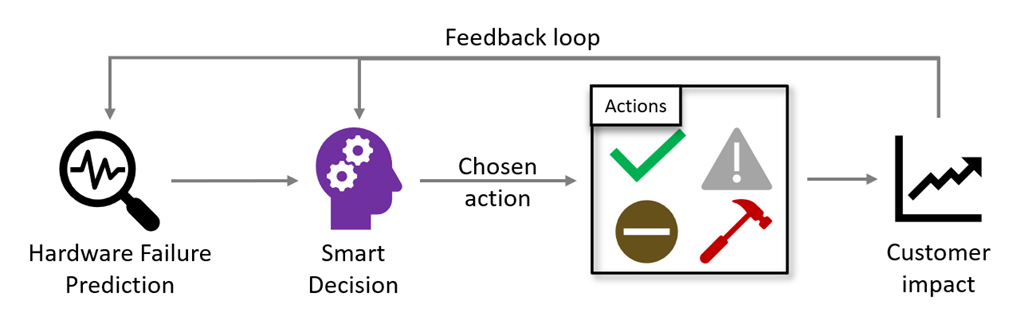
Project Narya is an end-to-end prediction and mitigation service as shared at Microsoft Ignite last week by Mark Russinovich. Not only does it predict and mitigate Azure host failures but also measures the impact of its mitigation actions and to use an automatic feedback loop to intelligently adjust its mitigation strategy.
Visit Mark’s blog post to learn more: Advancing failure prediction and mitigation with Project Narya
Azure VMware Solution now generally available in the Southeast Asia region
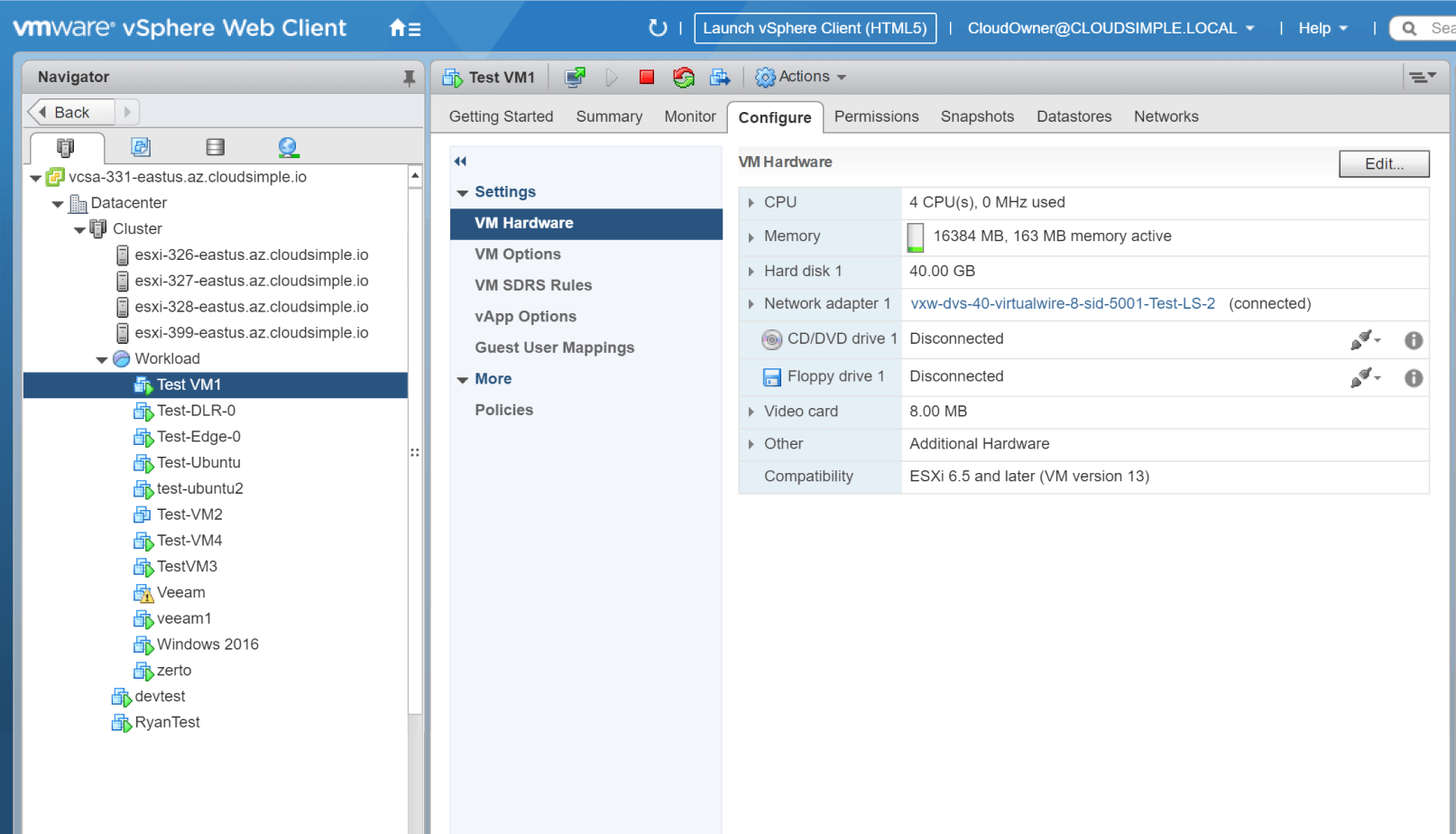
Microsoft has announced the availablity of Azure VMware Solution in the Southeast Asia (Singapore) region. Azure VMware Solution enables the ability to extend or migrate their existing on-premises VMware applications to Azure without the cost, effort or risk of re-architecting applications or retooling operations.
For updates on more upcoming region availability please visit the product by region page here: Azure VMware Solution
Windows Server 2019 Datacenter: Azure Edition with Hot Patching support
Bernardo Caldas, VP of Program Management from the Azure Edge and Platform team, recently announced the general preview of a new edition of Windows Server called Windows Server 2019 Datacenter: Azure Edition. It will be serviced in parallel to Windows Server 2019 Datacenter Core and will have the exact same feature set but will have one main addition – it supports hot patching. This enables the ability to apply patches in memory and not require a reboot of the server.
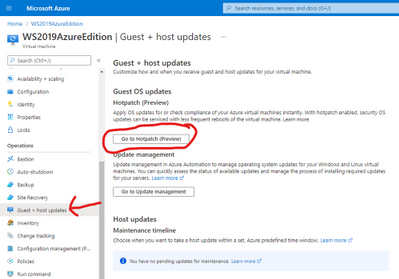
Learn more reguarding availablility and setup here: Windows Server 2019: Azure Edition
Microsoft Introduces PowerPoint Live in Microsoft Teams
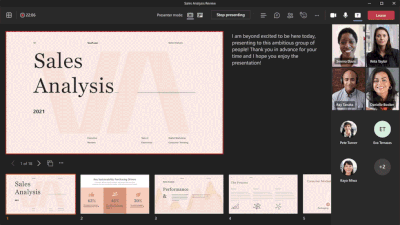
The new PowerPoint Live offering offers a better experience overall for presenters and attendees in virtual meetings. PowerPoint notes now available when you share the PowerPoint within Teams. There is seamless sharing between two presenters. Also chat pops up at the top of screen for presenter even if they don’t have the chat dialog highlighted. These features have been added to further enhance the capabilities of online presenations offering an enhancement to audience participation.
More information surrounding this can be found here: PowerPoint Live in Microsoft Teams
Azure monitor for containers now supports Pods & Replica set live logs in AKS resource view
Azure Monitor for containers now support access to pod & replica-set Live Logs of Azure Kubernetes Service (AKS) pods & replica-sets. Real-time live logs of your Kubernetes deployments can now be viewed. Admins can now search, filter, and view historic deployment pod logs in Log analytics, as well as troubleshoot and diagnose all your pod & replica-set issues.
Learn more about pod & replica-set live logs here: Viewing Kubernetes logs, events, and pod metrics in real-time
Community Events
MS Learn Module of the Week

Windows Server Deep Dive Learning paths
Built by Orin Thomas, these learning paths provide both an introduction and deep technical knowledge to including Windows Server into your organization’s infrastructure. The learning paths available include:
Our team is looking for feedback on the learning paths so let us know if anything else needed to be added or changed.

Let us know in the comments below if there are any news items you would like to see covered in the next show. Be sure to catch the next AzUpdate episode and join us in the live chat.
by Scott Muniz | Mar 12, 2021 | Security
This article was originally posted by the FTC. See the original article here.
The pandemic is still taking a toll on every kind of well-being we have. The new American Rescue Plan, just signed into law, gets the ball rolling to help out on many people’s financial well-being. Payments will soon be coming by direct deposit, checks, or a debit card to people eligible for the payment. You can learn more about who’s eligible, and the timing, at IRS.gov/coronavirus. But let me tell you what will NOT happen, so you can spot and avoid the scammers who are right now crawling out from under their rocks.
1. The government will never ask you to pay anything up front to get this money. That’s a scam. Every time.
2. The government will not call/text/email/DM you to ask for your Social Security, bank account, or credit card number. Anyone who does is a scammer.
3. Nobody legit will ever — EVER — tell you to pay by gift card, cryptocurrency, or wire transfer through companies like Western Union or MoneyGram. You know who will tell you to pay like that? A scammer.
The new law also has some language about health insurance, temporarily increasing subsidies for newly laid-off people and many people buying their own health insurance through the Affordable Care Act (ACA). Please re-read #1-3, above, because they apply here, too. Nobody legitimate will ever call, text, email, or message you out of the blue about getting or keeping health insurance coverage, or to demand payment or your account numbers. That will always be a scam.
If you spot one of these scams, please tell the Federal Trade Commission at ReportFraud.ftc.gov. We’re doing our best to stop these scammers in their tracks, and your report will help.
Meanwhile, check out this video for tips on avoiding economic impact payment scams.
Brought to you by Dr. Ware, Microsoft Office 365 Silver Partner, Charleston SC.
by Contributed | Mar 11, 2021 | Technology
This article is contributed. See the original author and article here.
Welcome back to the Security Controls in Azure Security Center blog series! This time we are here to talk about the security control: Encrypt data in transit.
Data must be encrypted when transmitted across networks to protect against eavesdropping of network traffic by unauthorized users. In cases where source and target endpoint devices are within the same protected subnet, data transmission must still be encrypted due to the potential for high negative impact of a data breach. The types of transmission may include client-to-server, server-to-server communication, as well as any data transfer between core systems and third-party systems.
Examples of insecure network protocols and their secure alternatives include:
|
Instead of…
|
Use…
|
Web Access
|
HTTP
|
HTTPS
|
File transfer
|
FTP, RCP
|
FTPS, SFTP, SCP, WebDAV over HTTPS
|
Remote Shell
|
Telnet
|
SSH2
|
Remote desktop
|
VNC
|
RDP
|
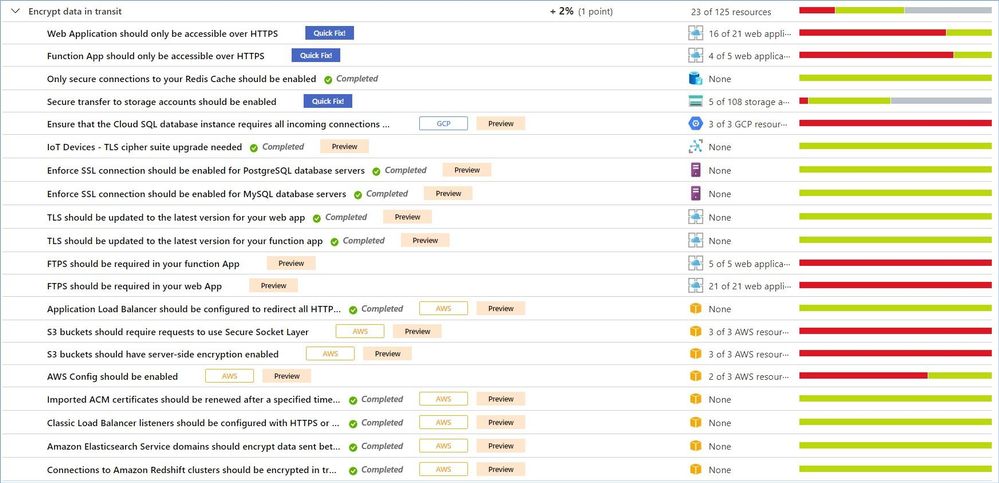
As of this writing (March 2021) this control includes 22 recommendations, and this list constantly grows as we add additional resources, e.g. AWS or GCP services. Your actual list may be different, depending on types of resources you have in your environment. To be able to increase your Secure Score by 2% (1 point) you will have to remediate all active recommendations.
Just a reminder, recommendations flagged as “Preview” are not included in the calculation of your Secure Score. However, they should still be remediated wherever possible, so that when the preview period ends, they will contribute towards your score.
Azure Security Center provides a comprehensive description, manual remediation steps, additional helpful information, and a list of affected resources for all recommendations.
Some of the recommendations might have a “Quick Fix!” option that allows you to quickly remediate the issue. In such cases we also provide “View remediation logic” option so that you can review what happens behind the scenes when you click the “Remediate” button. In addition, you may use the remediation scripts for your own automations/templates to avoid similar issues in the future.
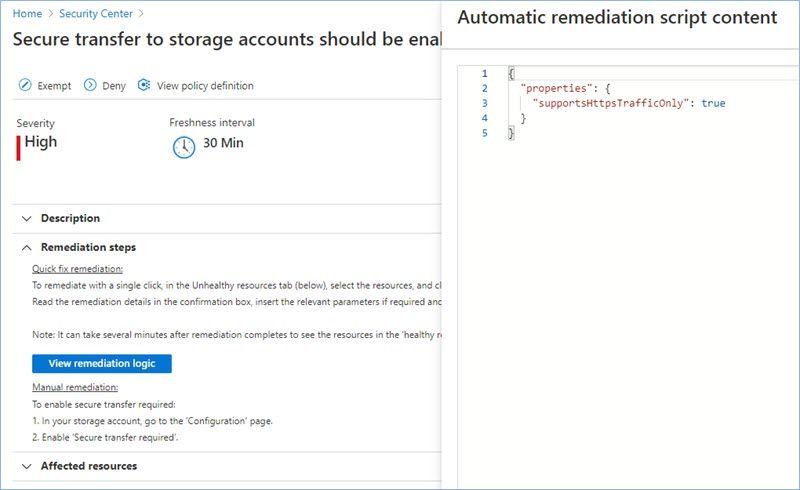
Let’s now review the most common recommendations from this security control.
Secure transfer to storage accounts should be enabled.
Secure transfer is an option that forces your storage account to accept requests only from secure connections (HTTPS). Use of HTTPS ensures authentication between the server and the service and protects data in transit from network layer attacks such as man-in-the-middle, eavesdropping, and session-hijacking.
You can find the related Azure policy here.
The manual remediation steps for this recommendation are:
- In your storage account, go to the ‘Configuration’ page.
- Enable ‘Secure transfer required’.
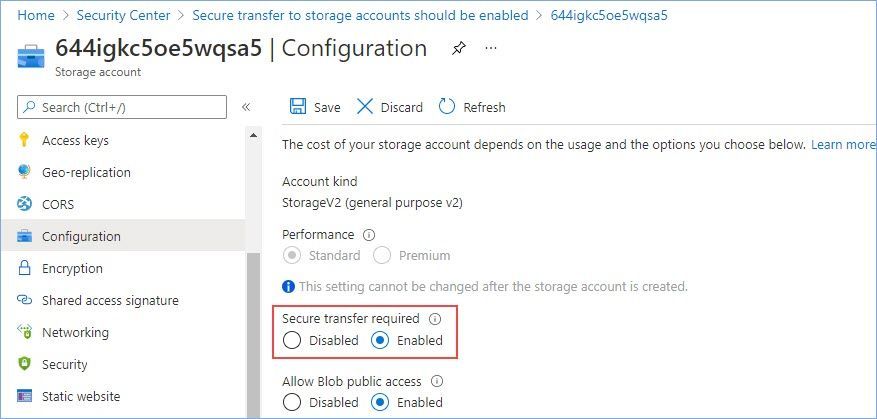
Please review our documentation to learn more about this configuration option.
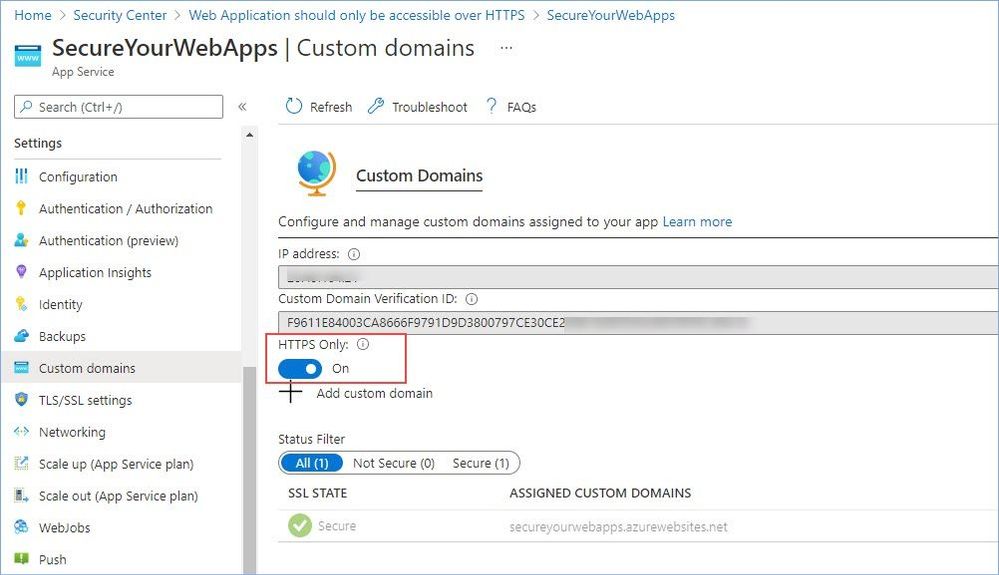
Web Application should only be accessible over HTTPS.
Use of HTTPS ensures server/service authentication and protects data in transit from network layer eavesdropping attacks.
You can find the related Azure policy here.
The manual remediation steps for this recommendation are:
- Go to the app service custom domains page
- In the HTTPS Only toggle select On
TLS should be updated to the latest version for your web app.
Transport Layer Security (TLS), like Secure Sockets Layer (SSL), is an encryption protocol intended to keep data secure when being transferred over a network. TLS 1.0 is a security protocol first defined in 1999 for establishing encryption channels over computer networks. Microsoft has supported this protocol since Windows XP/Server 2003. While no longer the default security protocol in use by modern Operating Systems, TLS 1.0 is still supported for backwards compatibility. Evolving regulatory requirements as well as new security vulnerabilities in TLS 1.0 provide corporations with the incentive to disable TLS 1.0 entirely.
Recommendation: Upgrade to the latest TLS version.
You can find the related Azure policy here.
The manual remediation steps for this recommendation are:
- Navigate to Azure App Service
- Select TLS/SSL settings
- Under the Protocol Settings section, choose the latest Minimum TLS Version.
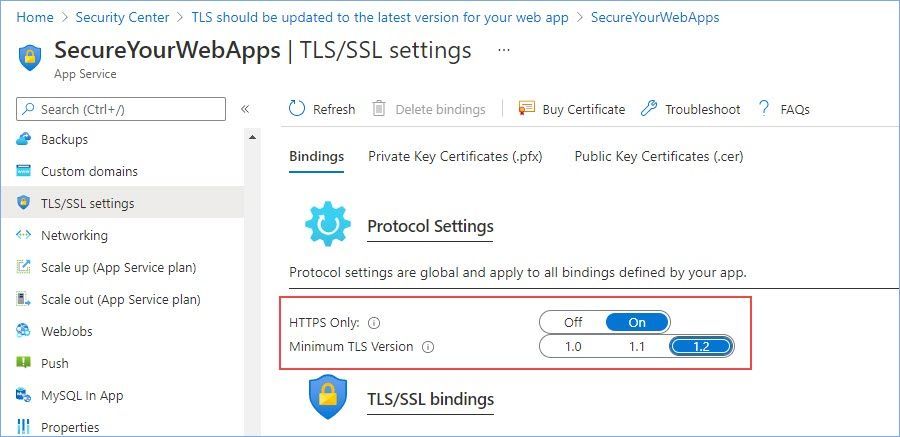
Please review our documentation to learn more about why upgrading to TLS 1.2 is very important.
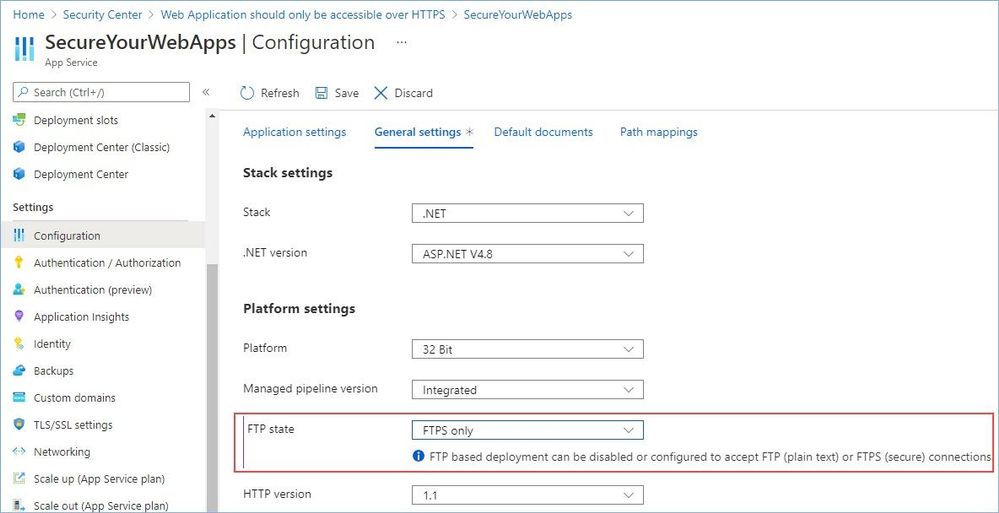
FTPS should be required in your web App.
Use of HTTPS ensures server/service authentication and protects data in transit from network layer eavesdropping attacks.
You can find the related Azure policy here.
The manual remediation steps for this recommendation are:
- Go to the App Service for your API app
- Select Configuration and go to the General Settings tab
- In FTP state, select FTPS only.
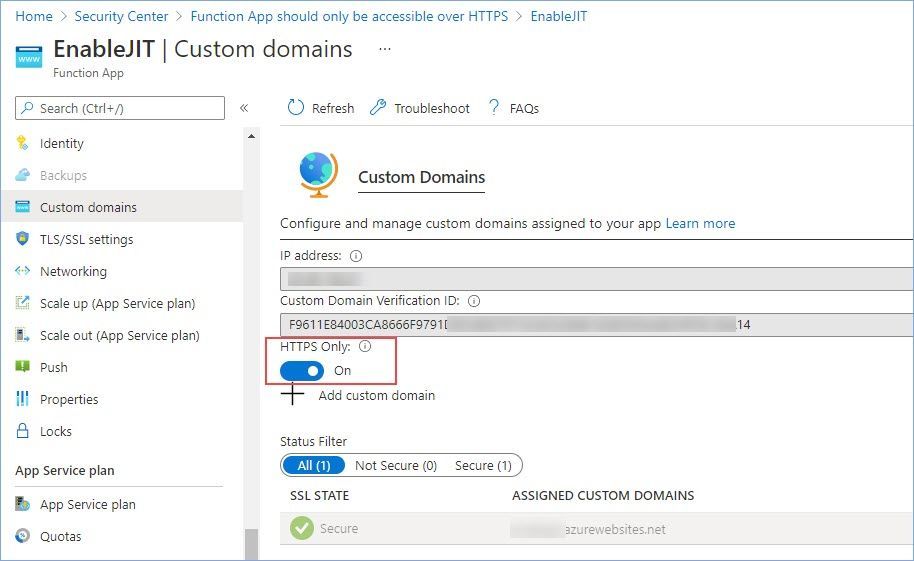
Function App should only be accessible over HTTPS.
Use of HTTPS ensures server/service authentication and protects data in transit from network layer eavesdropping attacks.
You can find the related Azure policy here.
The manual remediation steps for this recommendation are:
- Go to the Function App service custom domains page
- In the HTTPS Only toggle select On
Please review our documentation to learn more about serverless functions security.
TLS should be updated to the latest version for your function app.
Azure Functions is a serverless solution that allows you to write less code, maintain less infrastructure, and save on costs. Instead of worrying about deploying and maintaining servers, the cloud infrastructure provides all the up-to-date resources needed to keep your applications running.
Recommendation: Upgrade to the latest TLS version.
You can find the related Azure policy here.
The manual remediation steps for this recommendation are:
- Navigate to Azure App Service
- Select TLS/SSL settings
- Under the Protocol Settings section, choose the latest Minimum TLS Version.
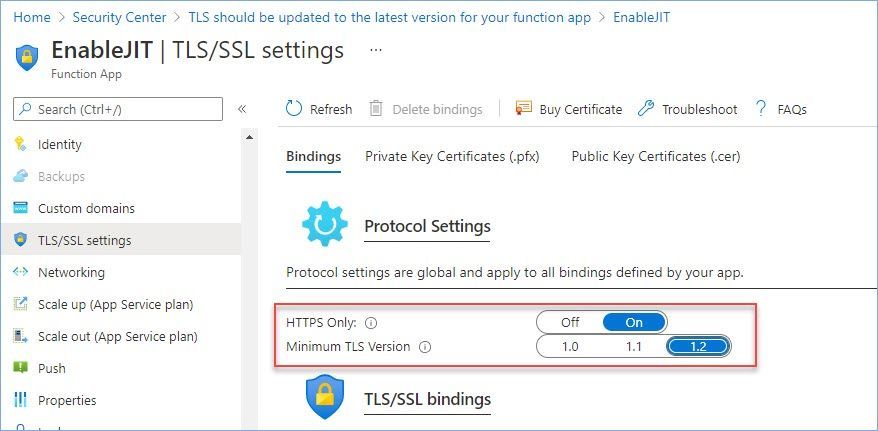
Please review our documentation to learn more about why upgrading to TLS 1.2 is very important.
FTPS should be required in your function App.
You can use FTP or FTPS to deploy your web app, function app, mobile app backend, or API app to Azure App Service. For enhanced security, you should allow FTP over TLS/SSL only. You can also disable both FTP and FTPS if you don’t use FTP deployment.
You can find the related Azure policy here.
The manual remediation steps for this recommendation are:
- Go to the App Service for your API app
- Select Configuration and go to the General Settings tab
- In FTP state, select FTPS only.
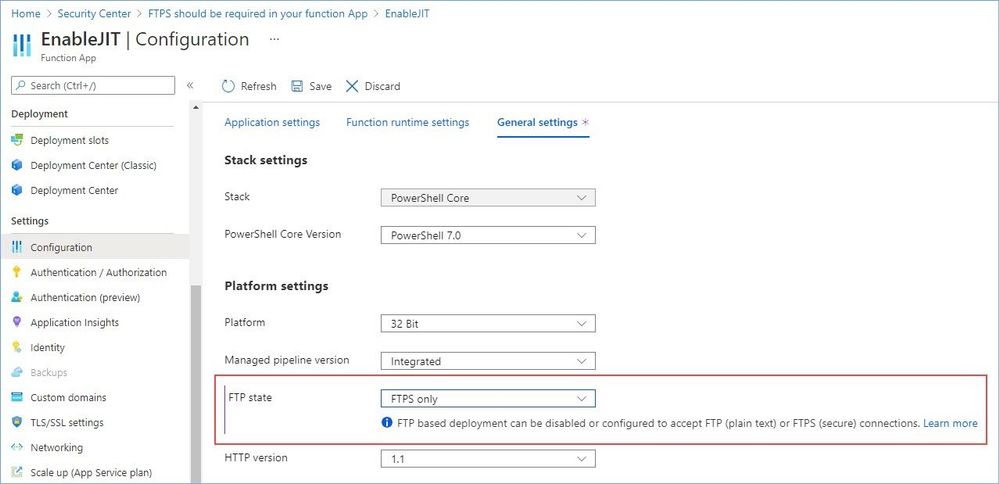
Please review our documentation to learn more about serverless functions security.
Enforce SSL connection should be enabled for MySQL database servers.
Azure Database for MySQL supports connecting your Azure Database for MySQL server to client applications using Secure Sockets Layer (SSL). Enforcing SSL connections between your database server and your client applications helps protect against ‘man in the middle’ attacks by encrypting the data stream between the server and your application. This configuration enforces that SSL is always enabled for accessing your database server.
You can find the related Azure policy here.
The manual remediation steps for this recommendation are:
- Select your Azure Database for MySQL.
- In Connection Security, set Enforce SSL connection to ‘Enabled’.
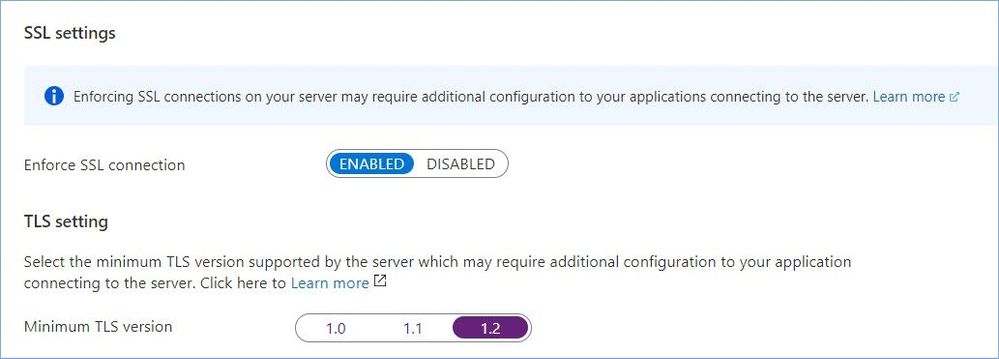
Please review our documentation to learn more about this configuration option.
Enforce SSL connection should be enabled for PostgreSQL database servers.
Azure Database for PostgreSQL supports connecting your Azure Database for PostgreSQL server to client applications using Secure Sockets Layer (SSL). Enforcing SSL connections between your database server and your client applications helps protect against ‘man in the middle’ attacks by encrypting the data stream between the server and your application. This configuration enforces that SSL is always enabled for accessing your database server.
You can find the related Azure policy here.
The manual remediation steps for this recommendation are:
- Select your Azure Database for PostgreSQL.
- In Connection Security, set Enforce SSL connection to ‘Enabled’.
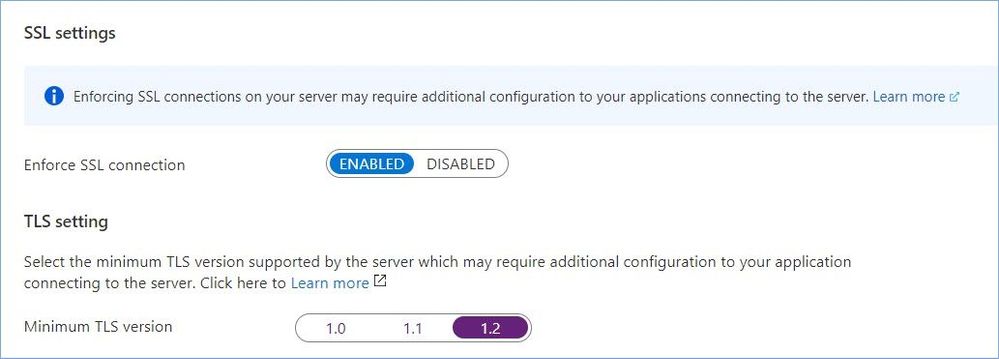
Please review our documentation to learn more about this configuration option.
Only secure connections to your Redis Cache should be enabled.
Enable only connections via SSL to Redis Cache. Use of secure connections ensures authentication between the server and the service and protects data in transit from network layer attacks such as man-in-the-middle, eavesdropping, and session-hijacking.
You can find the related Azure policy here.
The manual remediation steps for this recommendation are:
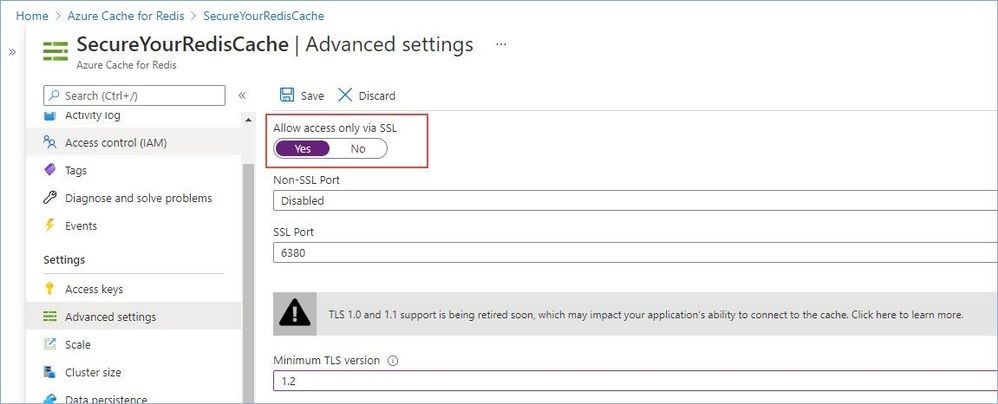
- Go to the Redis Caches, and select your redis cache.
- Select ‘Advanced settings’.
- For ‘Allow access only via SSL’, click ‘Yes’ and then click ‘Save’.
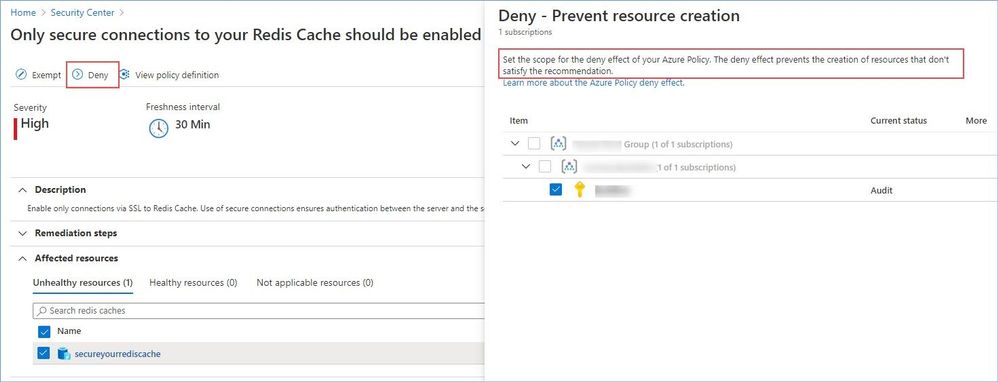
Worth mentioning that this particular recommendation has the “Deny” option that allows you to prevent creation of potentially insecure or incompliant resources, for instance:
Reference:
Security controls and their recommendations
Security recommendations – a reference guide
Recommendations with deny/enforce options
P.S. Consider joining our Tech Community where you can be one of the first to hear the latest Azure Security Center news, announcements and get your questions answered by Azure Security experts.
Reviewers
@Yuri Diogenes, Principal Program Manager, ASC CxE


Recent Comments