
by Contributed | Nov 2, 2021 | Business, Microsoft 365, Technology
This article is contributed. See the original author and article here.
In the past 20 months, we’ve witnessed an explosive growth of virtual interactions, with people collaborating more—both inside and outside their organizations, with greater frequency and across more applications than ever before. The question facing us now is, how can we shift from merely adapting to thriving with hybrid work?
The post Stay in the flow of work with new collaborative apps for Microsoft Teams appeared first on Microsoft 365 Blog.
Brought to you by Dr. Ware, Microsoft Office 365 Silver Partner, Charleston SC.
by Contributed | Nov 1, 2021 | Technology
This article is contributed. See the original author and article here.
By: @DomAllen, Senior Program Manager and @Jeff_Mitchell_MSFT, Principal Cloud Solution Architect
Customers today recognize the cloud enables digital transformation for the enterprise, while consistently meeting unique requirements for business growth. Cloud services are deployed at hyperscale, allowing you to consistently manage and optimize governance and operations management controls beyond on-premises environments—extending unified management across any infrastructure to multicloud and the edge.
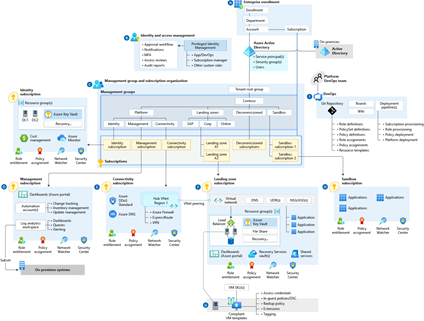
To help you prepare for your cloud adoption journey, we are excited to announce the availability of Azure landing zone conceptual architecture—your environment’s strategic design path and target technical state. It represents scale and maturity decisions based on experiences and feedback from customers who have successfully adopted Azure. To realize the value of the agility the cloud can provide, we recommend that environments be implemented to enable consistent scale—while meeting your business needs by creating consistent ways to govern and manage resources, not just by type, but also by organization, cost, and security.
Besides designing an architectural platform, you must implement and maintain the platform and design a systematic architectural and technical delivery approach to building patterns for success on the platform. We recommend developing a continuous engineering loop to ensure that environment lifecycles align with the Azure roadmap. Your process should validate new services in the context of enterprise controls—and it should deliver its learnings back to the platform, inputs for future iterations.
Azure landing zone conceptual architecture
Through a landing zone accelerator approach and a reference implementation, you enable the effective construction and operationalization of landing zones on Azure—at scale, aligned with the Azure roadmap and Microsoft Cloud Adoption Framework for Azure. Landing zone accelerator architecture represents the strategic design path and target technical state of your Azure environment. The architecture will continue evolving with the Azure platform, ultimately shaped by design decisions that are aligned with the architectural implementation best practices to safeguard your Azure journey.
Not all organizations adopt Azure in the same way. Enterprise-scale landing zone architectures, (as illustrated in Figure 1 below) might vary between customers, depending on enterprise requirements. Varied design considerations and recommendations might yield different trade-offs, depending on your organization’s cloud adoption path. Variation along your path is expected—but if you follow core recommendations, the target architecture that results will set you on a path to sustainable scale on Azure.
Figure 1
You can download PDF files of the Azure landing zone conceptual architecture diagrams with:
or download a Visio diagram (VSDX) file with a diagram of both Virtual WAN and hub-and-spoke architectures.
Getting your environment ready, faster: Azure landing zone accelerator
Azure landing zone accelerator enables your organization to make templatized landing zone deployments, with baked-in, repeatable best practices for governance, security, and compliance and it comes with a set of design principles for managing the platform at scale. These principles serve as a compass for subsequent design decisions across critical technical domains. Deploy the Azure landing zone accelerator (see Figure 2, below) directly within the Azure portal to speed up your implementation—allowing you to customize environment configurations for compliance, security, and operations management controls. GitHub integration will help your team to set up CI/CD pipelines—if your cloud operating model includes Infrastructure as Code (IaC) DevOps practices for infrastructure management.
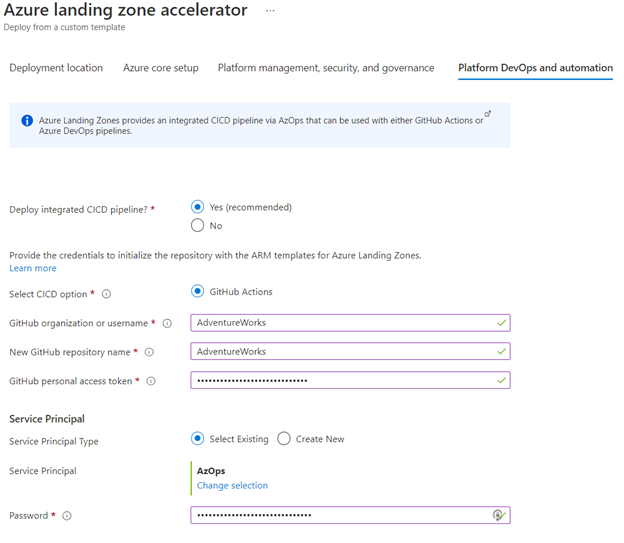
Figure 2
While your organization may have already adopted third party automation toolchain products, you may need to start with a smaller implementation of the Azure landing zone conceptual architecture. Explore more open source and partner landing zone implementation options.
Our conversations with customers and partners help us recognize that organizations may be at different stages along their cloud journey when reviewing landing zone implementation options. The deployment recommendations that advance your specific, strategic design path and target technical state will match the stage you’re in along your cloud path. Get started with the best next steps for your own cloud adoption path, and review your journey to the target architecture. Some organizations with a conceptual architecture matching the operating model and resource structure they plan to use can launch the ready-to-deploy experience with the Azure landing zone accelerator.
Picture Azure landing zone guidance as a large highway that leads to the cloud (your target architecture). You’re whizzing down this long and spacious-laned highway, and you see on-ramps and exits flashing by. Your highway will have several onramps feeding into its large asphalt path towards cloud adoption.
Three points reflect the most common customer journeys—customer experiences centering on three landing zone implementation stages: Start, Align, and Enhance.
Start is for those beginning their cloud adoption journey—who wish to develop a new cloud environment, without dependencies—where no production workloads are deployed. Perhaps, to begin with—your organization might have a blank sheet of paper, and you’re looking for the best route to get to your target end-state— the target technical state and strategic design path that guides the very beginning of your cloud adoption—always in alignment with the conceptual architecture. Launch the ready-to-deploy experience with the Azure landing zone accelerator, explore various other design area topics that help you determine where you need to customize, and explore other implementation options within Azure landing zones.
Align is for those who have already implemented services in Azure. Perhaps your organization is looking for ways to change your environment to more closely resemble the conceptual architecture.
We see a growing trend of organizations that might undergo requirements to introduce controls or design patterns because of a new workload being deployed. This would require specific environment configurations able to meet business or compliance requirements.
We recognize cloud environments are never static implementations. As your unique business requirements change (or your team’s capabilities expand), configurations of landing zones may need to iterate. For example, as your organization begins its cloud journey, it may choose to run with a baseline security configuration (made necessary by business requirements) to run a workload in the cloud. This may expand over time to require more sophisticated security services like Azure Sentinel to address more detailed security requirements.
Enhance represents the cusp of the Ready methodological approach and the continuous deployment of consistent, unified security, governance, and operational management controls supported by the methodologies of Secure, Manage, and Govern within the Microsoft Cloud Adoption Framework for Azure.
We’re excited about new updates to our Azure landing zone guidance in the Cloud Adoption Framework—about its potential to prepare for, and unlock, your successful and balanced digital transformation. Some organizations with conceptual architectures matching the operating model and resource structure they plan to use will launch the ready-to-deploy Azure landing zone accelerator experience—with baked in governance, compliance, and security. Other organizations, already in line with best practices—looking to add additional controls or features, may forge ahead and enhance guidance for management, governance, or security. These technical considerations are part of maturing key ongoing processes for cloud environments, like management, governance, and security.
Learn more about Azure landing zone conceptual architecture—or get started deploying the Azure landing zone accelerator (see Figure 2, above) directly within the Azure portal to accelerate your implementation, and customize environment configurations for compliance, security, and operations management controls. Or, simply benefit from deployments providing a full implementation of the conceptual architecture, with ready-to-deploy configurations for key components such as management groups and policies.
Check out our Channel 9 episodes on Azure landing zones today, on IT Ops Talk and the Azure Enablement Show!
by Contributed | Oct 30, 2021 | Technology
This article is contributed. See the original author and article here.
In today’s digital world tasks are coming our way from many sources. And with that rapid integration with technology, we worry about missing any tasks that are important to us. Microsoft To Do is committed to providing a complete task management solution that keeps people at the center. We want to offer you a single pane of glass for all your tasks by aggregating all tasks that you care for.
To fulfil our promise, we are now integrated with Microsoft Teams for your personal life. Yes, Microsoft Teams isn’t just for work anymore. Now you can connect with your family and friends outside of the office and make calls, chat, plan, and organize things in one place.
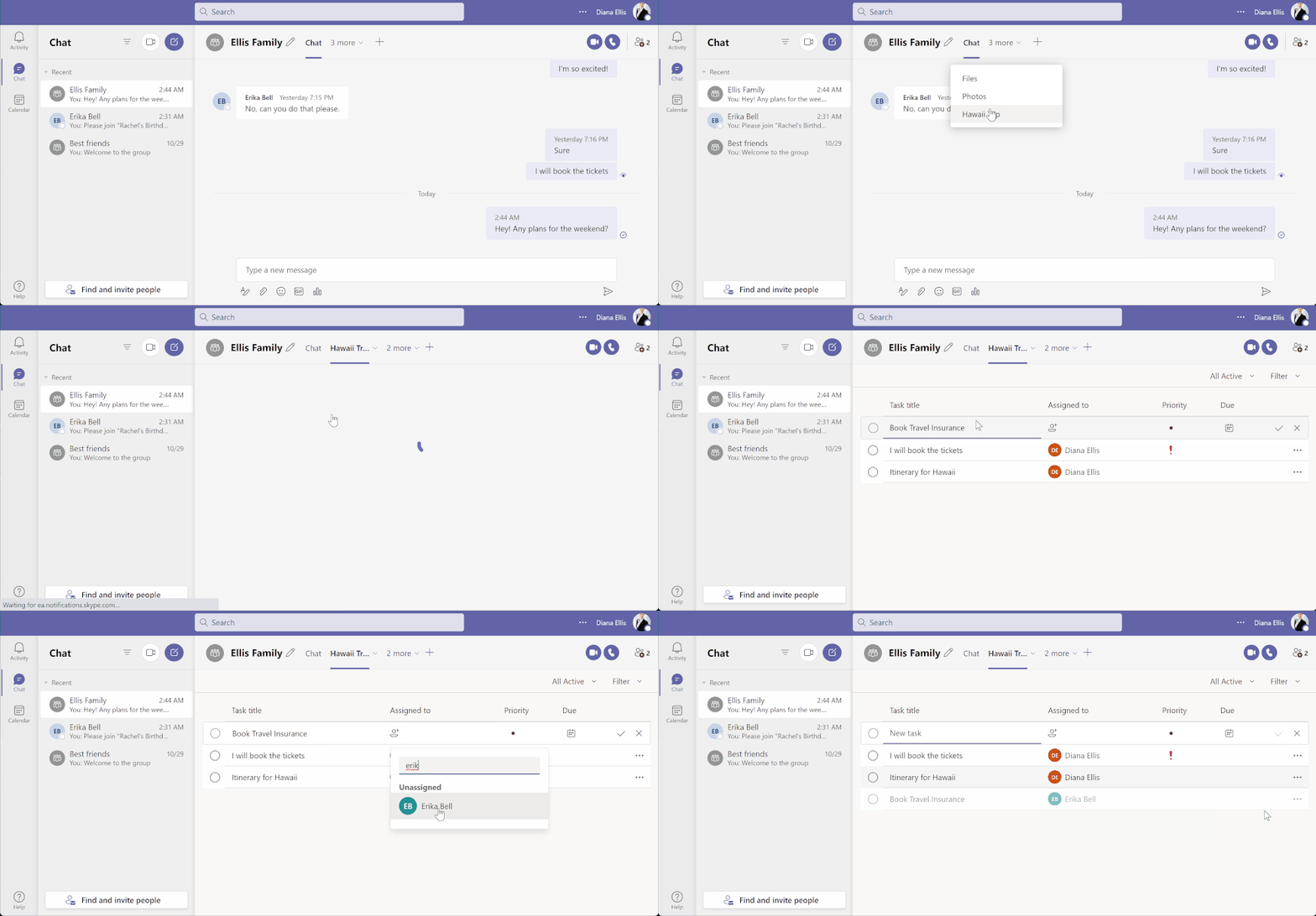
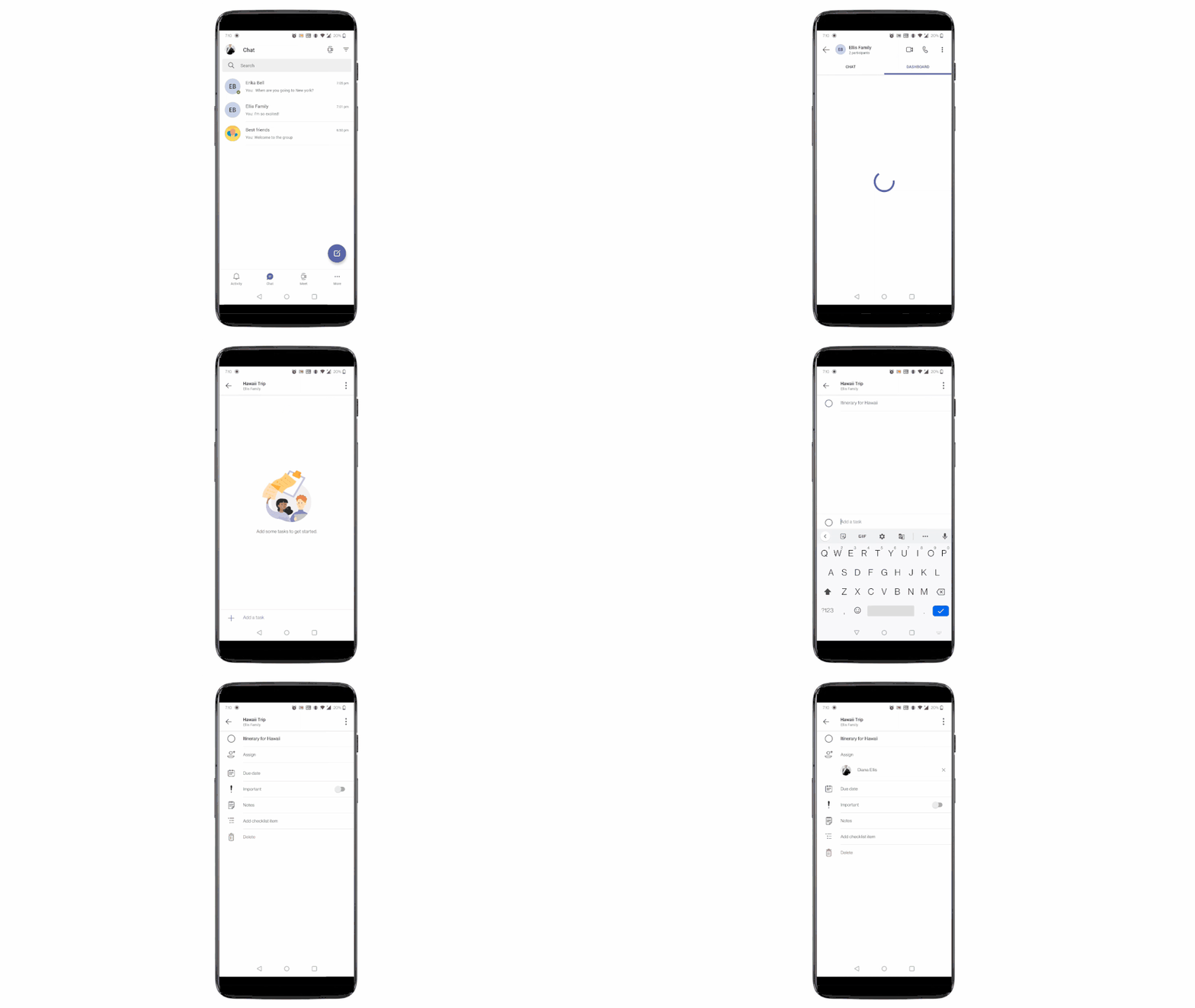
Teams for personal use allows users to create group chats and once in a group chat, you can create a shared to-do list and assign tasks to others in the group. Users can create and assign tasks from Teams web, Desktop, and Mobile applications.
Task assignment in shared lists from Teams for personal use – Desktop (above) and Mobile (below)
Another endpoint to track tasks from? Well, To Do is here to help you!
With this integration, all the tasks assigned to a user in Teams for personal use will now be visible to them under their ‘Assigned to me’ list in To Do. And with this, everything that you are supposed to do from your Teams’ shared lists is now aggregated in one place. No more fear of missing out!
The Richness of To Do
Once in To Do, you can apply some of the rich features of To Do on these tasks. You can mark them important, add sub-steps, add due dates, add to My Day while planning, or add notes to keep track of any information related to the task. To provide the users with more context, the task details in To Do specify the Teams shared list name as well.
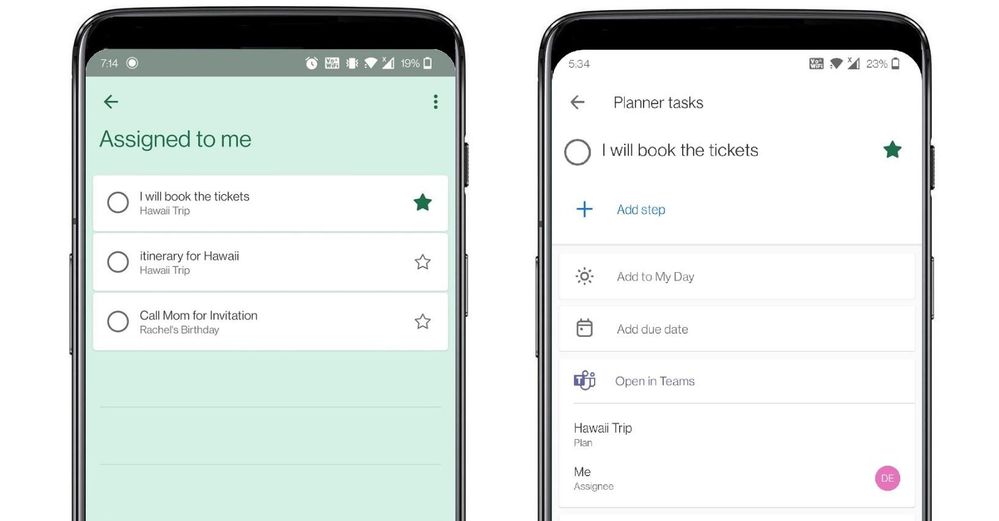 To Do aggregates tasks from shared lists of Teams for personal use in the ‘Assigned to me’ list
Is that all?
Not really! Teams for personal use allows users to capture tasks from their messages in mobile devices. With a long press on the message, you can invoke the message extension menu and from there you can convert your message into a task and add it to either your personal To Do lists or shared lists. Isn’t it amazing?
With this feature you can capture and track tasks in your personal lists, or capture and assign them to either yourself or others in shared lists. And just like we mentioned above, anything assigned to you will again be present in the ’Assigned to me’ list in To Do. To link the assigned tasks back to the chat context, users can click on the deep link provided in the task details in To Do and jump to the message from where the task was created in Teams conversation.
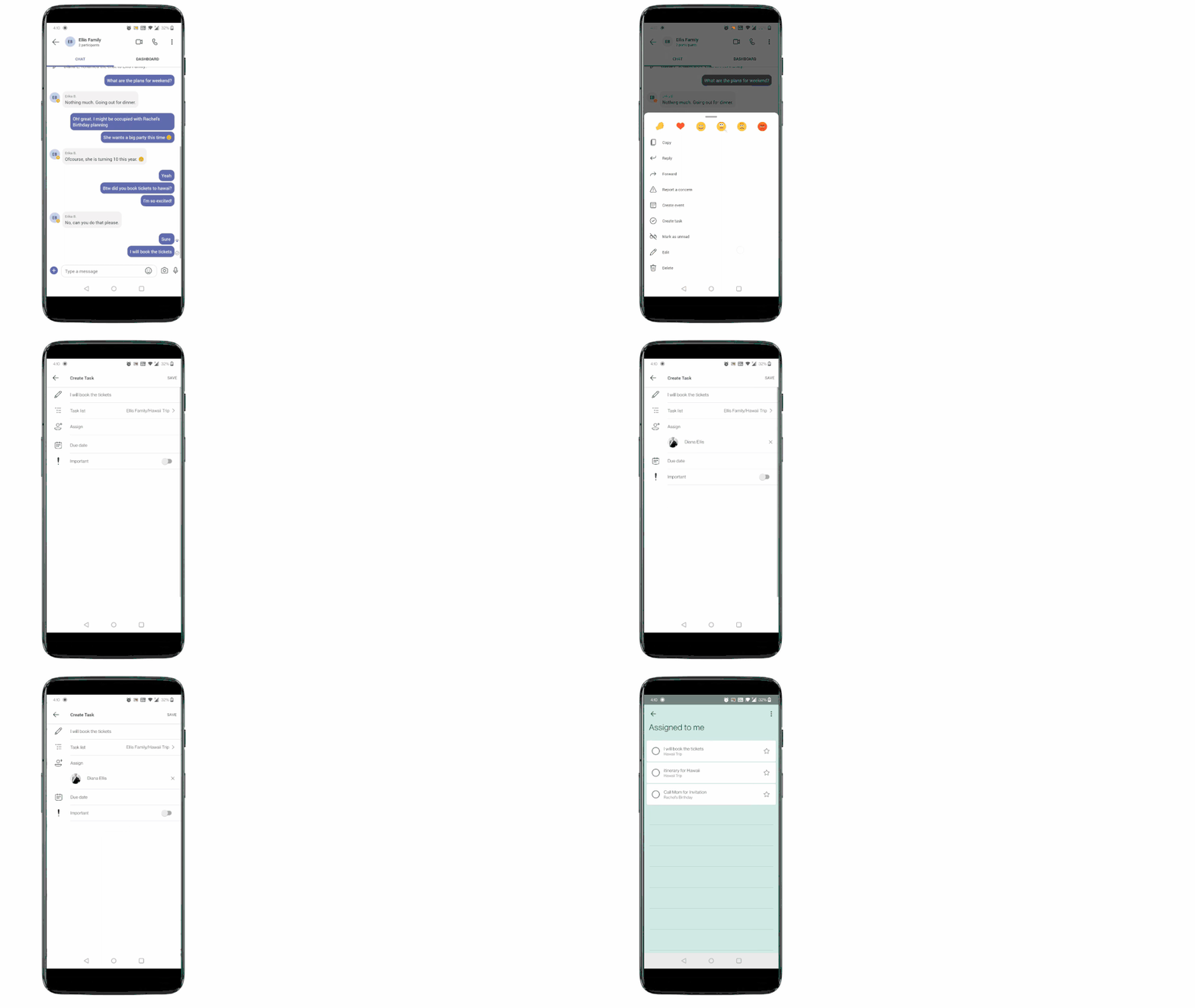 Tasks from Teams messages can be captured into users’ shared lists or personal To Do lists.
If you’re new to Teams, you can download the Teams app to get started today. And To Do, you can download it here.
We can’t wait to hear how To Do is making task management easy for you – let us know in the comments below or over on Twitter and Facebook.
You can also write to us at todofeedback@microsoft.com.
by Contributed | Oct 30, 2021 | Technology
This article is contributed. See the original author and article here.
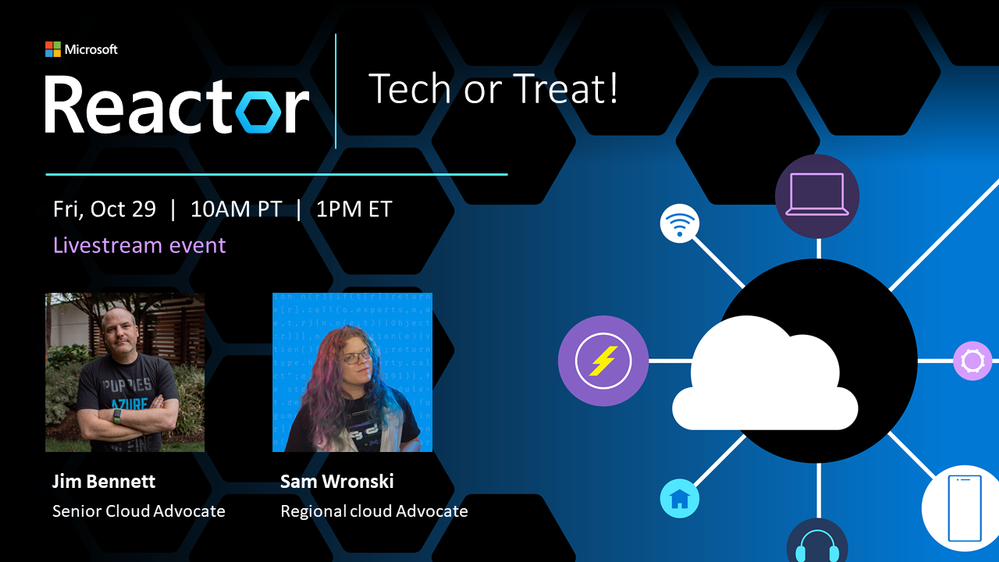
Tech or Treat!
For those who celebrate Halloween, October is spooky season. As the northern hemisphere heads into the chill of winter, and the Southern Hemisphere warms up towards summer, October is a month of ghost, ghouls, and other scary things like bugs in your code and failing unit tests…
Pumpkins are a great way to decorate your house, even better if they are powered by cool tech, and light up or make spooky sounds. Sam Wronski and I decided it would be fun to create some Tech or Treat pumpkins.
Check out the 10-second video below to see what I created.
This was using a Raspberry Pi, some programmable LEDs (WS2812Bs, or NeoPixels as they are also known), and a little bit of Python. Add in some Azure IoT central and I have internet controlled pumpkins.
Sam created these beauties:
 A smiling one-eyed pumpkin
 A glowing flask
Sam used some cool .NET IoT bindings to control the LEDs. It’s always great when there are multiple ways to do something using the technology you know and love!
We had a live stream showing how we got our pumpkins lit up, and you can watch the video below:
If you want to create a pumpkin yourself, check out our Tech or Treat GitHub repo to see some examples of how we did each part, and maybe build your own pumpkin and share it with us!
Lights are for life, not just for Halloween. You can take these code samples and use them for lights for any festive occasion, cool outfit, or just because you can. And if you do – please share in the comments below!
by Contributed | Oct 29, 2021 | Technology
This article is contributed. See the original author and article here.
Microsoft Ignite is back! The event starts November 2nd, 2021, at 8:00 am PT.
If you haven’t already, register now and complete your schedule!
We are excited for you to join us at Microsoft Ignite for a focused exploration of the security market today. Come share and learn with global leaders in cybersecurity and infrastructure, while exploring the most advanced prevention measures and strategies. Learn how to react to increasing threats, prepare for the next frontier in identity proofing, and improve overall productivity.
Let’s take a quick look to see what is in store this year:
Security Focus Area Session
Join Vasu Jakkal’s keynote: Protect Everything with End-to-End Security
- Tuesday, November 2, 10:35 AM – 11:00 PST
- Organizations around the world are facing a surge of sophisticated cyber threats. The hybrid work world is creating new opportunities for bad actors, and increased challenges for IT teams. Join us to learn how Microsoft’s integrated, comprehensive approach to security is helping customers become more secure and resilient. Discover new products and innovations that help you protect everything, from the endpoint to the cloud, across security, compliance, identity, device management, and privacy. Se e how Microsoft Security is helping organizations of all sizes be safe in the face of increased global cyber threats.
Featured Sessions from Day 1
Join Rob Lefferts and Eric Doerr’s session:
Tackling the biggest cybersecurity challenges for 2022
Join Joy Chik’s session:
Strengthen resilience with identity innovations in Azure Active Directory
- Tuesday, November 2, 1:30 PM – 2:00 PM PST
Joy Chik, CVP of Identity
- Nation-states and criminal syndicates are applying significant resources to orchestrate multi-pronged attacks against critical services and infrastructure. No single organization can withstand these onslaughts alone. In this session, we’ll share investments we’re making in Azure AD to help you stay protected and productive: a resilient platform, teams, and tolls that detect and respond to hard-to-identify attacks, and systems that strengthen the security posture of your expanding digital estate
Join Rudra Mitra’s session:
Manage risk and compliance with end-to-end security solutions
- Tuesday, November 2, 2:30 PM – 3:00 PM PST
Rudra Mitra, CVP, Microsoft 365 Compliance, Security and Privacy
- Managing risks is critical to ensuring business continuity, protecting brand reputation, and addressing the various internal and external requirements that you may be subject to. We know your data goes beyond the Microsoft cloud, so we are building solutions to help you reduce risk across your entire digital estate, especially in this hybrid work world. Organizations should not have to make the tradeoff between modern collaboration and modern security. Join our session to learn how our newest innovations help you address these challenges.
Join Alym Rayani’s session:
Build a privacy resilient workplace with Privacy Management for Microsoft 365
- Tuesday, November 2nd, 8:30 AM – 9:00 AM PST
Alym Rayani, GM of Compliance & Privacy
- With increasing complexities and changes in the privacy regulatory landscape, organizations must ensure privacy is central to their business to build customer trust. This means having greater visibility into personal data and associated privacy risks in your environment, automating privacy operations including subject requests fulfillment, and empowering employees to make privacy-compliant decisions without hindering productivity. Learn how Microsoft’s Privacy Management solution can help you build a privacy resilient workplace.
Security sessions from Day 2
Join us on day 2 for various security topics delivered by industry experts and insiders on major trends facing the industry helping attendees understand the latest threats and risks, how to address workforce challenges, and looking into the near and far future of cybersecurity.
Microsoft Into Focus: Security
- Wednesday, November 3rd, 10:30 AM – 12:00 PM PST
Ann Johnson, CVP of SCI Business Development at Microsoft, Vasu Jakkal, CVP of SCI at Microsoft, and more industry experts and insiders
- Attend the Keynote Microsoft Into Focus: Security with Microsoft Security leaders Vasu Jakkal, Bret Arsenault, Ann Johnson, on a series of insightful discussions as Microsoft hosts industry experts and insiders around current cybercrime trends, the evolution of hybrid work, and a look into the future of cybersecurity trends and solutions.
Grounding Zero Trust in Reality: Best Practices and Emerging Trends
- Wednesday, November 3rd, 12:30 PM – 1:00 PM PST
Alex Simons, CVP of Identity Security, Steve Turner, Forrester Analyst
- The events of the last two years confirm Zero Trust is no longer an option—it’s a business imperative. Implementing a Zero Trust strategy is best understood as a journey on which organizations and governments around the world have embarked to meet the expanded threat landscape of today. Come and listen to Alex Simons talk about what best practices Microsoft customers have applied in their Zero Trust implementations and listen to a discussion on emerging trends with Steve Turner from Forrester.
Skilling for Security: Forging the workforce of the future
- Wednesday, November 3rd, 1:30 PM – 2:00 PM PST
Naria Santa Lucia – GM, Digital Inclusion, Microsoft Philanthropies, Laramie County Community College, William Amick – Program Director, Information Technology Pathway, Reinier Moquete – Founder & CEO of CyberWarrior.com
- There are almost half a million unfilled cybersecurity positions in the United States alone, and the pipeline of new students is not on track to fill the demand. This session will discuss the workforce challenges facing the cybersecurity industry, and what Microsoft and training institutions are doing to address this critical need.
An inside view on detecting and mitigating insider risks
- Wednesday, November 3rd, 3:30 PM – 4:00 PM PST
Glenn Kaleta, Microsoft Principal Engineering Program Manager, Erin Miyake, Microsoft Principal Program Manager, Mod Tejavanija, Microsoft Senior Program Manager, Dan Costa, Technical Manager, Carnegie Mellon University
- There is no denying the fact that insider risks can pose as great of a damage threat as other security threats like ransomware, phishing, and malware. Yet unlike these security threats where you can develop and operationalize globally optimized detections, insider risk detections present unique and complex challenges where understanding context and correlations is critical to ensure you have a successful insider risk management program. Having run the Insider Threat program at Microsoft we will be discussing the five primary principles that we have learned in our journey both internally and from our customers to help organizations understand what is required to build an effective insider risk program.
External Attack Surface Management: Intelligence Defense in the Age of Digital Transformation
- Wednesday, November 3rd, 12:30 PM – 1:00 PM PST
Steve Ginty – Director, Threat Intelligence, RiskIQ
- Today’s digital transformation means a rapidly expanding IT ecosystem and an ever-evolving threat and vulnerability landscape of both nation-state and criminal actors that target a growing list of vulnerabilities to breach victim organizations. Understanding today’s external attack surface is essential to assess and protect critical assets. This session will demonstrate the vital role of combining vulnerability and traditional threat-actor intelligence in external attack surface management.
Understanding Nation-State Threats
- Wednesday, November 3rd, 1:30 PM – 2:00 PM PST
Cristin Goodwin, Microsoft General Manager & Associate General Counsel, Digital Security Unit
- The last 12 months have been marked by historic geopolitical events and challenges that have changed the way organizations approach their daily operations. During this time, nation-state actors have created new tactics and techniques to evade detection and increase the scale of their attacks. In this session, Cristin Goodwin, Associate General Counsel and head of Microsoft’s Digital Security Unit, explains the nation-state threat landscape and provides context for security leaders and practitioners who are looking to better understand the relevancy of these new threats.
Cloud Security: A guide for developing a comprehensive multi-cloud security strategy
- Wednesday, November 3rd, 2:30 PM – 3:00 PM PST
Andras Cser – Vice President, Principal Analyst, Forrester – Serving security and risk professionals
- The era of cloud transformation is driving customers to strengthen the security of their complex environment. Join us for an insightful discussion with a leading industry analyst on how to best approach an end-to-end cloud security strategy. We’ll explore top trends, emerging risks, and potential obstacles – along with practical guidance on how to better protect your IaaS, PaaS, and SaaS services.
How to Develop a Security Vision and Strategy for Cyber-Physical and IoT/OT Systems
- Wednesday, November 3rd, 2:30 PM – 3:00 PM PST
Phil Neray, Microsoft Director of IoT & Industrial Cybersecurity, Katell Thielemann, VP Analyst, Gartner
- Recent ransomware attacks that halted production for a gas pipeline operator and food processor have raised board-level awareness about IoT and Operational Technology (OT) risk. Security leaders are now responsible for new threats from cyber-physical systems (CPS) and parts of the organization they never traditionally worried about. Join Katell Thielemann from Gartner® to discuss how to develop a CPS risk strategy using the “language of the business” to show security as a strategic business enabler. GARTNER is a registered trademark and service mark of Gartner, Inc. and/or its affiliates in the U.S. and internationally and is used herein with permission. All rights reserved.
Engage with our security experts
Join in on the Connection Zone sessions with security experts for further engagement. The line-up for Ask the Experts this year has something for everyone!
Ask the Experts:
Explore the full session catalog to find sessions most interesting for your role and interests. Hear from security experts, attend workshops, watch new product demos, and more. To begin your journey, log into Security at Microsoft Ignite and make sure to register to access all the event has to offer.


Recent Comments