Windows 11: The operating system for hybrid work and learning

Windows 11: The operating system for hybrid work and learning

This article is contributed. See the original author and article here.

If the past year has taught us anything, it’s that organizations must be resilient, and technology has been more critical to that resilience than ever before. ​The global pandemic accelerated digital transformation in ways never before imagined, and we are honored and humbled that so many of you chose Windows as the platform for that transformation.…

The post Windows 11: The operating system for hybrid work and learning appeared first on Microsoft 365 Blog.

Brought to you by Dr. Ware, Microsoft Office 365 Silver Partner, Charleston SC.

Dynamics 365 and EY India helps Wonder Cement build a resilient supply chain

Dynamics 365 and EY India helps Wonder Cement build a resilient supply chain

This article is contributed. See the original author and article here.

As we’ve learned over the past year, building a resilient supply chain is more important than ever. 94 percent of Fortune 1000 companies have reported supply chain disruptions due to the COVID-19 pandemic. Meanwhile, nearly two-thirds of C-suite executives at manufacturing companies said their company either had no formal strategy or were taking an ad-hoc approach to digitization.

In this turbulent environment, resilience is a key theme for manufacturers. A recent survey found that the majority of supply chain leaders are planning to increase resilience, including many who said they would increase resilience even at the expense of short-term savings. Manufacturers are working hard to manage risk and costs, keep employees safe, and minimize operational disruption in order to keep manufacturing running smoothly for businesses and consumers.

To accomplish this, they need help accelerating the transformation of not only their operations but all aspects of their end-to-end business. As a Microsoft partner, you can help your manufacturing customers build a resilient supply chain using Microsoft Dynamics 365 Supply Chain Management, which provides companies with end-to-end supply chain visibility as well as agility in planning, sourcing, and distribution processes, so they can adapt to disruptions quickly and ensure business continuity.

This year, at Hannover Messe Digital Edition, we showcased new Dynamics 365 capabilities to help companies easily scale production and distribution, keep critical processes running, and ensure continuity on the frontlines of manufacturing. Now is a great time for you as a Microsoft partner to leverage these solutions and capabilities to help your manufacturing customers develop a resilient supply chain.

Wonder Cement pivots quickly to reduce risks

EY India is a great example of a Microsoft partner that has helped its customer, Wonder Cement, develop resilience by transitioning to the cloud with Dynamics 365. When COVID-19 forced them to work remotely last year, Wonder Cement was ready to pivot, and with more streamlined business processes, the company was able to reduce risk.

Headquartered in Udaipur, Rajasthan, Wonder Cement is among India’s largest cement producers. But the family-owned company believes that its business is much more than state-of-the-art cement production. Wonder Cement keeps its customers and the greater community at the forefront of everything it does.

That intense customer focus has propelled Wonder Cement, the youngest player in the Indian cement market, to one of the top three brands in the country. “People who buy from us once buy from us forever,” says Sanjay Joshi, Executive Director at Wonder Cement. “We have a deep emotional connection with our customers.”

As Wonder Cement has grown, the company has relied on innovative data technologies to help keep those close customer connections strong. In 2014, the company deployed Microsoft Dynamics AX 2012, now known as Dynamics 365 Finance + Operations (on-premises).

Wonder Cement was pleased with the solution, but as the company’s needs changed, they decided to make the move to cloud-based Dynamics 365. “As our prominence in the industry has grown, operations have become much more complex, and our need for data has exploded,” Joshi said. “We chose Dynamics 365 because we wanted to focus our time and energy on what we do best.”

Unlocking new opportunities

Wonder Cement chose Microsoft partner EY India, which is part of the global consultancy EY, and the Microsoft FastTrack for Dynamics 365 team, to help them implement the solution. “With the EY and FastTrack for Dynamics 365 teams helping us, we were able to address any challenges,” said Arun Attri, Vice President of IT at Wonder Cement.

“Wonder Cement wanted to embrace the cloud computing trend and new technologies to unlock further opportunities,” said Yatin Patil, who is a partner at EY. “Technology is at the forefront of this transformation agenda. One of the foundational requirements at Wonder Cement was embracing cloud technology, along with new edge digital technologies like IoT and RFID.”

According to Patil, the EY team laid out a roadmap for digital transformation, deploying Dynamics 365 Supply Chain Management and Dynamics 365 Finance. “It wasn’t just a platform upgrade,” Patil said. “We took advantage of the opportunity to examine, question, and greatly improve our processes by leveraging the new functionality in Dynamics 365. The out-of-the-box analytics in Dynamics 365 that link to Power BI was a critical component to democratize information to stakeholders.”

EY’s experience working with multiple cement-related businesses proved to be invaluable in helping Wonder Cement reengineer the company’s processes. “EY has a lot of process experience,” Attri said. “The EY team helped us think about our processes in new and different ways, cutting out unneeded steps and improving our methods.”

A deep understanding of their business

The transition to Dynamics 365 has led to process improvements across every part of the company. Inventory visibility has improved, and data management and reporting challenges have been significantly reduced. The company has also eliminated many third-party licenses, consolidating its software spend.

“The cement manufacturing process hasn’t changed over the past 70 years,” Joshi said. “The differentiation comes in our ability to market and sell to our customers. Dynamics 365 goes far beyond simply recording transactionswe now have a deep understanding of what’s happening in our business.”

That visibility translates to a range of practical, real-world benefits. “We save 80 to 85 percent of the time we used to spend on moving data from the production system to our ERP now that everything runs on Dynamics 365,” Attri said. “That’s a huge win for our company.”

Learn more

Learn more about how you can help your manufacturing customers create a more resilient and sustainable future using Microsoft Dynamics 365 Supply Chain Management.

Join the Business Applications Microsoft Partner Community (MPC) to converse, comment, and ask questions with over 5,000 Microsoft Partners.

Stay up to date with the latest partner stories on the Dynamics 365 partner blog.

The post Dynamics 365 and EY India helps Wonder Cement build a resilient supply chain appeared first on Microsoft Dynamics 365 Blog.

Brought to you by Dr. Ware, Microsoft Office 365 Silver Partner, Charleston SC.

Dynamics 365 and EY India helps Wonder Cement build a resilient supply chain

Host web apps using Microsoft Edge WebView2 Process in Unified Service Desk 4.2

This article is contributed. See the original author and article here.

Unified Service Desk for model-driven apps provides a configurable framework that allows you to build applications that give call center agents a unified view of customer data.

Unified Service Desk version 4.2, generally available since June, enables you to host web applications using Microsoft Edge WebView2 Process based on the Chromium open-source framework, as well as delivering improved performance and other enhancements.

The Microsoft Edge WebView2 control enables you to embed web technologies (HTML, CSS, and JavaScript) in your native apps. Microsoft Edge WebView2 Process is based on the open-source framework in Chromium that powers many modern browsers.

With support for Microsoft Edge WebView2, Unified Service Desk admins have these capabilities:

  • Ability to select WebView2 Process as the hosting type for their organization.
  • Ability to select WebView2 Process as the hosting type for web applications, along with Chrome Process.

In addition, Microsoft Edge WebView2 Process delivers:

  • Availability on supported versions of the Windows operating system.
  • Easy configuration of host applications in Unified Service Desk.
  • Ability to switch seamlessly from one browser to another for your entire organization.
  • Enhanced performance and memory optimization.

Next steps

To learn more, check out the Unified Service Desk documentation or the Microsoft Edge WebView2 documentation. To use the capabilities, download and install or update Unified Service Desk 4.2.

The post Host web apps using Microsoft Edge WebView2 Process in Unified Service Desk 4.2 appeared first on Microsoft Dynamics 365 Blog.

Brought to you by Dr. Ware, Microsoft Office 365 Silver Partner, Charleston SC.

4 post-pandemic retail trends

4 post-pandemic retail trends

This article is contributed. See the original author and article here.

The last few decades have seen monumental change in the retail industry. Specifically, technology has untethered the shopper from the store and allowed retail to take place anywhere, at any time. When viewed through hindsight, these changes occurred just in time, for without the e-commerce revolution during the past two decades, retailers would have faced a significantly more difficult situation during the recent pandemic. Nonetheless, innovative companies have been able to adapt and adjust to these challenging times.

Businesses looked to the role of technology in enabling the agility to not only meet emerging customer needs but also to drive lasting impact in their organization’s business efficiency, customer experience, and market position. Patagonia partnered with Microsoft and Dynamics 365 to help navigate through the market turmoil and continue to innovate and drive to meet their business goals.

This embed requires accepting cookies from the embed’s site to view the embed. Activate the link to accept cookies and view the embedded content.

This site uses cookies for analytics, personalized content and ads. By continuing to browse this site, you agree to this use.

The pandemic forced many retailers to rethink almost everything related to the purchase experience. Where and how can customers pick up and return their purchased items? How can they pay? What is the utility of a store in an online-first shopping environment? Questions like these are now being answered in ways that will reverberate through the industry long after the pandemic has receded.

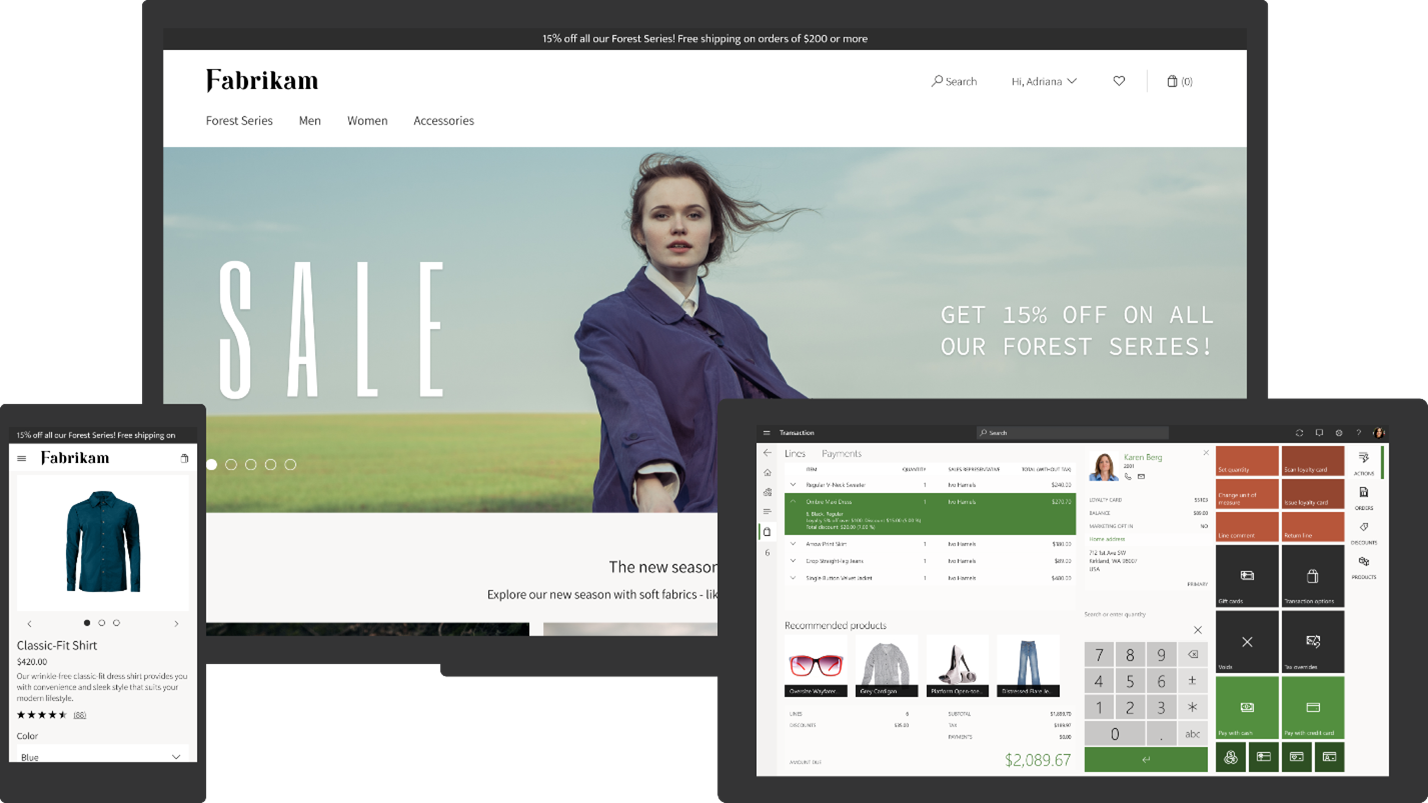
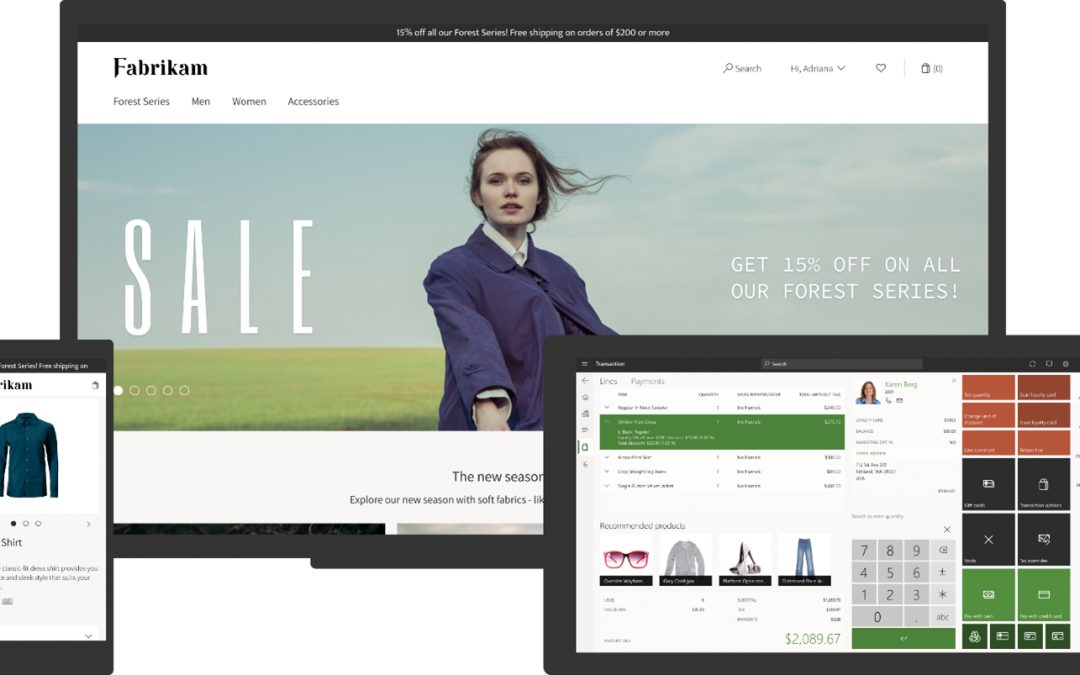
Dynamics 365 Commerce user interface across different devices and channels

Dynamics 365 has helped equip retailers with a flexible, unified, and seamless buying experience for customers and partners. With Dynamics 365 Commerce, businesses have been able to engage across traditional and emerging channels while allowing consumers the option to buy when, how, and where they wanton any deviceby delivering a frictionless and consistent experience across online and offline channels.

This embed requires accepting cookies from the embed’s site to view the embed. Activate the link to accept cookies and view the embedded content.

This site uses cookies for analytics, personalized content and ads. By continuing to browse this site, you agree to this use.

As we continue through the pandemic, both shoppers and retailers will have to adapt to a new normal. Let’s take a closer look at some trends that will persist in retail for the time to come.

1. Flexible order fulfillment

2020 ushered in the mass adoption of non-traditional fulfillment opportunities. One of these new methods that became essential during the past year is BOPIS, or buy-online-pick-up-in-store. As the pandemic unfolded, retailers saw a 208 percent increase in BOPIS from the previous year as customers gravitated to the increased convenience and choice that flexible order fulfillment offered. This accelerated a trend that had been gaining ground in some industries, like grocery, and saw it spread to retail sectors of all kinds.

2. Flexible returns

Like flexible order fulfillment, flexible returns provide the customer with increased convenience, this time related to items they no longer need or are not satisfied with. Returns are costly, and COVID-19 supercharged their numbers, with 2020 seeing consumers return $428 billion in merchandise, with $102 billion attributed to online purchasing, up 38.5 percent from 2019. As we move forward, the challenge will be for retailers to manage costs around returns without depriving consumers of the ease of returns they came to expect during the pandemic.

3. Contactless payments

Of all the trends mentioned in this blog, contactless payment via radio frequency identification (RFID) and near-field communication technology was perhaps the most widely adopted before the pandemic. Even at that, the need for increased cleanliness protocols and a desire to avoid touching surfaces where possible meant that the use of contactless payments has increased by 30 percent since COVID-19 started. With continued growth expected, savvy retailers will no longer allow the purchase experience to be tethered to specific locations or modes of payment.

4. Omnichannel retail

Like contactless payments, omnichannel retail plans had already been a high priority for many companies pre-COVID-19. However, the pandemic forced many retailers to speed up transitions from mostly brick-and-mortar to a proper omnichannel solution. Omnichannel has become an absolute requirement for modern retailers to survive. Part of this transition includes a re-thinking of the physical store itself. Rather than acting as the critical location in the retail journeya place for customers to browse for and purchase itemsthe store now serves as a place for customers to see, touch, and feel items they have discovered through other shopping channels before final purchase.

Microsoft is helping retailers deliver on their brand promises

In each of the trends mentioned, consumers rushed to welcome the added flexibility to the retail experience. As we continue through the pandemic and return to a new normal, consumers will be reticent to give their newfound conveniences.

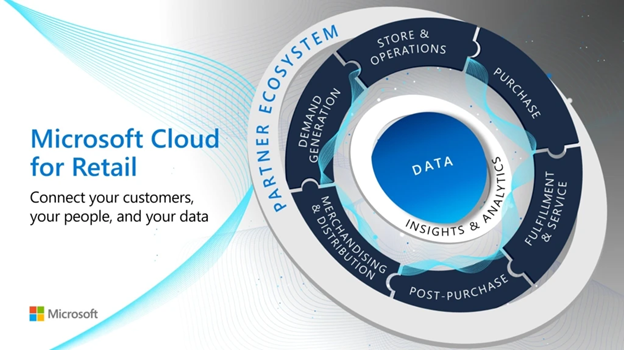
Cloud for Retail offer and affiliated retail scenario outcomes

At January NRF we announced Microsoft Cloud for Retail to help retailers deliver seamless experiences across the entire buying journey, and recently we announced even more capabilities within the Microsoft Cloud for Retail public preview to help businesses build flexibility into their systems in order to thrive in the post-pandemic world.

What’s next?

The post 4 post-pandemic retail trends appeared first on Microsoft Dynamics 365 Blog.

Brought to you by Dr. Ware, Microsoft Office 365 Silver Partner, Charleston SC.

Dynamics 365 and EY India helps Wonder Cement build a resilient supply chain

Accelerate time to market with Dynamics 365 Remote Assist for HoloLens 2

This article is contributed. See the original author and article here.

In today’s fast-evolving global economy, organizations are increasingly pressed to find ways to accelerate their time to market and unlock value to achieve a significant return of investment (ROI) on their technological investments.

Companies worldwide are fast realizing the costly consequences of not having robust business continuity plans and remote-capable tools especially in times of crisis and uncertain macroeconomic conditions such as the ongoing COVID-19 pandemic.

With enterprise-ready mixed reality solutions like Dynamics 365 Remote Assist for HoloLens 2, not only can companies survive these tough times, but many organizations spanning across a multitude of industries including biotechnology, pharmaceuticals, and manufacturing have discovered that they were able to even thrive and accelerate their time to market when they embraced mixed reality technologies that enabled teams across geographic borders to collaborate seamlessly with 3D annotations and anchor critical work resources right within their real-world work environment.

In the manufacturing industry, we are also seeing a groundswell of interest in mixed reality technologies because of the tangible benefits that can be achieved in a short amount of time. Based on the Microsoft-commissioned Forrester Total Economic Impact (TEI) report for Dynamics 365 Remote Assist, organizations have reported numerous quantified benefits gained from using mixed reality technologies to empower frontline workers on production floors.

Some of these benefits (as detailed in the report) include:

  • Customers typically resolving throughput-impacted issues five days earlier, saving an estimated $20,052 per issue. For each production hour saved, the composite avoids $950 in wasted labor, $2,500 in lost operating income, and $1,563 in direct costs such as rush shipping, waste, and fees. Mixed reality technologies have helped organizations to adopt practices that are kinder to the environment by avoiding travel and improving first-time fix rates to reduce wastage and the need for additional re-work.
  • Experts avoid approximately 17 trips per year, saving $53,550 in travel costs and 384 hours per expert. When remote experts can help support frontline workers in real-time with 3D annotations right in their real-world work environment, companies now have the ability to develop business continuity plans by leveraging remote collaboration tools to ensure that the right expertise is accessible anytime, anywhere.

When coupled with Dynamics 365 Field Service, organizations can transform their entire service delivery experience, right from issue ticket creation to issue resolution. While Dynamics 365 Remote Assist enables field technicians to remotely triage issues before determining whether an onsite visit is required, Dynamics 365 Field Service further supports field technicians by optimizing the service management process. It enables organizations to optimize resource management to ensure that technicians with the right expertise are dispatched in a timely manner to the customer’s site. Once onsite, field technicians can then seamlessly access relevant work order information anchored right in the context of their real-world environment to get a comprehensive understanding of the issue. They can also create, edit, and save work orders while onsite, and include relevant image assets from their field visits for future reference. This wealth of service-related information ultimately enables customers to swiftly move from reactive to proactive service, and eventually even leverage predictive capabilities powered by AI to anticipate issues even before they occur.

Companies have also found innovative uses for mixed reality technology, including using Dynamics 365 Remote Assist to conduct remote site visits of their production facilities and to conduct remote training to help onboard new employees. Read this inspiring story about EcoLab to learn how they successfully tested virtual service delivery at their pharmaceutical drug production facilitiesmore information is also available in their EcoLab press release.

Learn more

If you’re considering ways to infuse mixed reality technologies to accelerate your organization’s time to market and help build robust business continuity plans with mixed reality, learn more about Dynamics 365 Remote Assist via our free Dynamics 365 Remote Assist learning path.

Want to truly transform your customers’ end-to-end service experience? Learn more about using Dynamics 365 Remote Assist with Dynamics 365 Field Service to equip your field technicians with critical tools, resources, and access to remote experts while on the job.

Register for the Bringing Mixed Reality to BioTech webinar, available on-demand, to hear from Ian Curtinsmith, Chief Information Officer of Medlab Clinical, an ASX-listed biotechnology company to learn how mixed reality business applications has helped MedLab Clinical overcome global travel restrictions and accelerate their products’ time to market now that experts can remotely collaborate seamlessly in real-time from around the world. You can also read MedLab Clinical’s story.


Sources: The Total Economic Impact Of Microsoft Dynamics 365 Remote Assist, a commissioned study conducted by Forrester Consulting on behalf of Microsoft, June 2020

The post Accelerate time to market with Dynamics 365 Remote Assist for HoloLens 2 appeared first on Microsoft Dynamics 365 Blog.

Brought to you by Dr. Ware, Microsoft Office 365 Silver Partner, Charleston SC.
Windows 11: The operating system for hybrid work and learning

New hybrid work innovations in Microsoft Teams Rooms, Fluid, and Microsoft Viva

This article is contributed. See the original author and article here.

The future of work is collaboration without compromise—wherever, whenever.

The post New hybrid work innovations in Microsoft Teams Rooms, Fluid, and Microsoft Viva appeared first on Microsoft 365 Blog.

Brought to you by Dr. Ware, Microsoft Office 365 Silver Partner, Charleston SC.