How will removing Exchange Online Basic authentication affect Dynamics 365 and Power Apps?
After October 1, 2022, any connection to Exchange Online that uses server-side sync or the Dynamics 365 Email Router with Basic authentication (username and password) will quit working. Dynamics 365 mailboxes that use these connections will no longer be able to:
Send email from Dynamics 365 through Exchange Online
Retrieve email from Exchange Online
Synchronize appointments, contacts, or tasks between Dynamics 365 and Exchange Online
This change doesn’t affect connections that use Modern authentication (OAuth 2.0 token-based authorization).
How can I find out if I need to prepare?
If your company is using server-side sync or the Email Router to connect to Exchange Online using a username and password, you need to act. There are a couple of ways to find out whether your organization is affected and what you need to do if it is.
Review your Message Center Posts (recommended)
The fastest and most reliable way to know if you need to prepare and what to do is to look in the Microsoft 365 Message Center. (You must have admin rights to sign in to the Message Center.) The Exchange Online team has been sending monthly Message Center posts to all affected customers with the following title format: “Basic Authentication – Monthly Usage Report – <Month> 2022.”
If your organization is using server-side sync with Basic authentication, you may also have received Message Center posts from the Dynamics 365 or Power Apps services. Look for posts with the following title: “Impact due to Exchange Online disabling Basic Authentication.”
The posts provide detailed information about the change and actions you need to take before October 1.
Check your Dynamics 365 email settings
If you don’t find any posts in the Message Center, read our guide on how to check whether your organization is affected and if it is, what you need to do before October 1.
Learn more
You can find more information, including FAQs, in the documentation:
A few weeks ago, during his Microsoft Inspire keynote, Satya Nadella reminded us of the distinct value that Microsoft provides to organizations by leading the way in digital transformation and supercharging their systems of record. “Dynamics 365 is purpose-built for this new world of business process. Our intelligent business applications connect data, process, and teams, ushering in a new era of hyper connected business and offering unparalleled value.” And over this past year we have been proud to see our customers take Dynamics 365 and show that there are really no limits to what can be done when you unite data silos with industry-leading AI and integrate collaboration tools throughout.
From the Campari Group’s ability to deploy bespoke personalization to their event attendees with real-time customer journey orchestration, to Dextra Group’s saving a whopping 60 percent on their customer relationship management (CRM) cost while also increasing seller productivity and lead quality, and to the city of Richmond, Virginia transformation of their non-emergency case management capabilities to deliver omnichannel engagement for improved efficiency and also becoming benchmark for how governments nationwide can utilize digital tools to better serve their communities.
What makes our CRM and connected products stand out for our customers? Here are seven key insights we have heard over the past year.
Dynamics 365 provides an end-to-end, full-funnel solution. Dynamics 365 is the only portfolio of intelligent business applications that accelerates revenue outcomes by transforming selling experiences with a single intelligent, digital, customizable solution.
Robust AI insights at your fingertips. Dynamics 365 enables everyone, across every team, to make better and more impactful decisions by converting data into insights with the intelligence of Microsoft AI allowing teams to be more efficient and productive.
Breakdown the barriers between people. We offer the leading workplace collaboration, video conferencing, and meeting software in the world with Microsoft Teams, which can connect seamlessly with our out-of-the-box CRM or be personalized to fit an organization’s needs with custom features.
Personalize every experience. Dynamics 365 Marketing assists companies in more deeply understanding their customers and drives intent with AI-powered insights to deliver connected experiencesall the way from acquisition to retention.
Streamlined, proactive, scalable sales. Dynamics 365 helps sales teams uplevel forecasting and revenue operations with built-in AI and machine learning and enhance seller performance with recommended next best actions, productivity tools, and real-time coaching.
Breakthrough service capabilities. Dynamics 365 Customer Service helps organizations meet the evolving needs of every customer across every channel and increases customer satisfaction, while boosting frontline employee productivity regardless of location.
Low-code transformation. With Microsoft Power Platform, organizations can provide anyone with the ability for low-code transformation with low-code, intuitive, extensible tools that seamlessly connect to Dynamics 365.
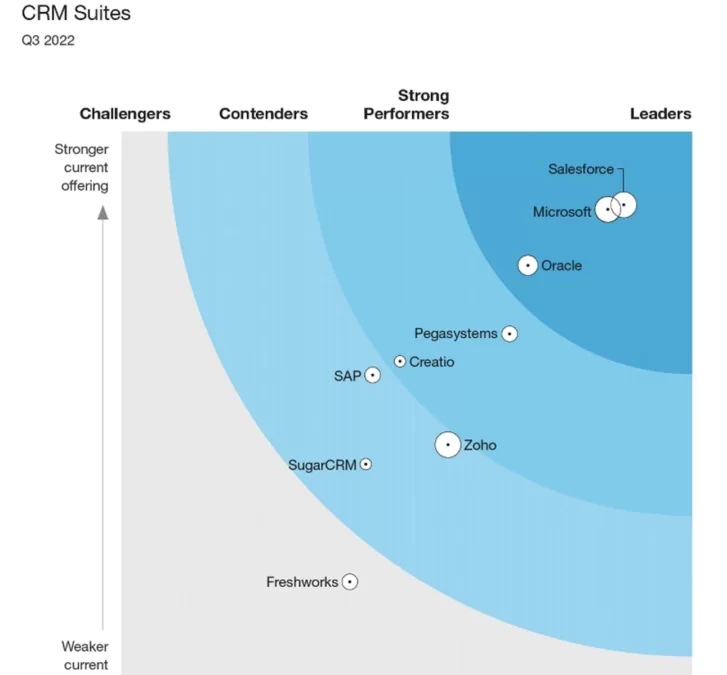
It’s an honor for us that so many organizations look to us for help modernizing sales, marketing, and service operations. As Forrester states in its report, “Microsoft’s strong vision, the breadth of its suite, and its partner ecosystem and industry solutions drive its 40% year-over-year growth, especially in industries such as financial services, healthcare, and retail.” We genuinely believe that with connected data, underpinned by industry leading AI and insights, there are no limits to what organizations can do. From upleveling employee experiences, to improving team productivity, and building deeper relationships with customers. It is all available with Dynamics 365.
This article is contributed. See the original author and article here.
Today, we’re celebrating the 15th anniversary of OneDrive. We’re excited to share even more features to help you access everything you need, whether you’re working alone on a project, collaborating with your team, or sharing photos and videos with your family.
This article is contributed. See the original author and article here.
Today’s customers expect more engaging, personalized service experiences from the brands they choose. They want intelligent self-service that offers always-on digital convenience. And they expect agents, whether human or virtual, to not just know who they are, but to already have an idea why they are reaching out and how to help.
That’s why we launched the Microsoft Digital Contact Center Platforman open, extensible, and collaborative platform for delivering seamless, omnichannel customer engagement at scalebuilt with AI at its heart, powered by Nuance technologies.
Bringing the power of AI to the contact center
AI is fast becoming an essential part of every contact center strategy, helping improve customer experiences while reducing costs, and helping contact center leaders accomplish their customer acquisition, retention, and revenue goals.
And now, enterprises have even more ways to optimize their digital experience strategy with AI.
The launch of the Microsoft Digital Contact Center Platform shows our commitment to putting our customers first. It brings together innovation from Nuance and Microsoft to power unmatched self-service experiences, live customer engagements, collaborative agent experiences, business process automation, advanced telephony, and fraud prevention capabilities. In this series of articles, we’ll outline how Nuance solutions enable the Microsoft Digital Contact Center Platform to deliver value across every engagement channelstarting with digital.
Creating standout digital experiences
As we enter a new, AI-powered era for the contact center, we look forward to stories from enterprise customers about how they’ve optimized their digital engagement strategies with the capabilities of Nuance’s intelligent engagement solutions and Microsoft Dynamics 365, Microsoft Teams, Microsoft Power Platform, and Azure.
Flexibility and choice, with an open platform
Many enterprises want to augment their digital capabilities to provide intelligent, omnichannel experiences. But they also need to protect the investments they’ve made in their existing customer engagement solutions, contact center platforms, and back-office systems.
The Microsoft Digital Contact Center Platform uses open, vendor-agnostic Nuance digital engagement solutions to offer complete flexibility and investment protection for organizations that want to:
Integrate best-of-breed virtual assistant or live chat solutions with a third-party customer relationship management (CRM) from any vendor.
Have a third-party virtual assistant, but need to integrate it with an industry-leading live agent platform.
Add powerful new messaging capabilities to a third-party agent desktop.
Surface third-party product recommendations, next best actions, knowledgebase information, tech support, or order management systems to their agents on a unified desktop.
And now that Microsoft and Nuance innovations are on a single platform, it’s even simpler for organizations currently using the Nuance Digital Engagement Platform to benefit from everything the Microsoft cloud has to offer, including CRM, knowledge management, case management, collaboration tools, and many other services.
A proven track record of increasing self-serviceand driving sales
The Nuance solutions on the Microsoft Digital Contact Center Platform have a strong record of enabling intelligent self-service and increasing containment.
For example, the AI-powered targeting engine behind Nuance Virtual Assistant and Live Assist uses customer profiles and purchase history to engage customers with personalized incentives and relevant offers at the right moment in their journey. That creates more valuable upsell and cross-sell opportunities, helping increase sales in digital channels. Esurance, for instance, generated live chat incremental sales of $4.4 million in just one quarter after implementing Nuance Live Assistand also saw 86 percent increased customer satisfaction with live chat.
Advanced capabilities built on decades of contact center AI experience
The powerful functionality of Nuance digital solutions comes from long experience in delivering AI-powered innovations for all customer engagement channels.
With Nuance AI on the Microsoft Digital Contact Center Platform, organizations can use proactive targeting to deliver the right kind of engagement for each customerat exactly the right time. They can enhance digital experiences by using rich media widgets in messaging channels. They can reduce the time and cost of ramping up new agents by delivering real-time guidance and recommendations straight to the agent desktop. The list goes on.
Plus, Nuance biometric authentication and intelligent fraud prevention solutions help streamline customer experiences and protect every interaction. And everything is delivered through a highly secure, compliant, and capable web interface that meets the stringent data privacy and security standards that regulators, businesses, and customers demand.
A roadmap for the future of the digital contact center
It’s an exciting time to be working with customer engagement leaders. We’re developing an evergreen roadmap for the Microsoft Digital Contact Center Platform, and while we’ll continuously add new capabilities, we’ll also ensure our customers’ existing investments are protected, enabling them to migrate seamlessly to our combined platform at their own pace.
Together with our trailblazing customers, discover how Nuance and Microsoft can offer limitless flexibility, unmatched operational efficiency, amazing customer and agent experiencesand better business outcomes with the Microsoft Digital Contact Center Platform.
This article is contributed. See the original author and article here.
At the announcement of Microsoft Viva Sales, Paul Greenberg, Founder, Managing Principal, The 56 Group, LLC,often called the “Godfather of CRM” and has written a book, CRM at the Speed of Light, and I were chatting about the state of customer relationship management (CRM) market and the innovations in the last 20 years. One area we both agreed that has been underserved is the seller experience. CRM vendors have all focused on the system of recordthe CRM system but sellers continue to work in the system of productivityMicrosoft Office and Microsoft Teams with no connection between them.
In independent research conducted by Microsoft, we surveyed over 500 salespeople who live and work in North America and who use a CRM on a regular basis. The findings revealed that the tools in use today aren’t always helping, and, in some instances, they are even hindering a salesperson’s ability to do their job.1 They love the CRM, but they hate manual data entry. This is one area where Microsoft wants to focus on with Viva Sales. With Viva Sales, we take the manual work of CRM away from the sellers and put technology to work on behalf of the sellers so they can cut the forms, connect the data, and crush the sale.
The Viva Sales preview includes surfacing customer contact information from your CRM directly in Microsoft Outlook and Teams, connecting to the CRM of your choice, capturing rich contact information in Outlook, capturing notes and action items using AI, providing AI driven recommendations, and more.
Improve the seller experience with Microsoft Viva Sales
The past two years have had a profound impact on work. Employee expectations concerning how, where, and when they work have significantly changed and continue to evolve. While these work trends are pervasive across the workforce, they have especially reshaped the expectations of sales professionals who have had to adapt to an increasingly digital workplace all while using outdated sales tools. In fact, 74 percent of sellers described sales intelligence tools as critical or extremely critical in closing deals.1 Prior to 2018, digital selling was already gaining popularity but the forced adoption of remote work, brought on by COVID-19, put a spotlight on the top pain points common across sales organizations by highlighting the gaps and limitations in the sales tools.
With Viva Sales we address these gaps to mitigate these top pain points:
Manual data entry is time-consuming and frustrating and bogs down digital sellers.
Inability to capture customer engagement data in productivity applications where sellers do their work. According to Futurum research, 82 percent of salespeople shared that faulty data has led to an embarrassing mistake with a customer.2
Lack of AI-based recommendations delivered to the point of action.
Disconnected processes and tools that slow down productivity. Sellers spend two-thirds of their time on administrative tasks that do not directly generate revenue.
Viva Sales gives sellers more time to focus on selling by eliminating the administrative burden of manual data entry to provide an improved seller experience. Combining the power of Microsoft 365 applications and Teams, this new sales experience application captures, accesses, and registers data into any CRM. With Viva Sales, sellers can cut the forms, connect the data, and crush the sale.
The power of AI combined with enriched customer engagement data from Microsoft 365 applications and Teams provides easy access to sales intelligence in the applications sellers already use every day.
In the video, The future of sales enablement, Paul states “Because Viva Sales is 100% seller focused and all the sales manager stuff is taken care of by the more traditional CRM technologies. That’s pretty awesome. You’ve managed to create it in a way that doesn’t disrupt or destroy the traditional focus but actually enhances it but at the same time makes the seller’s experience much better for that seller, which is not something that has been around much.”
DDMRP is the next evolution of material requirements planning (MRP), which has a long and storied history in manufacturing. From its origins in the early 1960s as the first manufacturing information system, MRP’s first evolution was to MRP II during the 1980s. Then, in the 1990s, MRP II evolved further into sales and operations planning (S&OP). Most recently, MRP was extended to include major enterprise functions, forming the basis of modern enterprise resource planning (ERP) systems. As such, it is fair to say that MRP’s staying power rests in the fact that it works.
Still, almost anyone involved in manufacturing planning can tell you that while MRP works, it is far from perfect. Organizations of every industry, size, and sophistication still have items that they chronically either have too much of or, conversely, never have enough. These items drive unplanned schedule changes, create inefficiencies, and increase costs in various ways. With the arrival of DDMRP, MRP continues to add to its storied history by incorporating new innovative thinking, such as strategically decoupling inventory from the sales forecast and introducing a new calculation for lead time, that delivers significant benefits to early adopters’ organizations.
What is DDMRP?
As MRP continued to be useful, it eventually became a standard function of modern-day ERP. During this time, other significant manufacturing philosophies and methods were born. The least effective of these were fads that have faded from use, but a handful went on to transform manufacturing in their own right. These include distribution requirements planning (DRP), lean manufacturing, theory of constraints (TOC), and Six Sigma. Each of these methodologies added a tool to our belt of such significance that they remain with us and in broad use today. This brings us back to DDMRP, the newest iteration of MRP, and our latest feature available for preview. While DDMRP is a relatively new methodology, it borrows and combines elements from the tried-and-true manufacturing philosophies discussed earlier in this paragraph.
According to the Demand Driven Institute, demand driven material requirements planning (DDMRP) is “a multi-echelon planning and execution method to protect and promote the flow of relevant information through the establishment and management of strategically placed decoupling point stock buffers.”1 It is important to note that the Demand Driven Institute is essentially a standards body for all DDMRP matters. They offer certification for software vendors to ensure that the principles of DDMRP are adequately embedded and utilized in a given application, and we are proud to share that Dynamics 365 Supply Chain Management is Demand Driven Institute compliant.
Several of the benefits of using DDMRP include the following:
Improve customer service to consistently reach 97 to 100 percent on-time order fulfillment rates.
Compress lead times for typical reductions above 80 percent across several industry segments.
Optimize inventory to unlock inventory reductions of 30 to 45 percent without impacting service levels.
Lower total operating costs by eliminating the false signals and schedule break-ins that drive expensive expedite activities, such as fast freight, partial ships, and cross-ships.
Improve planner productivity by providing visibility of priorities instead of constantly fighting the conflicting messages of MRP.
Create a predictive and resilient supply chain
According to a 2022 McKinsey & Company survey of dozens of supply chain executives, 90 percent expect to overhaul planning IT within the next five years.2 The renewed focus on supply chain planning was born from a broad recognition formed during COVID-19: our modern, lean, just-in-time supply chains were amazingly efficient and cost-effective but far from resilient in the face of unprecedented and sustained global disruptions.
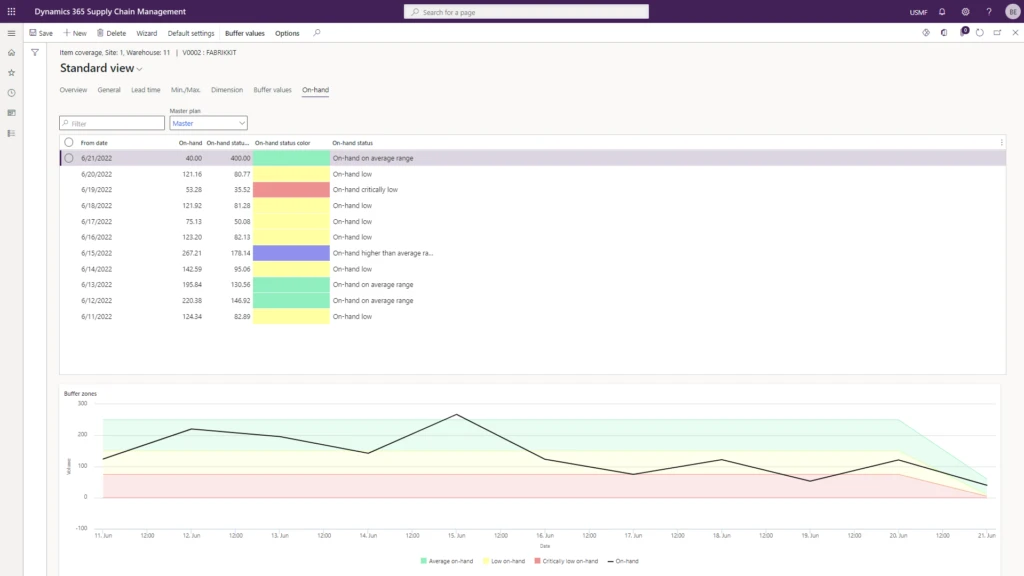
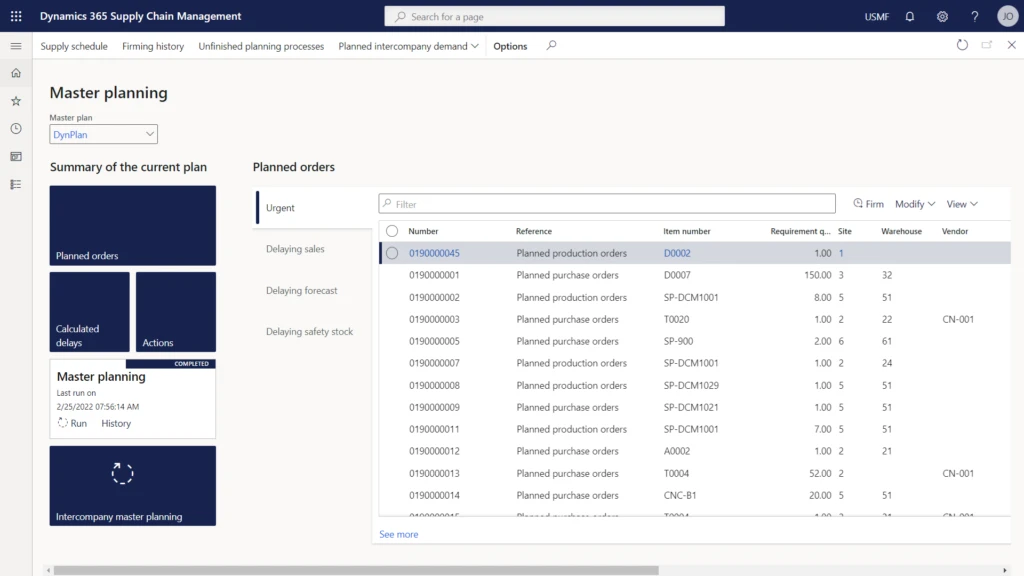
As businesses grappled with how to respond to the crisis, many identified opportunities to invest in their supply chain to become more predictive and resilient. It was no longer acceptable, as an example, for manufacturing production scheduling runs to last several hours or only run once per day. The new normal required systems to give planners near-real-time visibility and control and were capable of executing planning runs multiple times per day in the span of minutes. With our Planning Optimization Add-in, we were able to move master planning calculations outside of Dynamics 365 Supply Chain Management, which reduced planning runtimes from hours to minutes. The Planning Optimization Add-in also introduced priority-based planning, which allows businesses to distinguish demand based on urgency, and introduced one of the five steps required as part of DDMRP.
Microservices, like the Planning Optimization Add-in, are one way to quickly realize value from an ERP migration to the cloud. They deliver benefits such as better performance by offloading workloads to the cloud and improving adaptability by allowing you to react to changing demand in real-time. Ultimately, these investments in planning-related improvement features are designed to reduce stockouts and lower the cost of on-hand inventory, all while ensuring that more customer orders are fulfilled on time and in full.
Maximize operational efficiency with agile business applications
In this blog, we announced the preview of DDMRP, reviewed the evolution of MRP, and provided a basic understanding of what DDMRP is and its benefits. Then we touched on related microservice add-ins for Dynamics 365, such as Planning Optimization and priority-based planning, which are helping organizations create predictive and resilient supply chains.
Dynamics 365 Supply Chain Management is an agile and modern, composable business application. It enables manufacturers, retailers, and distributors to create a connected and resilient supply chain by enhancing visibility, advancing planning agility, and maximizing asset uptime to operate profitably during disruptions. And for companies planning to migrate their ERP to the cloud, the composable approach of Dynamics 365 makes it easy to start with a single workload and add additional solutions as the business evolves and needs mature. It also streamlines planning, production, inventory, warehouse, and transportation to maximize operational efficiency while also giving you access to groundbreaking innovations such as demand driven material requirements planning (DDMRP).




Recent Comments