by Contributed | Oct 9, 2020 | Technology
This article is contributed. See the original author and article here.
Molly McCarthy and Kate Judge discuss the ANA’s longstanding work supporting the 4.2 million registered nurses in America. The Well Being Initiative is a multi-tiered approach to help nurses build resilience, take advantage of resources available to them, and utilize new technologies to survive this pandemic.
The Well Being Initiative
COVID-19 Response Fund for Nurses
Claire Bonaci
The World Health Organization designated 2020 as the year of the nurse and midwife to raise awareness of nurses and midwives, significant and varied roles in health care. Today, we have guest host Molly McCarthy, talking with Kate Judge, Executive Director of the American Nurses foundation.
Molly McCarthy
I’m Molly McCarthy. I’m the managing director for US providers and plans and chief nursing officer for Microsoft health. And with me today is Kate Judge from the American Nurses Association. Kate, welcome. And thank you so much for taking time out of your schedule today. I’d love for you to tell our audience a little bit about what you do for for ANA and the initiative we’re going to be discussing today.
Kate Judge
Oh, thanks, Molly, it’s so good to be with you. So great to see you. As you said, I’m Kate Judge. I’m the executive director of the American Nurses Foundation, which is the philanthropic arm of the American Nurses Association. And there we do you know, a number of things to support America’s nurses so that America’s nurses can support everyone else. And we’re going to talk a little bit today about some of the work we’ve been doing with you and others around supporting nurses in this pandemic.
Molly McCarthy
Great. Well, thank you. I know, it’s been a challenging year for all of us, and especially for our nurses, from the bedside to the boardroom, as I like to say, dealing with the COVID pandemic as well as just the complicated healthcare system in which we navigate around these days. Tell me a little bit about the well being initiative that was launched by the foundation earlier this year, and and what are your goals around for nurses, all the way from the bedside to the boardroom?
Kate Judge
Well, I’m really excited to talk about the well being initiative. It is work that was in the pandemic, to support nurses because of the stress that we were seeing, and really what nurses were telling us themselves, about their experience at the bedside, in management in the boardroom, dealing with unprecedented stress and challenges to deliver the best care. And I will say it builds upon ANA’s long work around supporting America’s nurses and their health. You know, there are 4.2 million registered nurses in this country, that’s about 1% of the entire population of the US is registered nurses. So we have a real interest at the foundation and ANA and helping them be healthy, because they’re such a big part of our population, but also about all of us. I’m not a nurse, Molly as you know, but I a big fan and proponent of what nurses bring to the to the bedside into every conversation they’re in. So our well being initiative is a multi tiered approach to help nurses build resilience, have the skills to survive this pandemic. And we’ve looked at how to make it as easy as possible for nurses to get support because they’ve told us 10s of thousands of nurses have told us in in surveys that we’ve we’ve asked, What are you experiencing and what do you need. And so based on that, and with a great group of advisors, and a number of nursing organizations, we’re working with the critical care nurses, the perioperative nurses, the psych nurses, the emergency nurses coming together to create something that would be really usable, easy and easy to access for nurses.
Molly McCarthy
Great. Yeah, I know. It’s a true partnership across those organizations. And obviously Microsoft is happy to to support your efforts, especially in year of the nurse and midwife, although, you know, we look forward to working beyond this year. I know that when COVID hit one of the areas that Microsoft really invested in getting technology out quickly either through quite frankly, synchronous video visits through Microsoft Teams, but but also through the help health bot technology. And I know that this was something that interested Kate, you and your team over at the ANA both from a well being initiative perspective, but from a technology perspective. So I want to talk a little bit about the stress self assessment. And if you could tell us a little bit of history behind the bots. How it got to where it is today. I believe it launched back in August. And I’m really excited to hear some of the progress around what you’ve created.
Kate Judge
Well, you know, we we had use of some technology we use some apps encourage nurses to go to to apps that helped them track their mood and be calm and have some one on one conversation. We created some virtual conversation groups, among nurses to nurses. So we were using technology, one of the things that we saw was was a need. And really where our partnership with Microsoft started around this need was how nurses see themselves on a spectrum to understand, you know, how serious is the stress and and that they’re experiencing. And nurses told us that if they had something that they could quickly and easily use to help them, they would use that resource. And so working with your technology, and really your team, and our partners at the psych mental health nurses, we created a 10 question assessment. So it’s super easy, super fast launched, as you said, in mid August, and what we’ve seen is that a great majority of people coming to our well being initiative, start with the assessment. And what this assessment does, is it it easy, simple questions, so that you kind of are made more more present to what you’re experiencing. And then based on a three level high stress, mid stress, low stress, and then it sends you to very appropriate evidence based resources to use for nurses. And again, what we’ve found is that nurses are from the very beginning of the pandemic, still in this disaster. And so whatever you can do to provide them with tools that are easy, quick, fast, personal. And that’s what this bot does. And we’re really thrilled to see the pickup the interest. And then what we’re also seeing is some some real time data on what are nurses experiencing, and how stressed are they. I can report that that the news is not terrible, the majority are not coming in as as high stressed. And you know, we need to kind of walk them off the cliff, if you will, they’re coming in kind of mid stress, which is consistent with what we’ve seen. But the most important thing is that then we give them some tools, and that’s what the bot enables enables us to do is to very quickly send them to links that they can use themselves to, to promote their own well being.
Molly McCarthy
Right. I think that’s an important point. It’s, to some extent, a triage tool, to to really uncover anonymously, how you know, how to change, you know, an assessment of their stress level? Tell me, do you know about how many just in terms of the data around it? Can you tell how many people have used it thus far? And I don’t know if you have any of that data just yet. But that’s something that if not today, we hope, you know, we look forward to sharing that out. Are you having you share that out?
Kate Judge
Absolutely. Well, so far, we’ve had well over 1300 people nurses, yeah, and take the survey. And again, because it’s so easy, and it is something that they want to know, they want to know more information about themselves. So I think it’s just it’s the perfect sort of tool. And then the next thing is to really look at what did they then utilize. So one of the things, Molly that I’ll tell you is a real challenge is that nurses are so good at taking care of all the rest of us, but taking care of themselves. They’re very selfless people. So part of the challenge is some self awareness and that’s what the bot does. And then and then providing those resources and then really encouraging them to prioritize taking time really saying I matter and my well being matters and and that’s something that I hope anyone who’s watching this if you’re a nurse, it is okay we are all stressed. And it’s really important that you you take some time you acknowledge where you are because it’s it’s it How could you not be? And we all want you to get what you need and then if you’re not if you’re not a nurse and you’re watching this you probably know some nurses and encourage them or when you are going in for your primary care or other other clinicals check in with people and say how are you and you know, I bet you this is really hard and I hope you’re taking care of yourself.
Molly McCarthy
Right those are all great tips Kate I think for for nurses for all clinicians. We like to call it at my house here this year we call it the corona coaster, just because so many ups and downs throughout the year and especially for our my colleagues who are on the frontlines I you know I keep in touch with so many folks nurses from around here as in close contact with some of the New York all the way to California. So it’s really been a trying year for for everyone with COVID but you know beyond that with other circumstances so what a great resources. I’m really happy to hear that it’s getting so much use and we look forward to continuing to share it out as mental health week you know, kicks off. Tell me how can how can we help? How can people help the the foundation in terms of getting the word out about the well being initiative or otherwise support nurses right now.
Kate Judge
Well, there’s really three ways. One, going to the the website, looking at the resources, so nursing world.org backslash, the well being initiative. So absolutely going and taking advantage of that. supporting those around you that are in the healthcare world, your nurses are the largest providers in health care, but all healthcare people, all people on the front line people who are doing support services and in the hospitals and clinics, everyone is under tremendous pressure. So, you know, checking in and encouraging. And then part of this work that we’re able to do is being funded by a special fund that is exactly for nurses. It’s called the Coronavirus response fund for nurses, we were really one of the first to say there is going to be some need out there. We support them financially mental health advocating information so people can go on our website to at nursing world.org and contribute to that as well.
Molly McCarthy
Great. Well, thank you so much for your time, Kate Judge from the American Nurses foundation. appreciate all your insights today and we will definitely share out the three tips on how to help nurses today and appreciate everything that you’re doing for nurses in America. So thank you.
Kate Judge
Thank you so much, Molly, and thank you Microsoft.
Claire Bonaci
Thank you all for watching. And don’t forget to check back soon for more content from the Microsoft health and life sciences industry team.
by Contributed | Oct 9, 2020 | Technology
This article is contributed. See the original author and article here.
Here is the the list and links of the tools, templates, and other assets to help and support your cloud transformation journey across all the stages in this journey:
- Define Strategy
- Plan
- Ready
- Adopt
- Govern
- Manage
Reference – https://docs.microsoft.com/en-us/azure/cloud-adoption-framework/reference/tools-templates
by Contributed | Oct 9, 2020 | Technology
This article is contributed. See the original author and article here.
We share best practices from our employees, partners, and customers who have already undertaken the cloud journey. The Cloud Adoption Framework brings together people, process, and technology—a strategy that’s aligned to your business goals. So, Quickly, efficiently, and with actionable guidance, CAF provides guidance for your organization’s agile business transformation.
Cloud Adoption Framework—modular phases of adoption.
As your organization evolves, the Cloud Adoption Framework adapts to your business needs.
Each module in the diagram is an iterative phase that advances your business through the complete lifecycle of cloud adoption. Customers can choose the phase best-suited to their degree of cloud adoption maturity. The Cloud Adoption Framework offers a guiding methodology to cloud adoption, with specific approaches to overcoming common blockers to cloud adoption in each module, such as “Define Strategy,” “Plan,”, etc.
The Cloud Adoption Framework offers the enterprise a modular framework of how to incrementally onboard to the cloud. Cloud adoption shifts how companies obtain, make use of, and lock down their technology resources. And this kind of modular framework flips the model of how enterprises operate:
•Transitions organizations to need-based consumption of technology resources
•Change from cap-ex (capital expenditure) to op-ex (operating expenditure) model
•Cloud model assumes security, governance, cost-optimization, and hybrid cloud by default
•Develop a future-ready workforce—developing and deploying cloud skill readiness organization-wide
Reference – https://docs.microsoft.com/en-us/azure/cloud-adoption-framework/
by Contributed | Oct 9, 2020 | Technology
This article is contributed. See the original author and article here.
If you’re a Python developer, you probably are already familiar with the simplicity of event handlers. They make it easy for your application to respond to events without manually spinning up a thread to poll for updates. This is even more important for IoT devices that may be resource constrained while still needing to receive information from the cloud at any time. And if you are coding for IoT devices that connect to Azure IoT using Python, then you’ll be happy to learn that our Python SDK makes this easy to achieve!
We recently released a new and improved programming model based on event handlers in the Azure IoT Python Device SDK. Until now, developers had to spin up listener threads to poll for incoming messages to devices—this model required a more complicated API and management of additional resources by the developer.
As a quick example, let’s look at a sample for receiving a message from the cloud on a device using event handlers:
        # The connection string for a device should never be stored in code. For the sake of simplicity we're using an environment variable here.

        conn_str = os.getenv("IOTHUB_DEVICE_CONNECTION_STRING")

        # The client object is used to interact with your Azure IoT hub.
        device_client = IoTHubDeviceClient.create_from_connection_string(conn_str)

        # connect the client.
        device_client.connect()

        # define behavior for receiving a message
        def message_handler(message):

            print("the data in the message received was ")
            print(message.data)
            print("custom properties are")
            print(message.custom_properties)

        # set the message handler on the client
        device_client.on_message_received = message_handler

        # finally, disconnect
        device_client.disconnect()
In this example, you can see how the code does not create any new threads and receiving a message is as simple as assigning the event handler. The developer does not have to worry about any thread management which makes writing and maintaining code much easier, especially as your IoT projects scale to include more functionality. Event handlers can be used with the Azure IoT Python SDK in all receive message scenarios– receiving C2D messages, direct methods, device twin patches, etc. To see how you can adapt your code to use handlers, you can explore the samples in our Github repository.
We hope our new event helps simplify your IoT development experience with the Python SDK and optimize your IoT code. As always, please reach out to us on Microsoft Q&A (tag with azure-iot-sdk) or Github with any questions or feedback. Thanks and happy developing!
FAQs
I’ve already written my applications with the listener Python SDK programming model, do I need to update the code to use handlers?
No, the listener API isn’t going away and is still fully supported by the Python SDK. We introduced handlers because we believe they are much easier for developers to work with and, under the covers, they allow the SDK to be a lot more adaptable. We do highly recommend adapting your code to use the new handlers.
What scenarios will benefit from using handlers as opposed to the polling programming model?
All scenarios will benefit from the newer model in terms of ease of use. There are no changes in functionality, we have just introduced a simpler, cleaner, and easier way to use all of the existing receive functionality. However, going forth, any new receive-based patterns that may be introduced will only support the newer handler model. The older, polling-based model remains supported, yet we will not continue to develop on this model and highly recommend using event handlers moving forward.
I see that the Python SDK also supports both a synchronous and asynchronous programming model. What should I consider when deciding between writing sync or async code?
Are you already comfortable with async/await programming models? Do you need to do a high volume of operations simultaneously? If so, our async await pattern may be best for you, as it is optimized to operate asynchronously so your code isn’t slowed down by I/O delay.
Otherwise, for users who may not be familiar with this paradigm, and who don’t need to optimize performance for a high volume of simultaneous operations, the synchronous model will probably be more familiar and simpler to use.
Does it matter if I’m using Python 2 or Python 3?
No, handlers are supported for both Python 2 and Python 3, and for both synchronous and asynchronous programming. The synchronous client is compatible for both Python 2 and Python 3, whereas the asynchronous client only works with Python 3.

by Contributed | Oct 9, 2020 | Technology
This article is contributed. See the original author and article here.
This week’s blog roundup brought to you by Excel MVPs Leila Gharani, Bill “Mr. Excel” Jelen, and Cristiano Galvão.
 Leila Gharani
 Bill “Mr. Excel” Jelen
 Cristiano Galvão
Excel Filter Trick Using Non-Adjacent Columns, Leila Gharani
Leila Gharani shows an interesting application of the FILTER function. With this method you can use the FILTER function to return match results from non-adjacent columns. The same trick can be applied to the UNIQUE function to get a unique list of values from non-adjacent columns.
Using SEQUENCE inside of other functions such as IPMT, Bill “Mr. Excel” Jelen
When you first see the dynamic array functions of SORT, FILTER, UNIQUE, SORTBY, RANDARRAY, the SEQUENCE function might seem like the most trivial. But the real power of SEQUENCE is when it is used as an argument in other functions to coerce them to return an array. In this article, Bill “Mr. Excel” Jelen shows how to calculate the total interest to book for an entire year.
Dynamic Folders in Excel Power Query (in Portuguese), by Cristiano Galvão
Excel MVP Cristiano Galvão describes step by step how to get data with Power Query from a lot of files inside folders that can be switched according to the user’s needs and keeping the same query, in a dynamic way.
###
O MVP de Excel Cristiano Galvão descreve passo a passo como obter dados com o Power Query a partir de um monte de arquivos dentro de pastas que podem ser trocadas de acordo com as necessidades dos usuários e mantendo a mesma query, de um jeito dinâmico.
Click the Like button and/or leave a comment below
by Contributed | Oct 9, 2020 | Technology
This article is contributed. See the original author and article here.
We are pleased to announce the enterprise-ready release of the security baseline for Microsoft Edge, version 86!
We have reviewed the new settings in Microsoft Edge version 86 and determined that there are no additional security settings that require enforcement. The settings from the Microsoft Edge version 85 package continue to be our recommended baseline. That baseline package can be downloaded from the Microsoft Security Compliance Toolkit.
Microsoft Edge version 86 introduced 32 new computer settings and 28 new user settings. We have attached a spreadsheet listing the new settings to make it easier for you to find them.
As a friendly reminder, all available settings for Microsoft Edge are documented here, and all available settings for Microsoft Edge Update are documented here.
Please continue to give us feedback through the Security Baselines Discussion site or this post.
by Contributed | Oct 9, 2020 | Azure, Technology
This article is contributed. See the original author and article here.
Howdy folks,
A few months back, we introduced Continuous Access Evaluation (CAE) for tenants who had not configured any Conditional Access policies. CAE provides the next level of identity security by terminating active user sessions to a subset of Microsoft services (Exchange and Teams) in real-time on changes such as account disable, password reset, and admin initiated user revocation.
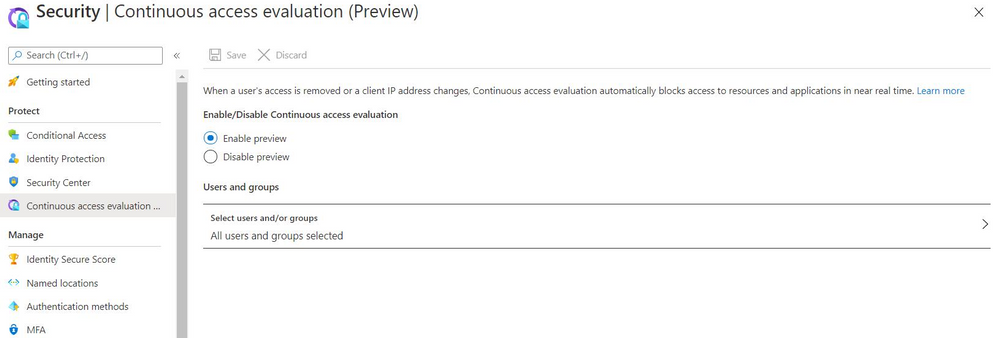
Today marks an important milestone in bringing this capability to everyone – now CAE is available in public preview for Azure AD tenants who have configured Conditional Access policies. Microsoft services, like Exchange and SharePoint, can terminate active user sessions as soon as a Conditional Access policy violation is detected. More Microsoft services, such as Dynamics and Azure, will be enabled in the future. You can turn on CAE to improve the security posture in your tenant with just a few clicks!
Getting started
For tenants with Azure AD Premium subscription, you can configure CAE in our portal by going to Azure Active Directory -> Security -> Continuous Access Evaluation. There you can Enable Preview and you can also choose to configure this initially for a select set of users and groups.

If there are no conditional access policies configured in your tenant. CAE is already enabled for all users in your tenant and there are no additional actions you need to take. This is enabled even if your tenant has no Azure AD premium subscription.
To learn more about these changes, check out here: continuous access evaluation.
As always, we’d love to hear any feedback or suggestions you have. Let us know what you think in the comments below or on the Azure AD feedback forum.
Best regards,
Alex Simons (twitter: @alex_a_simons)
Corporate Vice President Program Management
Microsoft Identity Division
Learn more about Microsoft identity:
by Contributed | Oct 9, 2020 | Technology
This article is contributed. See the original author and article here.
Learning a new framework or development environment is made even more difficult when you don’t know the programming language. To help you with that, we’ve created this series of videos to focus on the core concepts of JavaScript.
The full video series is available for free here:
This series of 51 videos is designed to be consumed as you see fit. You can watch from start to finish, or you can dive into specific topics. You can always bookmark and come back as you need.
What you’ll learn
The videos take you from the very beginning on how to set up your machine and install the tools you need to develop JavaScript code. After that, you’ll dive into the JavaScript syntax and structure including objects, functions, logic, and more. Finally, once the basics are covered you’ll get to know about more advanced topics like asynchronous programming and how to use packages to develop apps more efficiently.
Most topics will be covered by explaining first the concepts behind, then show you a demo on how you can use it in your code. All the code used in the demos is also available on this GitHub repository.
What’s next?
This is only the beginning of your learning journey, and once you’re up to speed with JavaScript, maybe you’ll want to get started with Node.js?
We have a lot more content in the pipe, so stay tuned ;)
Tell us your experience
While we don’t cover every aspect of JavaScript in these videos, we want to help you build a foundation from which you can continue to grow. By the end of this series, you’ll be able to work through tutorials, quick starts, books, and other resources, continuing to grow on your own.
We’re also looking to improve, so please tell us what you think of the format, what were your difficulties, and how was your experience in the comments.
Time to learn some JavaScript!

by Contributed | Oct 9, 2020 | Azure, Technology
This article is contributed. See the original author and article here.

TCA Podcast Episode 42: Multi-Vendor Cloud Management with Azure
Chris Goosen is an Office Apps & Services MVP with a passion for technology and almost two decades’ experience working with Microsoft technologies. As a solutions architect and consultant, Chris has many years’ experience helping organizations around the world design and implement Microsoft Exchange Server and other Microsoft technologies. Chris has been a speaker at conferences such as Microsoft TechEd and Ignite. For more on Chris, check out his blog and Twitter @chrisgoosen

Import existing resources as Terraform using Terraformer
Kasun Rajapakse is a cloud enthusiast based in Sri Lanka. Currently working as a Senior System/Automation Engineer, Kasun has more than 8 years of experience in cloud technologies and is well versed in multiple cloud technologies. Kusan actively contributes to the community by speaking in user groups, conferences, and content creating. For more on Kusan, see his blog.

AI-powered FinTech: The drivers of Digital India
Sray Agarwal is an AI MVP based out of London. Sray’s expertise lies in Predictive Modelling, Forecasting and advanced Machine Learning. He possesses a deep understanding of algorithms and advanced statistics with a background in management and economics. Moreover, Sray has completed a Master equivalent program in Data Science and Analytics. For mmore on Sray, check out his Twitter @srayagarwal

Teams Real Simple with Pictures: Group Policy Assignment
Chris Hoard is a Microsoft Certified Trainer Regional Lead (MCT RL), Educator (MCEd) and Teams MVP. With over 10 years of cloud computing experience, he is currently building an education practice for Vuzion (Tier 2 UK CSP). His focus areas are Microsoft Teams, Microsoft 365 and entry-level Azure. Follow Chris on Twitter at @Microsoft365Pro and check out his blog here.

Keyless Authentication using Azure Managed Identity
Garry Trinder is a Microsoft Office Development MVP from the UK. Garry has specialised in SharePoint and Office 356 development for the past 10 years with varying roles, including administrator, developer and consultant. In recent years, his focus has been on integration and automation in Microsoft 365 using Microsoft Azure platform. Passionate about community, Garry is a member of the Microsoft 365 Patterns and Practices (PnP) team, maintainer of the ‘CLI for Microsoft 365’ open source project and co-organiser of the PowerPlatform User Group in Leeds, UK. For more, visit Garry’s blog and Twitter @garrytrinder
by Contributed | Oct 9, 2020 | Azure, Technology
This article is contributed. See the original author and article here.
Some great new announcements and an important certificate change to tell you about this week.
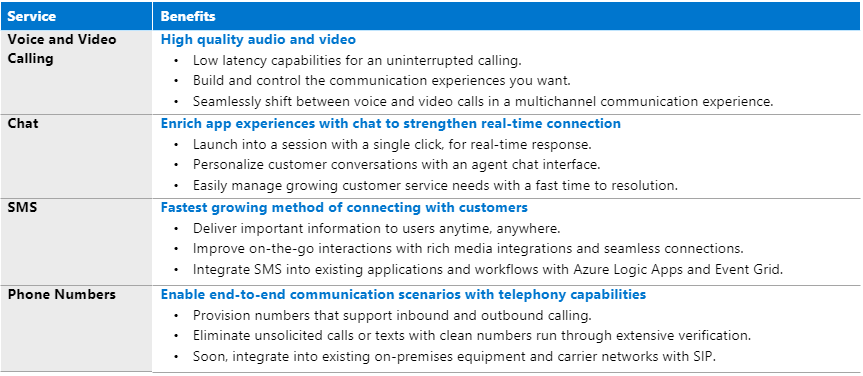
Azure Communication Services (SMA and Telephony) is now available in public preview. There’s an important change to the root certificate authority of the TLS certificates used by Azure services. Conditional Access to the Office 365 Suite is now generally available. And we look at managing Azure Policies as code in GitHub. Let’s go!
https://youtube.com/watch?v=AvXw1380Vq4
Azure Communication Services SMS and Telephony now available in Public Preview
Azure Communication Services makes it easy to add voice and video calling, chat, and SMS text message capabilities to mobile apps, desktop applications, and websites with just a few lines of code. While developer friendly APIs and SDKs make it easy to create personalized communication experiences quickly, without having to worry about complex integrations.

These capabilities can be used on virtually any platform and device. Build engaging communication experiences with the same secure platform used by Microsoft Teams.
View the announcement
Learn more about Azure Communication Services
IMPORTANT: Azure TLS certificate changes
Microsoft is updating Azure services to use TLS certificates from a different set of Root Certificate Authorities (CAs). This change is being made to comply with one of the CA/Browser Forum Baseline requirements.
This exercise will conclude on October 26, 2020. This will impact customers who use certificate pinning (to explicitly specify a list of acceptable CAs) or customers with specific operating systems that talk to Azure services and may require steps to correctly build the cert chain to the new roots (e.g. Linux, Java, Android etc).
For more information, see Azure TLS certificate changes
Conditional Access for the Office 365 Suite now in GA
Conditional Access Policies give you a greater level of control over enforcing security requirements when accessing Office 365 applications, but with the apps sharing many underlying services, it can be hard to keep these policies consistent. You can now set conditional access policy requirements across the entire suite of Office 365 apps, including Exchange Online, SharePoint Online, and Microsoft Teams, as well as micro-services used by these well-known apps.
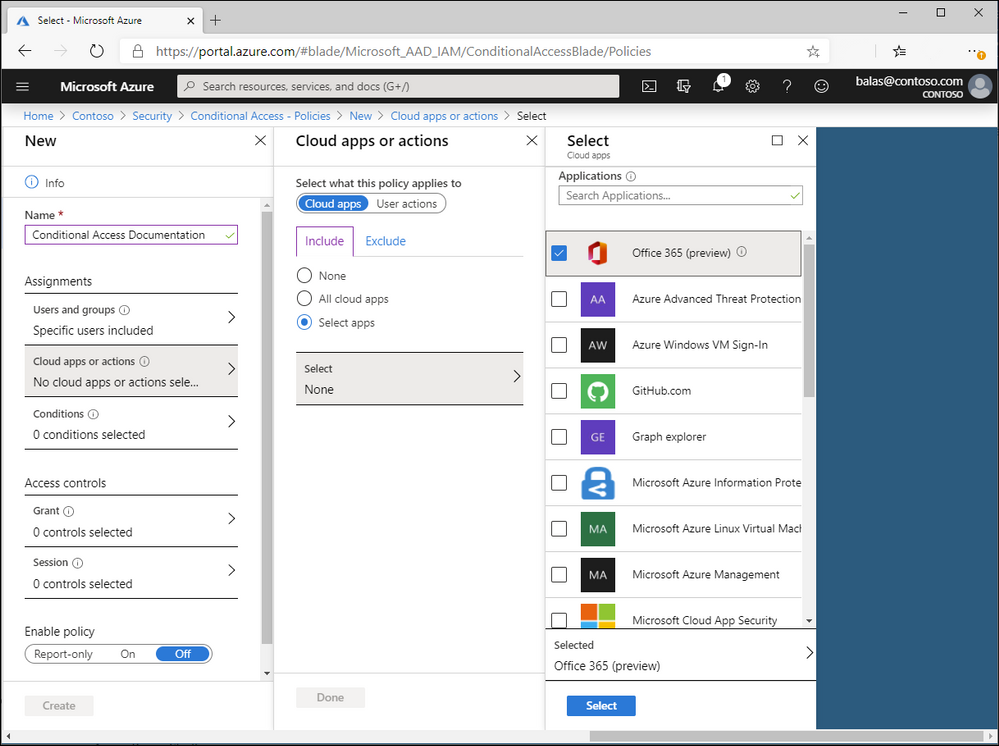
Premiered in public preview in Feb 2020, this capability is now Generally Available.
View the announcement
Learn more about Conditional Access for the Office 365 Suite
Enabling resilient DevOps practices with code to cloud automation
Thanks to Pixel Robots (Discord) for bringing this one to our attention.
As you progress on your Cloud Governance journey, there is an increasing need to shift from manually managing each policy in the Azure portal to something more manageable, collaborative, and repeatable at enterprise scale. We are announcing that we made the integration between Azure Policy and GitHub even stronger to help you on this journey.
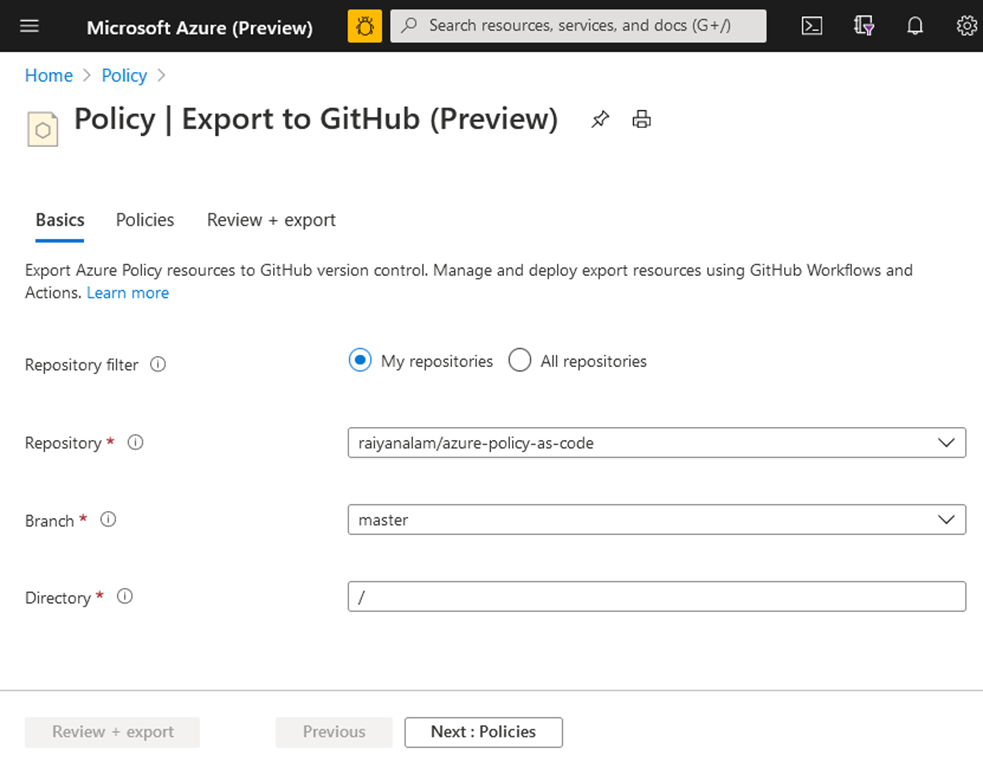
You can now easily export Azure policies to a GitHub repository in just a few clicks. All exported policies will be stored as files in GitHub. You can then collaborate and track changes using version control and push policy file changes to Azure Policy using Manage Azure Policy action. See Managing Azure Policy as Code with GitHub to learn more and go to Azure Policy to access the feature.
View the full product group blog on enabling resilient DevOps practices with code to cloud automation.
MS Learn Module of the Week

Build a cloud governance strategy on Azure
Keeping a Cloud environment controlled and consistent can be challenging, as it expands and as more teams have access to deploy and change resources. Enable teams to have the control they need, within the boundaries you set, and avoid configuration drift by implementing a cloud governance strategy. This module is part of a newly updated set of Azure Fundamentals training, and includes exercises in the free Azure sandbox environment.
After completing this module, you’ll be able to:
– Make organizational decisions about your cloud environment by using the Cloud Adoption Framework for Azure.
– Define who can access cloud resources by using Azure role-based access control.
– Apply a resource lock to prevent accidental deletion of your Azure resources.
– Apply tags to your Azure resources to help describe their purpose.
– Control and audit how your resources are created by using Azure Policy.
– Enable governance at scale across multiple Azure subscriptions by using Azure Blueprints.
Let us know in the comments below if there are any news items you would like to see covered in next week show. Az Update streams live every Friday so be sure to catch the next episode and join us in the live chat.


Recent Comments