This article is contributed. See the original author and article here.
In the northern hemisphere, spring is upon us. Spring is often a time of anticipation for warmer weather and long days spent outside. And the anticipation is greater this spring as some parts of the world make progress against the COVID-19 pandemic, creating the possibility of increased mobility and social interaction later this year. For…
This article is contributed. See the original author and article here.
Hear the experience of 2 nurses heeding the call of service to volunteer with their local Medical Reserve Corps to vaccinate their communities
Claire Bonaci
You’re watching the Microsoft US health and life sciences, Confessions of Health Geeks podcast, a show that offers Industry Insight from the health geeks and data freaks of the US health and life sciences industry team. I’m your host, Claire Bonaci. On today’s episode, Molly McCarthy and Kathleen McGrow discuss the complexities of volunteering at a COVID-19 vaccination clinic and their concerns and hopes for the future for the COVID-19 vaccination process. Hi, Molly. Hi, Kathleen, and welcome to the podcast.
Molly McCarthy
Hi, Claire. It’s great to see you.
Kathleen McGrow
Hi, Claire.
Claire Bonaci
So you both had volunteered with your local Maryland Medical Reserve Corps vaccination clinics and you had very different experiences. Do you mind sharing with our listeners what your experiences were like? Molly, you can go first.
Molly McCarthy
Sure. Well, it was just a privilege to be able to get back into clinical practice. Through the Maryland Medical Reserve Corps, I’m actually licensed in the District of Columbia. But thanks to Kathleen, she informed me that because they have reciprocal license and compact licensure I could work in Maryland as well. So I signed up and went through an orientation process. So I spent an entire day at the end of February volunteering actually, in montgomery county, our sights are done at the local high schools. So I worked from about 8am till 4:30pm. vaccinating primarily group one B, so a lot of our senior population from around our county. And luckily for myself, I had the opportunity to actually focus my time on vaccinations. I wasn’t I didn’t have to document we I actually had a scribe so there were 15 tables at our clinic and I had the privilege of welcoming the, the the elders and vaccinating them while I had a scribe documenting everything and actually inputting it into the computer system. And I know Kathleen, would love to hear from you too, about what what you saw up in Baltimore.
Kathleen McGrow
Yeah, Molly, I think we had similar experiences, but a little bit dissimilar, as well. So I look to volunteer a few times a month. So I’ve gone I think about three times now, I usually do a set day of the week because they like the consistency. I’m also through Maryland responds and as a vaccinator. And my site is Baltimore City Community College. The process at my site is very organized, we work in what you call pods, which stands for point of dispensing. There’s a very purposeful workflow. And it’s all about getting the person who needs a vaccine, their vaccine, it needs to be timely and as pleasant experience as possible. And they actually brief us every morning. And explain this to us. Because you never know if there’s like new people that are coming into volunteer work for the day. And to make it a pleasant experience. This really takes a large number of people. So if you look through the pods documentation, there’s actually 19 identified roles from director to greeter that touch people as they come in to get their vaccination. Some of the differences from Molly’s process is that we had the medical physicians in the line when people were waiting to do the pre screening and they actually wrote on the paper how long the person would need to wait either 15 or 30 minutes after their injection. And I was the only person at my table, I did not have a scribe, I would ask the person their name. And just to clarify who it was and to look at it in the prep mode, which is the name of the of the of the computer program that we’re using to get that data entry into. And then just their date of birth to verify that it was them. And I was doing mostly second doses for one A’s and one B so I worked a lot with emfs police, fire school teachers, homeless advocates, nurses, so it really was a great experience. Mostly overall, I think that they’re doing a great job at at the place where I am, but it is very, very much a set process. I think process wise they’re doing a really good job there.
Molly McCarthy
I think the process is it’s a well oiled machine. It was my first time volunteering. I’m going back again next week. And I my my focus was very much vaccinating the patients. You know, we did have that flow as well Kathleen, and there was a we call it an observation area where they sent everyone afterwards for a 15 minute watch, so to speak. That the the part that was is a little bit challenging for me is that in Montgomery county, we actually sign up on a on a weekly basis. is through signup genius. So we don’t necessarily have visibility for the whole month, which is frustrating, but yet well understood, because we’re not exactly sure how many appointments, how many people we can get through the process, and how many vaccines are available. I think with Johnson and Johnson being approved more recently, we should really see an uptick here over the next couple of months.
Claire Bonaci
So do you – either of you really attribute that smooth process at your clinics to anything in particular? And it sounds like you were using different technology or different systems, both for sign up? And for actually inputting the piece of information? Was there anything in particular that you thought Yes, this is what’s causing it to be really smooth, whether that was management or or technology or something in between?
Kathleen McGrow
I think actually, the dispensing and getting the process where I was coming in actually getting a shot in the arm was very well organized. I think it’s the registration process that people can struggle with. And then I think it’s potentially you know, how many vaccines like Molly said, you know, how many we every when we every day we go in, they tell us how many vaccinations we actually have, how many vaccines are available, but they may not know today? How many they have, you know, early next week, right? It’s, it’s pretty much I think it’s like a four to seven day lead time. And that’s, I think, problematic, and I totally agree with Molly, with more vaccinations coming into the market, I think that’ll help some of that process.
Molly McCarthy
Yeah, and from my perspective, again, I think, you know, what went well, for us? And when I say for us, I’m gonna really reference the vaccinators is that we had a very strict process in terms of, you know, we were each so I was doing the majorna vaccine, and I was doing both first back vaccinations as well as second. So it would just depend upon who, who was brought to my table. And we, you know, it’s a it’s a 10 dose vial, you know, half a cc 10 doses is very strict count on everything from the band aids, to the syringes to the needles to the alcohol pads, as well as the CDC vaccine card. So we know we were only given a lot at a certain amount. And by the end of the day, we actually would, you know, we would get be given a vial between two tables and have to share that vile back and forth. So that really at the end was to prevent any waste.
Kathleen McGrow
So I think that was a big difference in the process, my, my place, we actually had fillers that were in a separate room isolated from everyone. So you weren’t allowed to go in that room, I could go to the door of the room and ask for equipment if I needed it. But they we had a runner, when our cooler lid was up, that meant we didn’t have any more vaccines and the runner would come over and bring vaccines in the beginning of the day, we would get lots of five syringes into the end of the cooler. When your lid went up, they brought you more and at the end of the day, I think probably similar to Mali, we had two or maybe one and then sometimes they would let the queue of people form and then they would crack open the vial. And they would go ahead and pull up similar. We have materna that was 10 pen 10 per mile. But I did not have to fill my medications. We did not have that strictness of supplies. If I needed additional white cards, I could go back, which is the CDC card, I could go back and I could get cards or band aids or whatever else was needed. And you know, we kind of set our table up how we did our work. And everyone did it maybe just a little bit differently. But everyone was really helpful. My we had 15 we had 15 vaccinators it was two nurses, five nursing students who had an instructor and everyone else was a paramedic, or Baltimore City paramedic, which was nice. And people help each other out if they were new that day, the folks like myself who had been there previously, we kind of told him, here’s how you kind of set it up and help each other out. So I think there was a lot of camaraderie and we had a person who was in charge of the area who came often and asked if we needed anything. We had a runner. And then we had flags red flag and yellow flag yellow flag was you’re ready for your next person red flag was I need a physician to come to the table if there was specific questions.
Claire Bonaci
Well, it does sound like a well oiled machine in general for both of the counties. So that’s good. And I know, you know, I just want to say first of all, thank you both for for volunteering to do that. I think we need a lot of volunteers to administer somebody’s vaccines. So thank you both for doing that. And in helping just given the issues that you had seen with the process on your side, what do you think needs to be changed? Or what is the longer term issues that you see arising from the issues that you experienced?
Kathleen McGrow
Yeah, thanks, Claire. Yeah, I described a really great process and then we talk about an issue and the issue was my personal issue. And that was really when it was my time to get vaccinated because I was considered an add on I was not in the computer. So I completed a paper form. Once I had my vaccination and had completed all the paperwork. I had a paramedic Give it to me. She was great. I handed it off to the person who was going to do the manual entry within to the system. And of course, you know, being that I’m in the system I went in and I double checked and my name was misspelled my last name was misspelled by one character. And of course, I didn’t want to be an alarmist and really like, say, Hey, you know, this is a huge problem. But I did go to the person and say, you know, I’m a little concerned about this, and initially told it would be taken care of, but I never really saw a correction. So actually, the next time I volunteered, I did a double check. When I was able to get in the system, it was still spelled incorrectly. So I escalated to someone who went in and made that correction. And she actually showed me where in the system it went both to the state and then to the federal. So she was able to track it all the way through. So that when I did come in for my second injection, I was in the system, they were able to enter me in and did a system and make sure that it was documented. So it was a not a manual process. But to be honest with you, I’ve really started thinking about, wow, this could be a problem, because what’s going to happen? And what are the ramifications if I have to show proof of vaccination for travel? And if it needs to be digitized, and I couldn’t because of my last name being spelled incorrectly. And how ironic is that, that the informatics nurse has her last name spelled incorrectly and can’t get it fixed. So I’m not really sure that I have any answers. But I do think that this probably happens more frequently than we realize. And I think that we really need to understand that we should be concerned about data integrity, data issues, these are all really important. And even more so now, especially as we come to this process of having to do this mass vaccination of so many people in a really short period of time. And it happens, right? It could be fat fingered, there’s any any any in wonders or reasons it could happen. But I’m glad I was able to catch it and get it repaired.
Molly McCarthy
Were able to get back to it because I was not, I was told that we had to volunteer at least three times. So again, I think in general, it’s great. But but big picture, there are a little law, systemic processes, which could be streamlined, quite frankly, for future reference. And I think, you know, Maryland, I hope will and and the rest of the country will look at this this process and think how can we take the good, bad and ugly and move forward? For future not even just even like flu vaccine or thinking about vaccines for kids and documenting that? So lot lots of learnings.
Claire Bonaci
Yes, and I do think it’s so interesting that both of you in Maryland is in the same state, but just different counties are doing things so differently. So I just find that very interesting that obviously, it’s not even a state to see issuers the state, you know, difference, it really is just, you know, a county to county problem. So I think obviously, many states are experiencing the same issues that you you both brought up, how do you see technology playing a role in either streamlining that process or just helping with future vaccination processes, whether that’s for the flu shot or for a COVID? vaccine?
Molly McCarthy
Yeah, so I guess I’ll maybe take a stab at that. And then so to speak, and then let Kathleen finish finish it off, I think, you know, again, from from our perspective here at Microsoft is thinking about, you know, just from the COVID testing, and actually, you know, having proof I recently traveled and had to be tested. Before I was I left the country and then coming back into the country, it was a paper form. So thinking about that process and how we could streamline that. So that tech not to say that my test results, for example, are part of my airline pass or whatever it may be. And I know there are some companies that are looking at that, because I was checking into them over the weekend. But really around the vaccination process. You know, I’m sending these individuals home with a car that has, you know, their first and second dose the lot number, you know, where they were vaccinated my signature on it, as you know, the either the first or second vaccinator. And I’ve been telling everyone take a picture of that card. That card is like your passport. I’m not sure exactly how you’ll need it. But to some extent you will need it and I think, you know, obviously we can think about the vaccine credentialing initiative that Microsoft is involved with, at, you know, at early stages in terms of advising through the commons project. But But I think just how can we streamline technology along the way so that even within a state from county to county, where at least you know, using similar systems and bigger picture. You know, I think the key really is interoperability. So no matter what system you’re using, it’s able to be connected to Wherever you need to get the information to and from. And then of course back to your point, Kathleen about the data integrity. And I’ll let you take it from there.
Kathleen McGrow
Yeah, I totally agree with Molly that we need this interoperability because now we have even more disparate systems that we have to pull all this data together, it could be a matter of just your day to day activity, like going into an office building, you know, or getting on a plane or things like that, like Molly described, I still can’t believe as digitized as we are. And with so many, you know, when you think about all the different technology we use every day, we have to rely on a paper card. And I did the same thing I said, You know, I highly suggest I took a photo of mine take a picture just in case you lose it. But Molly’s right that had my signature on it as well and where they had gotten it. And I saw a lot of people were posting their cards on social media. And that made me really worried because you know, anyone could steal your identity with your name and your birthdate. Oh, and by the way, my name is on there, too, although my signature is not so readable, to be frankly honest, which is a little teeny, tiny space. But I think that it was just a great opportunity to give back to be frankly, honest with you, Claire, I really loved it because I actually got to talk to people outside of my bubble. And it was really nice, and they were so grateful everyone was so grateful. Even the people that were Frankly, I’m afraid of needles, you know, you do you kind of put your nurse hat on and you do your best to reassure them that you know, it’s gonna be okay, and it’s not gonna hurt that much. So I guess you know, my message really, for the end is if you have an opportunity, get vaccinated doesn’t matter what the vaccine is, please just get your vaccine to keep us all safe. keep yourself safe, your family safe, so that we can kind of move on and figure out the next steps and how we’re going to be getting through that to this new normal, which I’m not sure there’s going to be a new normal. I think we’re just gonna have to move forward.
Claire Bonaci
Perfect. Well, on that note, I would love to thank you guys again for being part of the podcast and sharing your experience and for doing all of the vaccinations. So thank you again.
Molly McCarthy
Great, thanks, Claire. Thanks, Claire.
Claire Bonaci
Thank you all for watching. Please feel free to leave us questions or comments below and check back soon for more content from the HLS industry team.
This article is contributed. See the original author and article here.
This is already the third part of my little series on what it takes to do the Microsoft Graph Fundamentals Learning Path on Microsoft Learn. If you missed part 1 or part 2, it would be a good idea to catch up first, as the parts build upon each other.
After we already saw how easily we could configure a JavaScript application to retrieve Microsoft 365 data using Microsoft Graph in the last module, we will focus this time on how to access user photo information by using Microsoft Graph.
This module is supposed only to take 17 minutes to complete – timer set :smiling_face_with_halo:.
intro
Our goal is to insert a user profile in our app that we already used in the last module. We will need to authenticate our user using Microsoft identity and receive an access token and call Microsoft Graph API with this token. – If you now wonder, ‘wait, but why?’ it’s a good idea to reread part 2 of my summary or do the last module.
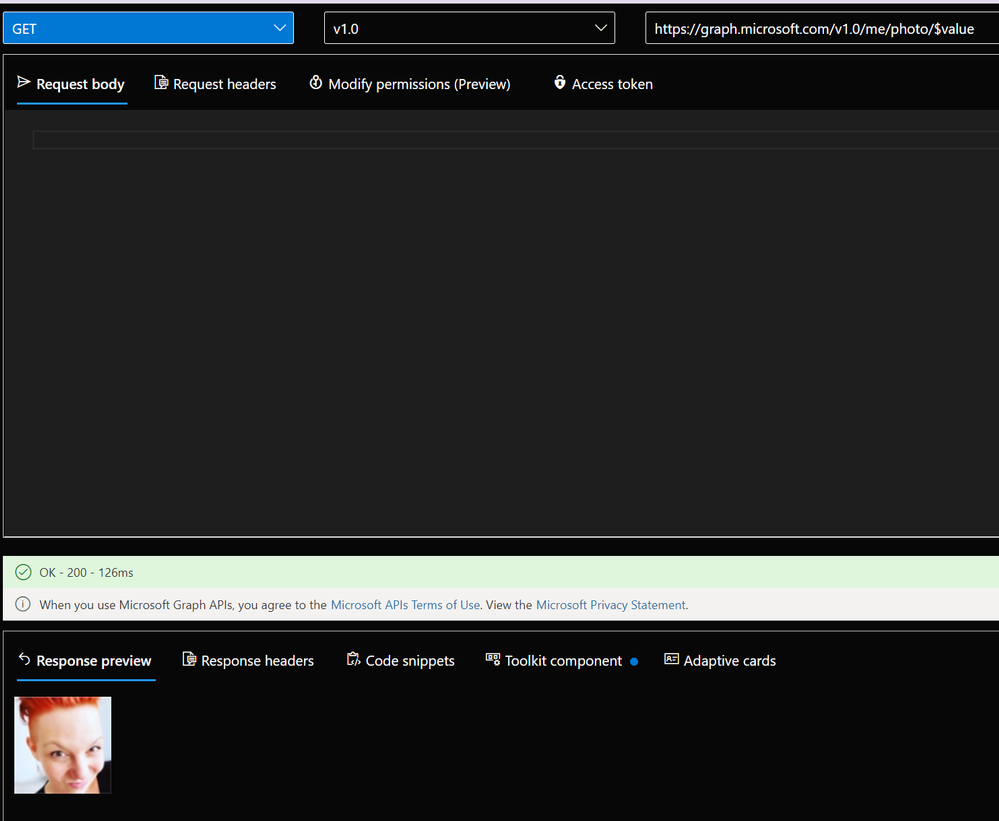
After making us aware of WHY we should display a user picture, we learn that there are several ways to get profile picture information with Microsoft Graph, for example `GET https://graph.microsoft.com/v1.0/me/photo/$value` gets us the image of the signed-in user itself. I used the Graph Explorer to check that:
Let’s do an exercise:
Exercise – Use Microsoft Graph in your web application to retrieve a user’s profile photo
build upon module 2
As we are building upon the last module, we will not need to clone the repository again. The unit quickly walks us through the four primary files for our app `index.html`, `auth.js`, `graph.js` and `ui.js` to make us aware of what they will do and repeats the steps we did in module 2 to insert tenant ID and application ID.
Now the new part
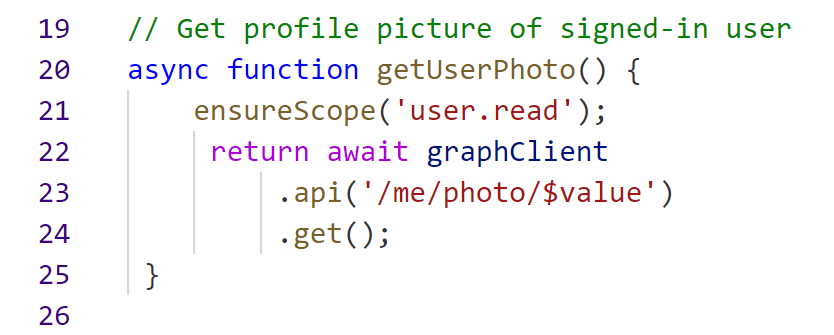
1. copy – paste two code snippets into the `index.html` file to create and style a button with an image element 2. add a function to the `graph.js` file to call Microsoft Graph API and retrieve the photo of the signed-in user 3. add a function to the `ui.js` file that displays the image that we got from Graph into the image element that we created and styled in step 1 4. copy-paste a snippet to show a button that a signed-in user can click on to view their profile picture.
time to run our app
Like in Module 2, open your terminal (I use the built-in Powershell in Visual Studio Code) and type in `npm start`, which will open your browser with `localhost:8080`.
* Click on **Sign in with Microsoft** * Click the `show profile picture` button * see that profile pic? YAY – time for a happy dance- You made it!
conclusion
As I did module 2 just a couple of days before, I did not need to reinvent the wheel, and it took me way less than 17 minutes to complete this module 3 – but I realized that I could reuse this app over and over again to whenever I need to sign-in a user or want to display information that I can get from Microsoft Graph API.
I wrote this summary of the whole learning path because I worked with Microsoft Graph before, and although I don’t write (a lot) of code daily, these modules felt doable – even if you are not a super experienced developer. I hope there will be even more cool content!
If you now read this and wonder if you could build applications with Microsoft Graph as well: Yes, you can! To learn more – from developers, please join Microsoft’s Learn Together event: Building apps with Microsoft Graph on April 14!
I would love to hear your feedback! Did you start this learning path? Or completed it? What were your aha moments? Where did you struggle? What content is now needed to take you to the next level? Please comment below!
This article is contributed. See the original author and article here.
The Microsoft 365 PnP Team would love to invite you to the Watch Party that we are hosting for the Learn Together: Building apps with Microsoft Graph event.
The event is a 2 hour live stream and is offered live twice to accommodate the global audience:
April 14, 2021 8:30 am PDT 10:30 am PDT (North America & Europe Regions)
For the North America & Europe Regions live stream, we will host a Teams meeting to connect and collaborate while we are watching the live stream on our own devices. There will be games, popcorn, G-raphs ? and much more.
My dear Sharing Is Caring friend David Warner made a short video to explain it in his own words!
This article is contributed. See the original author and article here.
Why?
Ever since I saw the postSource code files for Canvas appsfrom Microsoft, I thought this might come in handy for some of my Canvas Apps. As a non-coding Citizen Developer, I just thought that day would be more in the future. A day when this feature would not be experimental anymore but general available :beaming_face_with_smiling_eyes:.
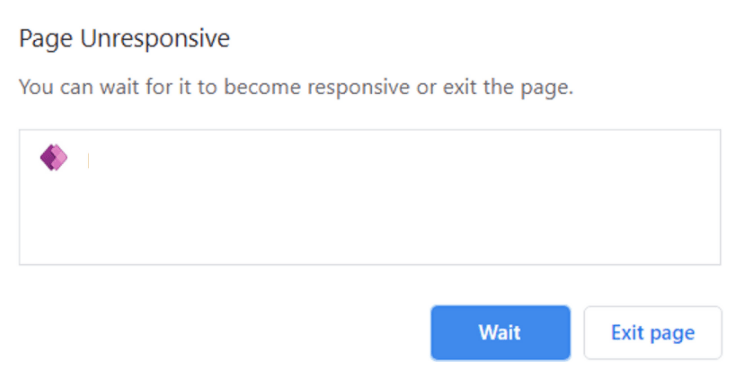
One of my customers created a Power App with too many screens, too many data sources and too many controls referencing each other. The result was a Power Apps Studio with aPage Unresponsiveerror when when opening specific screens:
This left us with no way to clean up the latest version of the Canvas App through the Studio anymore :cross_mark::face_without_mouth::cross_mark:.
What?
This post adds information on how to edit Power Apps source code for Canvas Apps. It will also show you that GitHub it is not per se needed.
How?
I still recommend to read the Microsoft post first. There is a lot of potential in using GitHub as your code repository. There are also some Youtube video’s on how to perform most of the steps explained in further detail. This post just focuses on how to use the toolingwithout a GitHub setup.
1) First step is to download the .msapp file of your Canvas App. The .msapp file is like a bundled package of multiple kind of files (.json, .xml and .yaml), making up your whole Power App :woman_technologist:.
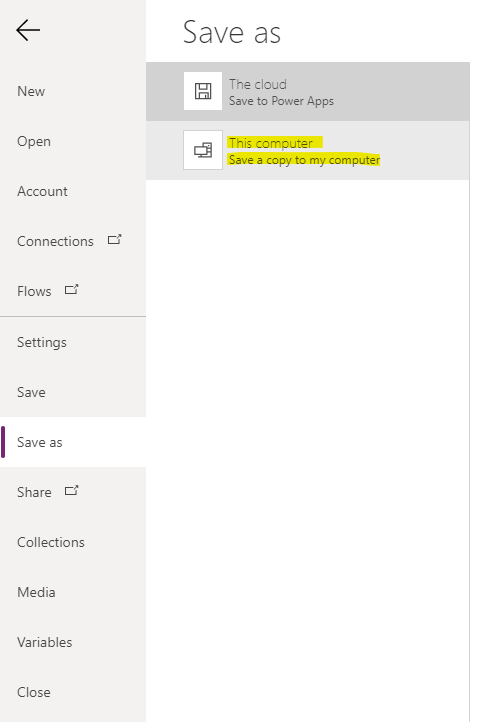
You can download your .msapp file by opening the Power App in the online Studio. Then selecteSave asand selectThis computeras your destination. A popup should appear that offers you to download the .msapp file: Save your .msapp file to a local destination
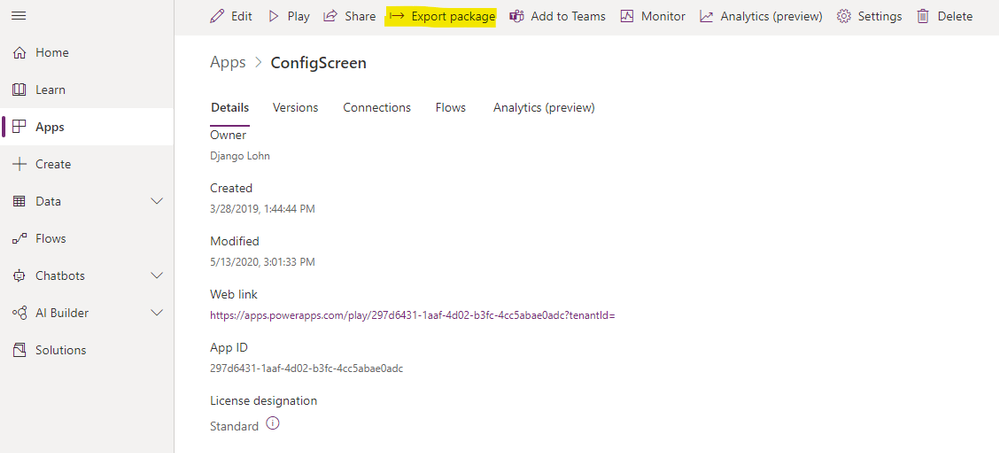
Another option is to Export the whole Power App package from the Power Apps as a ZIP file.
Export your Power App as a packaged ZIP file
In this option you need to unzip the downloaded file and find the .msapp files in a sub folder.
2) I then move the .msapp file to a folder within my Downloads folder making the file path:
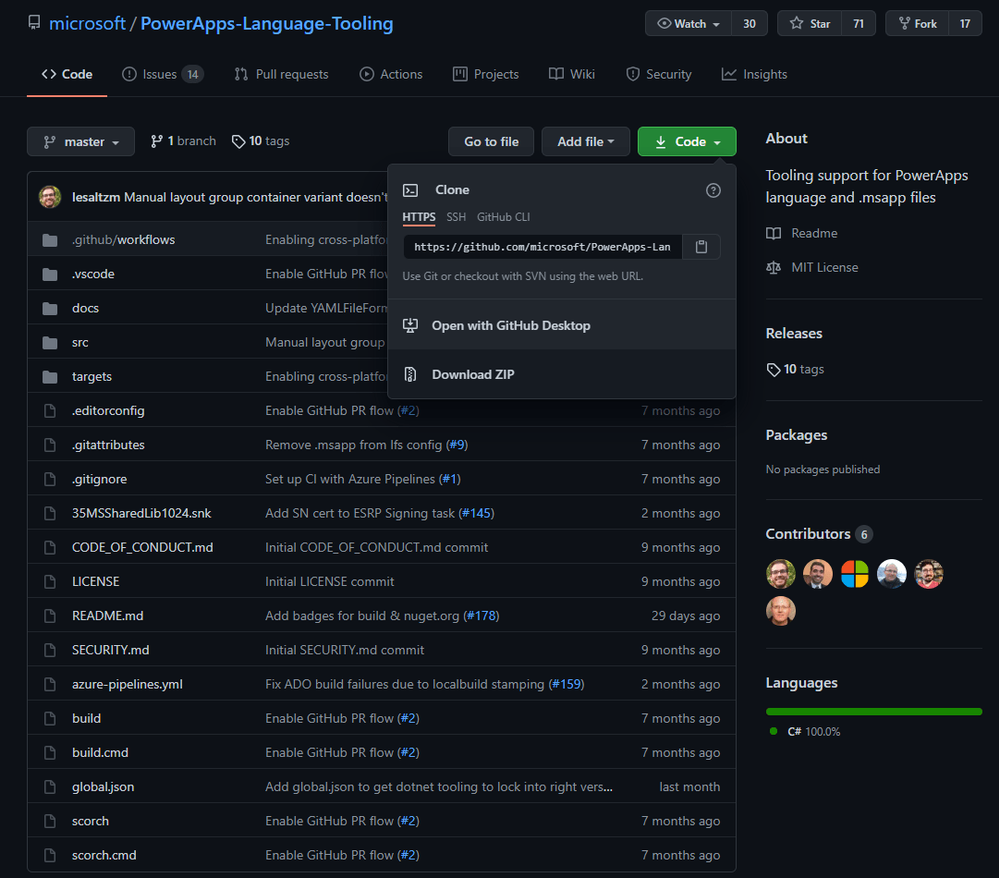
3) Make sure that you install the required .NET Core SDK version as mentioned in the Microsoft post. Then download the Power Apps Language Tooling locally to your Downloads folder:
Download the Power Apps Language Tooling tool from GitHub locally
Unzip this file and save the unzipped folder in a local place of your computer. I chose to store it next to my .msapp file so the directories would be near each other:
Please note that your directory path may be different at the beginning, but from the last PowerApps-Langauage-Tooling-master section it should be the same. The PASopa file is where the magic happens.
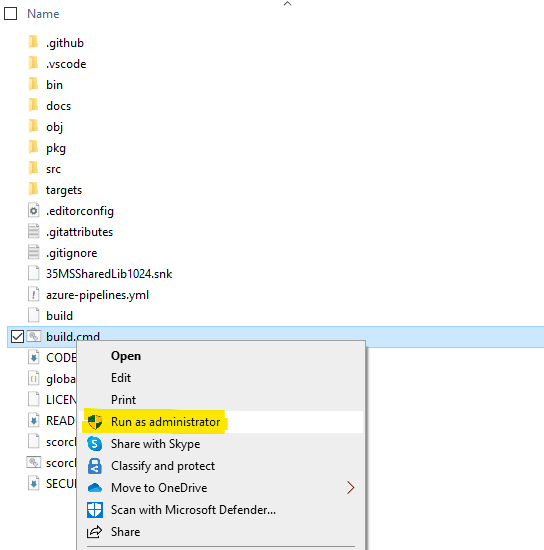
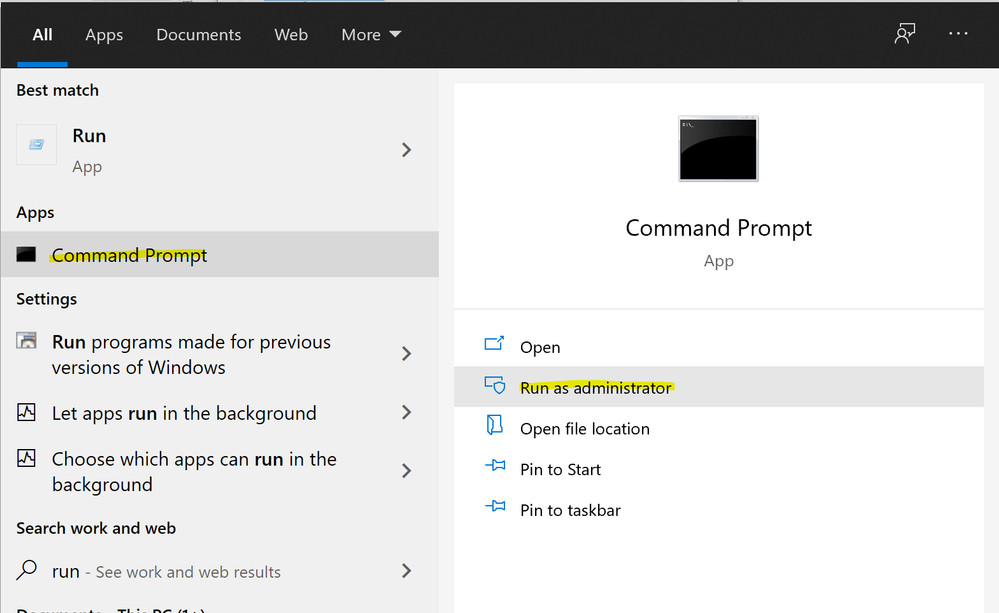
5) Now open the default Windows Command Prompt and Run as adminisrator:
Run Command Prompt as administrator
6) Have a folder prepared where you want to store the unpacked .msapp files. I chose a folder next to the .msapp file again:
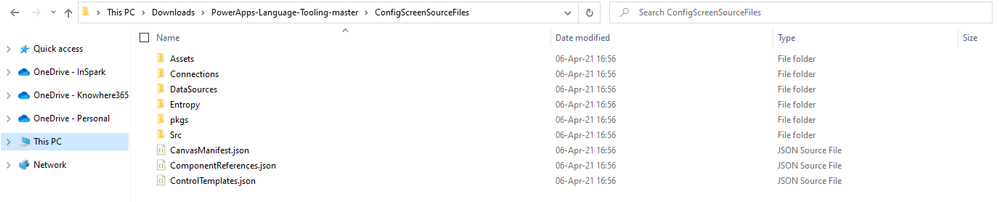
Note that the first directory is that of the .msapp file. The second directory is that of the folder where we want to unpack the separate files. Warnings may occur because of checksums built in by the developers. However in the end, the folder with the unpacked .msapp file will have a default content structure:
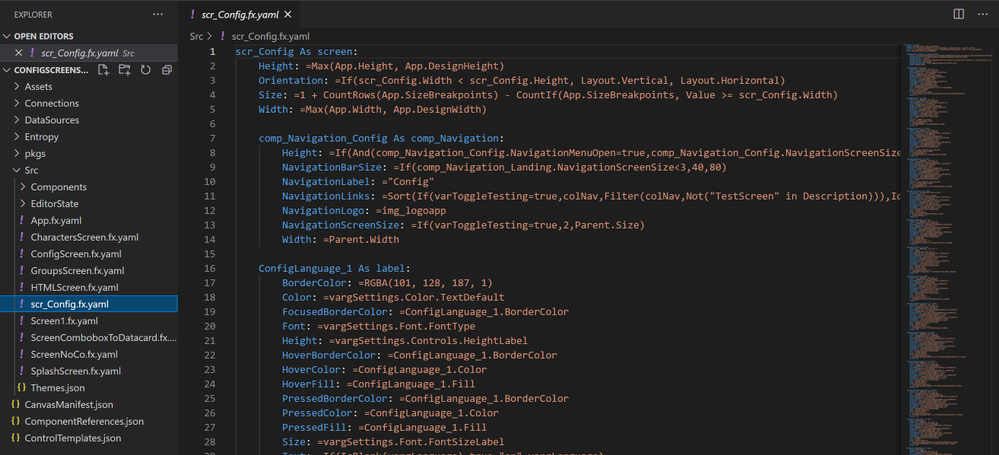
With a tool like Notepad++ or my personal favorite Visual Studio Code, you can edit the individual files. This is how you edit Power Apps source code of Canvas Apps. I prefer Visual Studio Code because you can open up a whole folder in one go:
Visual Studio Code opening a whole Folder and Sub Folders to edit individual files
9) Now you can remove frozen screens, rename controls in bulk, update variables in bulk or any other action which in Power Apps Studio would be a hassle.
When this is all done, you can just repack the files with a command like:
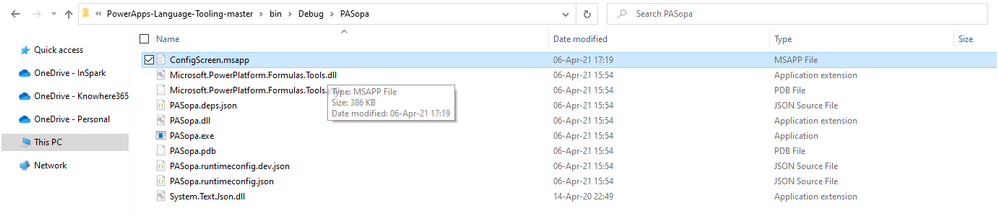
If you are more observant than I was, you will have noticed that this command does not give an output directory… so where did the new repacked .msapp file go?? It gives you the new .msapp file in the PASopa directory:
The repacked ZIP file can be imported in the online Studio. This import will then update the existing Power App to a new version. Never thought I would say this as if I know how to develop code but –> happy coding :flexed_biceps::nerd_face::thumbs_up:!




Recent Comments