It is imperative for organizations to create agile, connected, and sustainable manufacturing processes to customize products and services for their customers, accelerate innovation, and adopt to new business models like offering products-as-a-service. This requires hyper-automated processes and enhanced visibility across production floor and supply chains. In addition, more standardization and interoperability of software across plants is a critical capability to support more remote management and control.
Our latest investments in Microsoft Dynamics 365 Supply Chain Management are enabling organizations to innovate with intelligent manufacturing operations by easily adapting to new business models, improving planning agility, enhancing visibility of your shop floor, and ensuring round-the-clock uptime and business continuity.
Manufacturers can now seamlessly work with any manufacturing execution system (MES) and eliminate data siloes. They can optimize production processes with enhanced visibility of the shop floor and improve throughput and quality.
Priority-based planning
One of the challenges that manufacturers face when it comes to supply planning occurs when multiple orders for the same items land simultaneously, and there is not enough stock on hand to fulfill all demand. Which distribution center or store orders should be filled and in what order? Which is most important, and how should manufacturers set priority? While it is relatively easy for someone to manually review and determine planning priorities in these situations, manufactures have lacked a systematic process to automate these decisions at scale.
Master planning with Planning Optimization is changing the situation for manufactures. The Priority-based planning feature can be utilized to configure optimal replenishment based on priority, instead of by date only. This enables businesses to increase service levels, reduce on-hand inventory, and optimize their supply chains by prioritizing replenishment orders to ensure that urgent demand is fulfilled before less important demand.
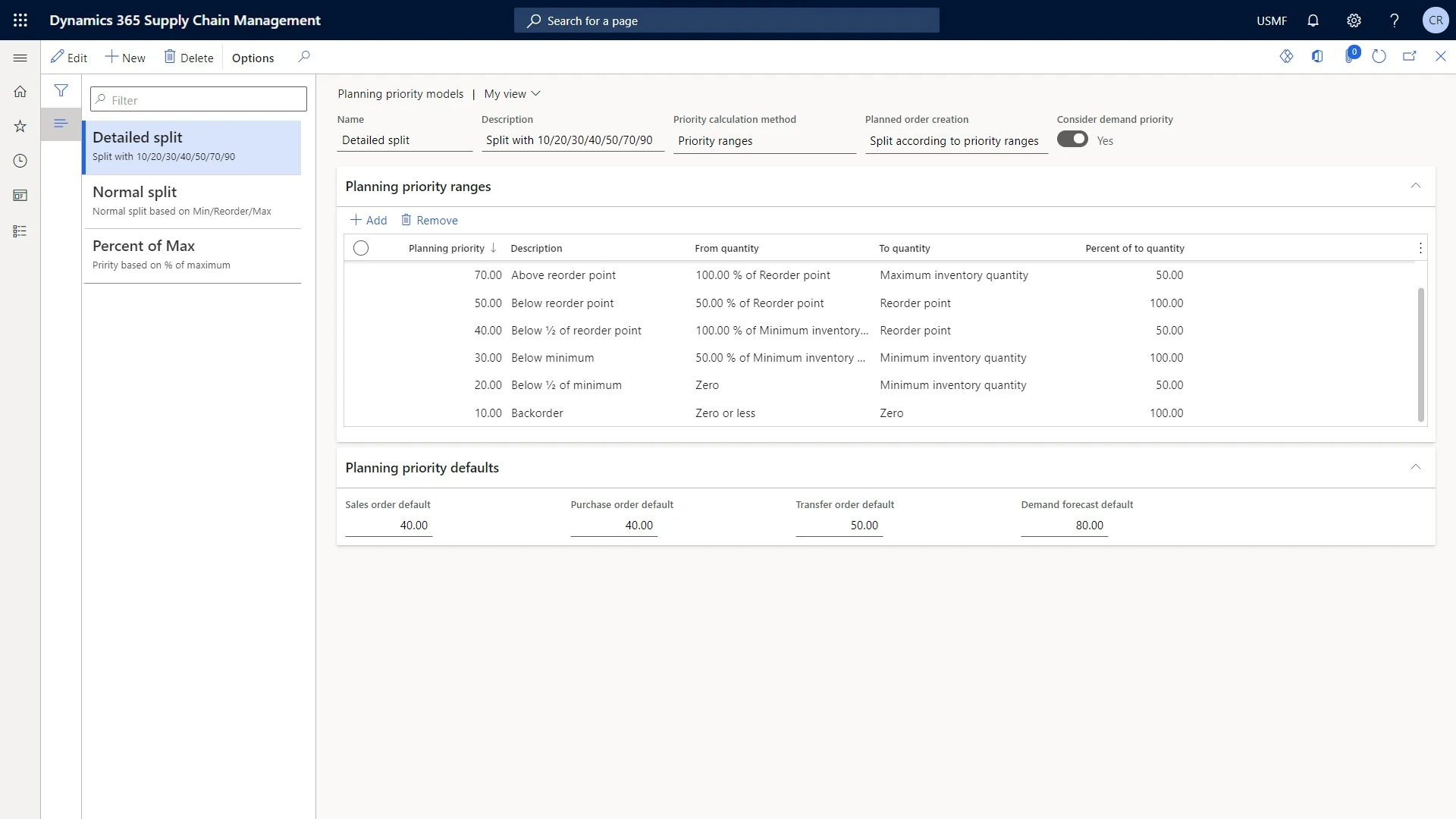
The planning priority is automatically calculated based on a flexible setup that considers inventory levels for minimum, reorder point, maximum, and projected on-hand that includes planned receipts and distributions. This data can be used to compare the importance of any orders across products and locations.
With priority-based planning, organizations gain the capability to:
- Calculate, manually edit, or default on planning priorities.
- Control replenishment by setting reorder point parameters.
- Split and optimize distribution orders using planning ranges.
- Group planned orders at firming.
- Utilize customizable planning priority ranges.
- Apply planning priority capabilities to intercompany orders.
With the introduction of Priority-based planning, Dynamics 365 Supply Chain Management is helping organizations to eliminate stockouts by automatically prioritizing replenishment of high-demand items in near-real-time based on order priorities, current stock levels, and projected inventory. Watch the on-demand session on Innovate with Intelligent Manufacturing Operations to learn more.
MES integration
Recent decades have seen manufacturers invest heavily in two automation layers: production lines and equipment and enterprise resource planning (ERP) systems. MES resides between these two layers and manages manufacturing’s unique operational requirements. One challenge that manufacturers have faced when it comes to these two separate automation layers is how to keep data synchronized as transactions occur across both.
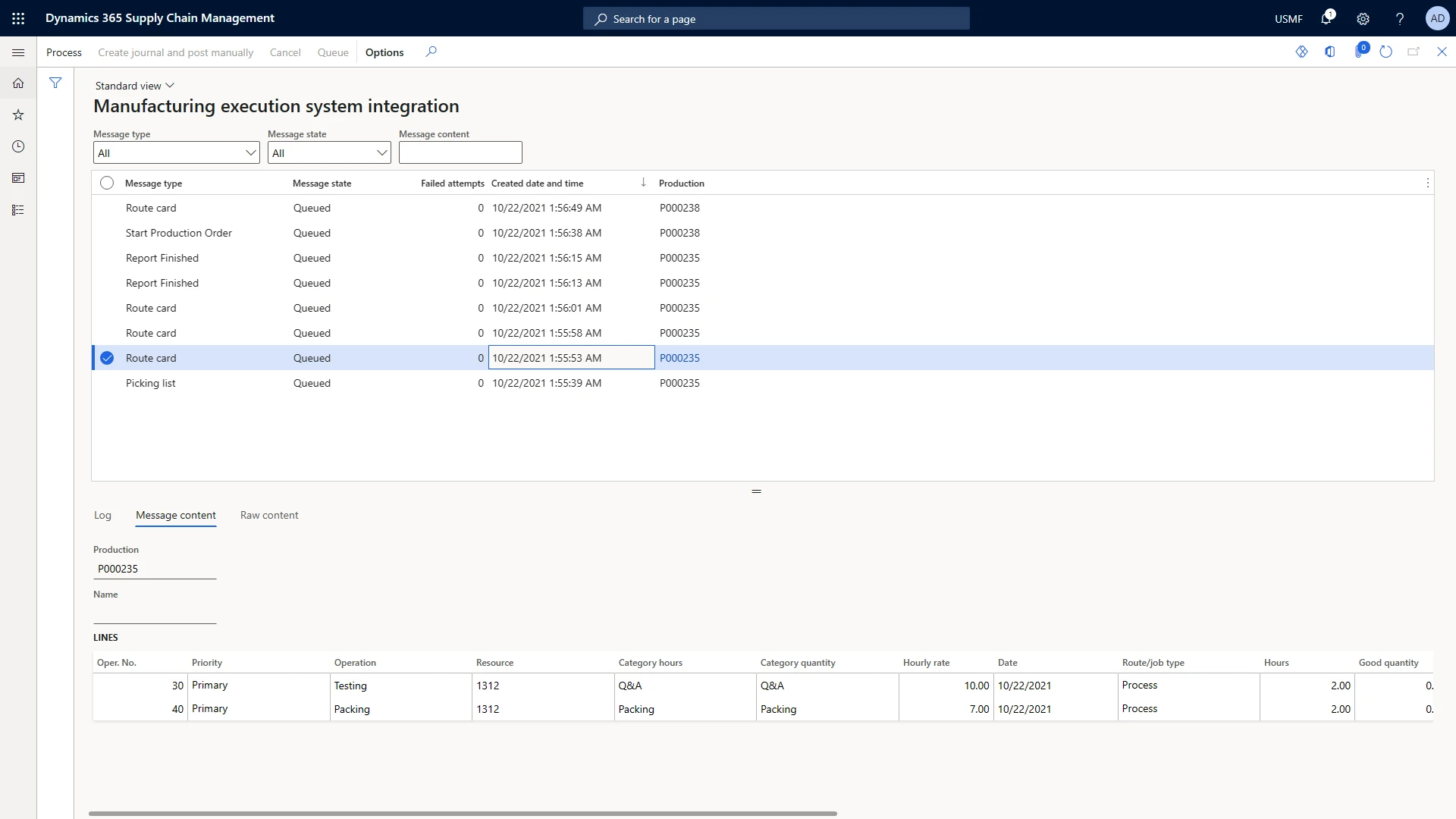
Dynamics 365 Supply Chain Management’s MES integration solves this problem by providing the means to keep data and transactions synchronized between both systems. Plus, it offers manufacturers a path to realizing their Industry 4.0 ambitions by making it faster and easier to integrate Dynamics 365 Supply Chain Management with common manufacturing execution systems.
By integrating a third-party MES solution with Dynamics 365 Supply Chain Management, data exchange is fully automated in near real-time. This is important for manufactures not only because it keeps data current in both systems but also because it eliminates the need for error-prone, manual data entry. For example, when material consumption is registered in the MES system, the integration ensures that the same consumption is also registered in Dynamics 365. This keeps inventory records up-to-date in support of other essential processes such as planning, sales, and so on. This is one reason that manufacturers, particularly those with advanced manufacturing requirements, can benefit from MES integration.
For instance, here is the benefit of integrating Dynamics 365 with Aegis Factorylogixone of the MES software that it integrates with:
“Aegis’ IoT-based MES platform orchestrates execution of ERP work-orders in real-time, across highly complex and technical assembly, test and inspection stations, with exact material, product and process traceability that satisfies the most stringent quality assurance requirements. The feedback of live operational data enhances ERP by providing detailed, accurate and timely information related to completions, material consumption and much more.”Jason Spera, CEO and co-founder, Aegis Software
Other benefits of MES integration include enhanced visibility of the production floor, improved throughput and quality by unifying data across ERP and MES, and the ability to track, trace, troubleshoot, and resolve issues by contextualizing MES data. Also, the MES integration solution offers business event interfaces to support key manufacturing execution processes and a centralized dashboard where the event processing history can be monitored.
With the introduction of MES integration, Dynamics 365 Supply Chain Management is reducing overall implementation and operating costs and helping manufacturers to establish end-to-end visibility and control over the production floor. At the same time, we are providing a faster, easier, and cheaper means of integrating Dynamics 365 Supply Chain Management with third-party MES systems. Watch the on-demand session on Innovate with Intelligent Manufacturing Operations to learn more.
Total economic impact
Microsoft commissioned Forrester Consulting to examine the business impact of deploying Dynamics 365 Supply Chain Management. To understand and quantify the economics of implementing the solution, Forrester interviewed six senior decision-makers from five companies ranging in size from $100 million to $1 billion in revenue that had experience using Dynamics 365 Supply Chain Management.1 The purpose of the study was to discover the decision drivers and financial benefits and compare the cost of implementation to the realized value.
Value drivers
Users reported increased production volume of $24.3 million, reductions in equipment downtime worth $1.5 million, improvements to production quality that reduced costs by $6.8 million, infrastructure cost reductions valued at $11 million, and increased developer productivity of $0.7 million, for a total of $44.33 million in financial savings over a three-year period.
Customers also experienced numerous other unquantified benefits to their organizations. These included increased flexibility to adapt, improved ability to deliver on time, improved customer satisfaction, better forecasting capabilities that improved supplier collaboration and planning, and improvements to team members’ day-to-day work realized by breaking down siloes between teams and functions.
Average payback in under two years
The Dynamics 365 Supply Chain Management investment cost an average of $23.27 million, took 22 months to pay back, and produced a return on investment (ROI) of 90 percent and net present value (NPV) of $21.06 million across the three-year benefit study.
Customers also noted an overall streamlining of their supply chain due to the unification of systems, processes, and data. Plus, they were able to scale much faster and far cheaper than their previous environment would allow.
See the full details in the Forrester Total Economic Impact (TEI) study to understand how your organization might benefit from a move to Dynamics 365 Supply Chain Management.
Read the full report: A Total Economic Impact of Microsoft Dynamics 365 Supply Chain Management.
What’s next?
Dynamics 365 Supply Chain Management is an agile and composable ERP solution. It enables manufacturers, retailers, and distributors to create a connected, resilient, and digital supply chain by enhancing operational visibility, improving planning agility, and maximizing asset uptime. In addition, it unifies data from almost any source in real-time and generates intelligence by leveraging AI and machine learning to proactively detect opportunities and develop a long-term competitive advantage.
If you are ready to see what our modern, cloud-based supply chain management solution can do for your organization, we invite you to start today with a free Dynamics 365 trial. Or you can learn more about the benefits of a digital supply chain in our recent e-book: Four Pillars of the Digital Supply Chain.
____________________________________________________________________________________________________
Sources
1Forrester, The Total Economic ImpactTM of Microsoft Dynamics 365 Supply Chain Management, August 2021
The post Optimize production processes with Dynamics 365 Supply Chain Management appeared first on Microsoft Dynamics 365 Blog.
Brought to you by Dr. Ware, Microsoft Office 365 Silver Partner, Charleston SC.



 ) or https:// means you’ve safely connected to the .gov website. Share sensitive information only on official, secure websites.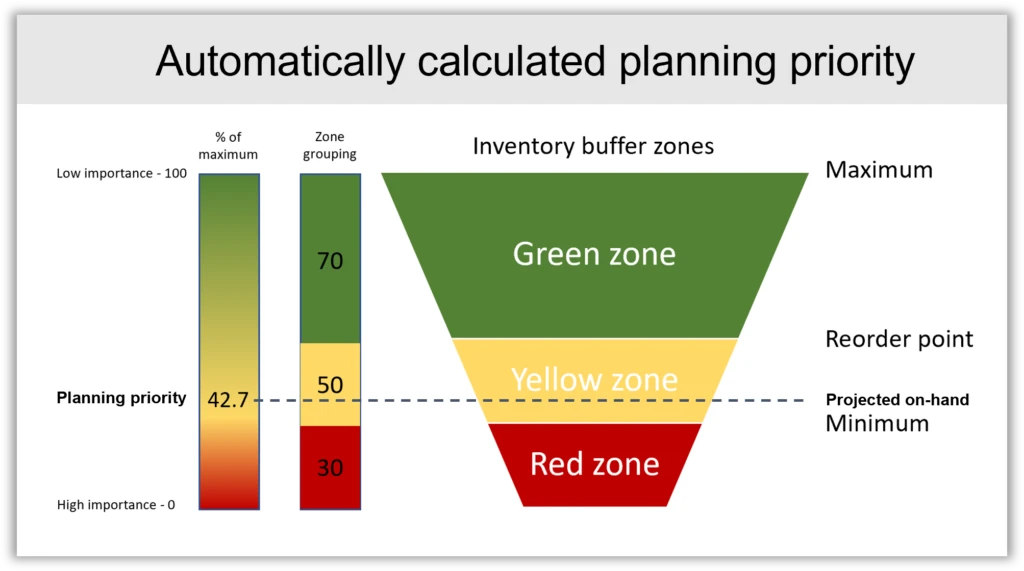

Recent Comments