
by Scott Muniz | Nov 18, 2021 | Security, Technology
This article is contributed. See the original author and article here.
Official websites use .gov
A .gov website belongs to an official government organization in the United States.

Secure .gov websites use HTTPS A
lock ( )
) or
https:// means you’ve safely connected to the .gov website. Share sensitive information only on official, secure websites.
by Scott Muniz | Nov 17, 2021 | Security, Technology
This article is contributed. See the original author and article here.
CISA has added four new vulnerabilities to its Known Exploited Vulnerabilities Catalog, which require remediation from federal civilian executive branch (FCEB) agencies by December 1, 2021. CISA has evidence that threat actors are actively exploiting the vulnerabilities listed in the table below. These types of vulnerabilities are a frequent attack vector for malicious cyber actors of all types and pose significant risk to the federal enterprise.
| CVE Number |
CVE Title |
Remediation Due Date |
| CVE-2021-22204 |
Exiftool Remote Code Execution vulnerability |
12/01/2021 |
| CVE-2021-40449 |
Microsoft Win32k Elevation of Privilege |
12/01/2021 |
| CVE-2021-42292 |
Microsoft Excel Security Feature Bypass |
12/01/2021 |
| CVE-2021-42321 |
Microsoft Exchange Server Remote Code Execution |
12/01/2021 |
Binding Operational Directive (BOD) 22-01: Reducing the Significant Risk of Known Exploited Vulnerabilities established the Known Exploited Vulnerabilities Catalog as a living list of known CVEs that carry significant risk to the federal enterprise. BOD 22-01 requires FCEB agencies to remediate identified vulnerabilities by the due date to protect FCEB networks against active threats. See the BOD 22-01 Fact Sheet for more information.
Although BOD 22-01 only applies to FCEB agencies, CISA strongly urges all organizations to reduce their exposure to cyberattacks by prioritizing timely remediation of Catalog vulnerabilities as part of their vulnerability management practice. CISA will continue to add vulnerabilities to the Catalog that meet the meet the specified criteria.
by Contributed | Nov 17, 2021 | Technology
This article is contributed. See the original author and article here.
Azure Purview lets you govern Azure SQL Databases at scale, and with ease. The following details how to register and scan your Azure SQL Database, along with how to extract lineage to view and analyze how data is being transformed. It also describes how to discover assets easily by grouping Azure SQL Database schemas and tables into Purview collections.
Register and scan
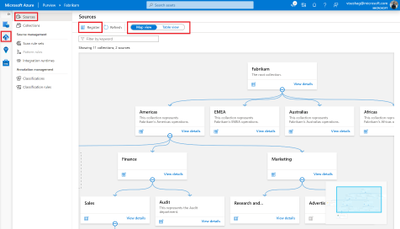
Navigate to your Purview account and click on the Data Map section to the left. You can view your data estate map and choose to view your sources in table format as well.
Purview now supports 20-plus source types, ranging from Azure SQL Database, to AWS S3, to Oracle Database. Sources can be registered in two ways: by either clicking on the register button on the top left or by navigating to the collection that you’d like to register the source to and clicking on the Register quick action icon. Then click on the Azure SQL Database source tile and fill in the required details.
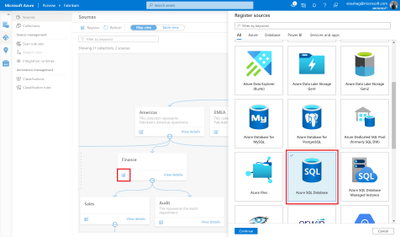
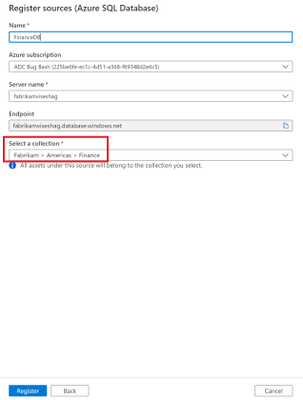
As part of the required details, register your source to a collection of interest. In our example, we register the source to the Finance collection.
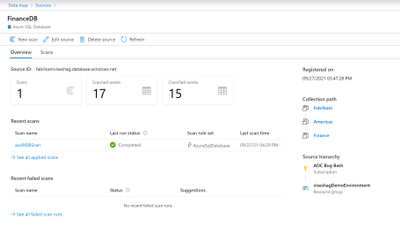
Once your source is registered, the next step is to set up a scan. While setting up your scan, fill in details for the integration runtime, database name, and credential. You can also set up your scan with a collection; in our example, it’s the Audit collection under Finance. So you can now scope your scan to only the Audit tables to ensure all assets are scanned into the catalog with the right collection associated for discovery and access control.
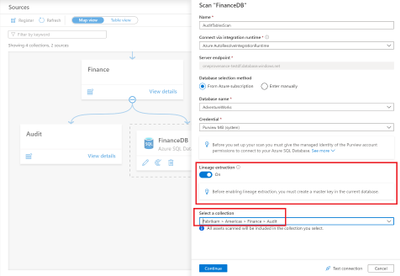
See results of the scan by clicking on View details for your source.
Lineage extraction (preview)
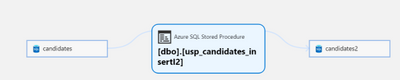
While setting up your scan, you can now extract lineage from stored procedures and other artifacts in your Azure SQL Database source.
Learn more on how to get onboarded to the Preview program here.
Discover—search and browse for your Azure SQL Database tables
Once a scan completes, you can discover assets either via search or browse. To search, enter keywords in the search bar on the top of the Purview studio and narrow down results by the facet filters Purview provides.
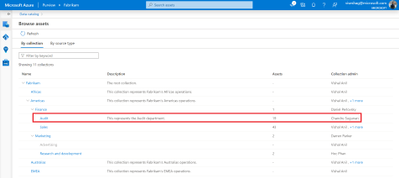
To browse, click on the browse assets tile on the catalog home page, navigate to the By collection tab and navigate to the collection that you scanned assets into. In our example, it would be Audit. If you have access to this collection, click on it to browse for your assets.
Add business metadata to your Azure SQL database assets
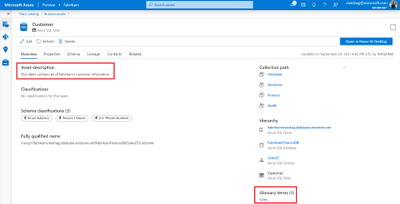
You can also navigate to one of your Azure SQL tables and view details. To aid in discoverability and compliance, add descriptions and business glossary terms by clicking on the Edit button.
Insights (preview)
Finally, view all your Azure SQL Database-related insights around assets, scans, glossary, classification, and labels by navigating to the Insights section of Purview.
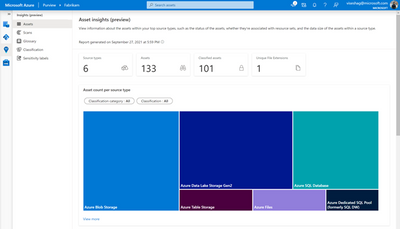
Get started today!
- Quickly and easily create an Azure Purview account to try the generally available features.
- Read documentation on how to register and scan an Azure SQL Database in Azure Purview.
by Scott Muniz | Nov 17, 2021 | Security, Technology
This article is contributed. See the original author and article here.
Summary
Actions to Take Today to Protect Against Iranian State-Sponsored Malicious Cyber Activity
• Immediately patch software affected by the following vulnerabilities: CVE-2021-34473, 2018-13379, 2020-12812, and 2019-5591.
• Implement multi-factor authentication.
• Use strong, unique passwords.
Note: this advisory uses the MITRE Adversarial Tactics, Techniques, and Common Knowledge (ATT&CK®) framework, version 10. See the ATT&CK for Enterprise for all referenced threat actor tactics and techniques.
This joint cybersecurity advisory is the result of an analytic effort among the Federal Bureau of Investigation (FBI), the Cybersecurity and Infrastructure Security Agency (CISA), the Australian Cyber Security Centre (ACSC), and the United Kingdom’s National Cyber Security Centre (NCSC) to highlight ongoing malicious cyber activity by an advanced persistent threat (APT) group that FBI, CISA, ACSC, and NCSC assess is associated with the government of Iran. FBI and CISA have observed this Iranian government-sponsored APT group exploit Fortinet vulnerabilities since at least March 2021 and a Microsoft Exchange ProxyShell vulnerability since at least October 2021 to gain initial access to systems in advance of follow-on operations, which include deploying ransomware. ACSC is also aware this APT group has used the same Microsoft Exchange vulnerability in Australia.
The Iranian government-sponsored APT actors are actively targeting a broad range of victims across multiple U.S. critical infrastructure sectors, including the Transportation Sector and the Healthcare and Public Health Sector, as well as Australian organizations. FBI, CISA, ACSC, and NCSC assess the actors are focused on exploiting known vulnerabilities rather than targeting specific sectors. These Iranian government-sponsored APT actors can leverage this access for follow-on operations, such as data exfiltration or encryption, ransomware, and extortion.
This advisory provides observed tactics and techniques, as well as indicators of compromise (IOCs) that FBI, CISA, ACSC, and NCSC assess are likely associated with this Iranian government-sponsored APT activity.
The FBI, CISA, ACSC, and NCSC urge critical infrastructure organizations to apply the recommendations listed in the Mitigations section of this advisory to mitigate risk of compromise from Iranian government-sponsored cyber actors.
For more information on Iranian government-sponsored malicious cyber activity, see us-cert.cisa.gov/Iran.
Click herefor a PDF version of this report.
Technical Details
Threat Actor Activity
Since at least March 2021, the FBI and CISA have observed Iranian government-sponsored APT actors leverage Microsoft Exchange and Fortinet vulnerabilities to target a broad range of victims across multiple critical infrastructure sectors in furtherance of malicious activities. Observed activity includes the following.
- In March 2021, the FBI and CISA observed these Iranian government-sponsored APT actors scanning devices on ports 4443, 8443, and 10443 for Fortinet FortiOS vulnerability CVE-2018-13379, and enumerating devices for FortiOS vulnerabilities CVE-2020-12812 and CVE-2019-5591. The Iranian Government-sponsored APT actors likely exploited these vulnerabilities to gain access to vulnerable networks. Note: for previous FBI and CISA reporting on this activity, refer to Joint Cybersecurity Advisory: APT Actors Exploit Vulnerabilities to Gain Initial Access for Future Attacks.
- In May 2021, these Iranian government-sponsored APT actors exploited a Fortigate appliance to access a webserver hosting the domain for a U.S. municipal government. The actors likely created an account with the username
elie to further enable malicious activity. Note: for previous FBI reporting on this activity, refer to FBI FLASH: APT Actors Exploiting Fortinet Vulnerabilities to Gain Initial Access for Malicious Activity.
- In June 2021, these APT actors exploited a Fortigate appliance to access environmental control networks associated with a U.S.-based hospital specializing in healthcare for children. The Iranian government-sponsored APT actors likely leveraged a server assigned to IP addresses
91.214.124[.]143 and 162.55.137[.]20—which FBI and CISA judge are associated with Iranian government cyber activity—to further enable malicious activity against the hospital’s network. The APT actors accessed known user accounts at the hospital from IP address 154.16.192[.]70, which FBI and CISA judge is associated with government of Iran offensive cyber activity.
- As of October 2021, these APT actors have leveraged a Microsoft Exchange ProxyShell vulnerability—
CVE-2021-34473—to gain initial access to systems in advance of follow-on operations.
ACSC considers that this APT group has also used the same Microsoft Exchange vulnerability (CVE-2021-34473) in Australia.
MITRE ATT&CK Tactics and Techniques
FBI, CISA, ACSC, and NCSC assess the following tactics and techniques are associated with this activity.
Resource Development [TA0042]
The APT actors have used the following malicious and legitimate tools [T1588.001, T1588.002] for a variety of tactics across the enterprise spectrum.
- Mimikatz for credential theft [TA0006]
- WinPEAS for privilege escalation [TA0004]
- SharpWMI (Windows Management Instrumentation)
- WinRAR for archiving collected data [TA0009, T1560.001]
- FileZilla for transferring files [TA0010]
Initial Access [TA0001]
The Iranian government-sponsored APT actors gained initial access by exploiting vulnerabilities affecting Microsoft Exchange servers (CVE-2021-34473) and Fortinet devices (CVE-2018-13379, CVE-2020-12812, and CVE-2019-5591) [T1190].
The Iranian government-sponsored APT actors may have made modifications to the Task Scheduler [T1053.005]. These modifications may display as unrecognized scheduled tasks or actions. Specifically, the below established tasks may be associated with this activity:
SynchronizeTimeZoneGoogleChangeManagementMicrosoftOutLookUpdaterMicrosoftOutLookUpdateSchedule
Persistence [TA0003]
The Iranian government-sponsored APT actors may have established new user accounts on domain controllers, servers, workstations, and active directories [T1136.001, T1136.002]. Some of these accounts appear to have been created to look similar to other existing accounts on the network, so specific account names may vary per organization. In addition to unrecognized user accounts or accounts established to masquerade as existing accounts, the following account usernames may be associated with this activity:
SupportHelpelieWADGUtilityAccount
Exfiltration [TA0010]
The FBI and CISA observed outbound File Transfer Protocol (FTP) transfers over port 443.
The APT actors forced BitLocker activation on host networks to encrypt data [T1486]. The corresponding threatening notes were either sent to the victim or left on the victim network as a .txt file. The ransom notes included ransom demands and the following contact information.
- sar_addr@protonmail[.]com
- WeAreHere@secmail[.]pro
- nosterrmann@mail[.]com
- nosterrmann@protonmail[.]com
Detection
The FBI, CISA, ACSC, and NCSC recommend that organizations using Microsoft Exchange servers and Fortinet investigate potential suspicious activity in their networks.
- Search for IOCs. Collect known-bad IOCs and search for them in network and host artifacts. Note: refer to Appendix A for IOCs.
- Investigate exposed Microsoft Exchange servers (both patched and unpatched) for compromise.
- Investigate changes to Remote Desktop Protocol (RDP), firewall, and Windows Remote Management (WinRM) configurations that may allow attackers to maintain persistent access.
- Review domain controllers, servers, workstations, and active directories for new or unrecognized user accounts.
- Review Task Scheduler for unrecognized scheduled tasks. Additionally, manually review operating-system defined or recognized scheduled tasks for unrecognized “actions” (for example, review the steps each scheduled task is expected to perform).
- Review antivirus logs for indications they were unexpectedly turned off.
- Look for WinRAR and FileZilla in unexpected locations.
Note: for additional approaches on uncovering malicious cyber activity, see joint advisory Technical Approaches to Uncovering and Remediating Malicious Activity, authored by CISA and the cybersecurity authorities of Australia, Canada, New Zealand, and the United Kingdom.
Mitigations
The FBI, CISA, ACSC, and NCSC urge network defenders to apply the following mitigations to reduce the risk of compromise by this threat.
Patch and Update Systems
- Install updates/patch operating systems, software, and firmware as soon as updates/patches are released.
- Immediately patch software affected by vulnerabilities identified in this advisory: CVE-2021-34473, CVE-2018-13379, CVE-2020-12812, and CVE-2019-5591.
Evaluate and Update Blocklists and Allowlists
- Regularly evaluate and update blocklists and allowlists.
- If FortiOS is not used by your organization, add the key artifact files used by FortiOS to your organization’s execution blocklist. Any attempts to install or run this program and its associated files should be prevented.
Implement and Enforce Backup and Restoration Policies and Procedures
- Regularly back up data, air gap, and password protect backup copies offline.
- Ensure copies of critical data are not accessible or modification or deletion from the system where the data resides.
- Implement a recovery plan to maintain and retain multiple copies of sensitive or proprietary data and servers in a physically separate, segmented, secure location (e.g., hard drive, storage device, the cloud).
Implement Network Segmentation
- Implement network segmentation to restrict adversary’s lateral movement.
Secure User Accounts
- Audit user accounts with administrative privileges and configure access controls under the principles of least privilege and separation of duties.
- Require administrator credentials to install software.
Implement Multi-Factor Authentication
- Use multifactor authentication where possible, particularly for webmail, virtual private networks (VPNs), and accounts that access critical systems.
Use Strong Passwords
- Require all accounts with password logins to have strong, unique passwords.
Secure and Monitor RDP and other Potentially Risky Services
- If you use RDP, restrict it to limit access to resources over internal networks.
- Disable unused remote access/RDP ports.
- Monitor remote access/RDP logs.
Use Antivirus Programs
- Install and regularly update antivirus and anti-malware software on all hosts.
Secure Remote Access
- Only use secure networks and avoid using public Wi-Fi networks.
- Consider installing and using a VPN for remote access.
Reduce Risk of Phishing
- Consider adding an email banner to emails received from outside your organization.
- Disable hyperlinks in received emails
Resources
- For more information on Iranian government-sponsored malicious cyber activity, see us-cert.cisa.gov/Iran.
- For information and resources on protecting against and responding to ransomware, refer to StopRansomware.gov, a centralized, whole-of-government webpage providing ransomware resources and alerts.
- The joint advisory from the cybersecurity authorities of Australia, Canada, New Zealand, the United Kingdom, and the United States: Technical Approaches to Uncovering and Remediating Malicious Activity provides additional guidance when hunting or investigating a network and common mistakes to avoid in incident handling.
- CISA offers a range of no-cost cyber hygiene services to help critical infrastructure organizations assess, identify, and reduce their exposure to threats, including ransomware. By requesting these services, organizations of any size could find ways to reduce their risk and mitigate attack vectors.
- The U.S. Department of State’s Rewards for Justice (RFJ) program offers a reward of up to $10 million for reports of foreign government malicious activity against U.S. critical infrastructure. See the RFJ website for more information and how to report information securely.
- ACSC can provide tailored cyber security advice and assistance, reporting, and incident response support at cyber.gov.au and via 1300 292 371 (1300 CYBER1).
Appendix A: Indicators of Compromise
IP addresses and executables files are listed below.
IP Addresses
91.214.124[.]143 162.55.137[.]20 154.16.192[.]70
Executable Files
Executable files observed in this activity are identified in table 1.
Table 1: Executable Files
| Filename: |
MicrosoftOutLookUpdater[.]exe |
|
| MD5: |
1444884faed804667d8c2bfa0d63ab13 |
|
| SHA-1: |
95E045446EFB8C9983EBFD85E39B4BE5D92C7A2A |
|
| SHA-256: |
c51fe5073bd493c7e8d83365aace3f9911437a0f2ae80042ba01ea46b55d2624 |
|
| SHA-512: |
6451077B99C5F8ECC5C0CA88FE272156296BEB91218B39AE28A086DBA5E7E39813F044F9AF0FEDBB260941B1CD52FA237C098CBF4B2A822F08E3E98E934D0ECF |
|
| Filename: |
MicrosoftOutlookUpdater.bat |
|
| MD5: |
6735be6deea16d03cb628b553d71fe91 |
|
| SHA-1 |
95E045446EFB8C9983EBFD85E39B4BE5D92C7A2A |
|
| SHA-256 |
C51FE5073BD493C7E8D83365AACE3F9911437A0F2AE80042BA01EA46B55D2624 |
|
| SHA-512 |
6451077B99C5F8ECC5C0CA88FE272156296BEB91218B39AE28A086DBA5E7E39813F044F9AF0FEDBB260941B1CD52FA237C098CBF4B2A822F08E3E98E934D0ECF |
|
| Filename: |
MicrosoftOutlookUpdater.xml |
|
| MD5: |
AA40C49E309959FA04B7E5AC111BB770 |
|
| SHA-1 |
F1D90E10E6E3654654E0A677763C9767C913F8F0 |
|
| SHA-256 |
5C818FE43F05F4773AD20E0862280B0D5C66611BB12459A08442F55F148400A6 |
|
| SHA-512 |
E55A86159F2E869DCDB64FDC730DA893718E20D65A04071770BD32CAE75FF8C34704BDF9F72EF055A3B362759EDE3682B3883C4D9BCF87013076638664E8078E |
|
| Filename: |
GoogleChangeManagement.xml |
|
| MD5: |
AF2D86042602CBBDCC7F1E8EFA6423F9 |
|
| SHA-1 |
CDCD97F946B78831A9B88B0A5CD785288DC603C1 |
|
| SHA-256 |
4C691CCD811B868D1934B4B8E9ED6D5DB85EF35504F85D860E8FD84C547EBF1D |
|
| SHA-512 |
6473DAC67B75194DEEAEF37103BBA17936F6C16FFCD2A7345A5A46756996FAD748A97F36F8FD4BE4E1F264ECE313773CC5596099D68E71344D8135F50E5D8971 |
|
| Filename: |
Connector3.exe |
|
| MD5: |
e64064f76e59dea46a0768993697ef2f |
|
| Filename: |
Audio.exe or frpc.exe |
|
| MD5: |
b90f05b5e705e0b0cb47f51b985f84db |
|
| SHA-1 |
5bd0690247dc1e446916800af169270f100d089b |
|
| SHA-256: |
28332bdbfaeb8333dad5ada3c10819a1a015db9106d5e8a74beaaf03797511aa |
|
| Vhash: |
017067555d5d15541az28!z |
|
| Authentihash: |
ed463da90504f3adb43ab82044cddab8922ba029511da9ad5a52b8c20bda65ee |
|
| Imphash: |
93a138801d9601e4c36e6274c8b9d111 |
|
| SSDEEP: |
98304:MeOuFco2Aate8mjOaFEKC8KZ1F4ANWyJXf/X+g4:MeHFV2AatevjOaDC8KZ1xNWy93U |
|
| Note: |
Identical to “frpc.exe” available at:
https://github[.]com/fatedier/frp/releases/download/v0.34.3/frp_0.34.3_windows_amd64.zip
|
|
| Filename: |
Frps.exe |
|
| MD5: |
26f330dadcdd717ef575aa5bfcdbe76a |
|
| SHA-1 |
c4160aa55d092cf916a98f3b3ee8b940f2755053 |
|
| SHA-256: |
d7982ffe09f947e5b4237c9477af73a034114af03968e3c4ce462a029f072a5a |
|
| Vhash: |
017057555d6d141az25!z |
|
| Authentihash: |
40ed1568fef4c5f9d03c370b2b9b06a3d0bd32caca1850f509223b3cee2225ea |
|
| Imphash: |
91802a615b3a5c4bcc05bc5f66a5b219 |
|
| SSDEEP: |
196608:/qTLyGAlLrOt8enYfrhkhBnfY0NIPvoOQiE:GLHiLrSfY5voO |
|
| Note: |
Identical to “frps.exe” available at:
https://github[.]com/fatedier/frp/releases/download/v0.33.0/frp_0.33.0_windows_amd64.zip
|
|
APPENDIX B: MITRE ATT&CK TACTICS AND TECHNIQUES
Table 2 identifies MITRE ATT&CK Tactics and techniques observed in this activity.
Table 2: Observed Tactics and Techniques
Contact Information
To report suspicious or criminal activity related to information found in this Joint Cybersecurity Advisory, contact your local FBI field office at https://www.fbi.gov/contact-us/field-offices, or the FBI’s 24/7 Cyber Watch (CyWatch) at (855) 292-3937 or by e-mail at CyWatch@fbi.gov. When available, please include the following information regarding the incident: date, time, and location of the incident; type of activity; number of people affected; type of equipment used for the activity; the name of the submitting company or organization; and a designated point of contact. To request incident response resources or technical assistance related to these threats, contact CISA at CISAServiceDesk@cisa.dhs.gov. Australian organizations can visit cyber.gov.au or call 1300 292 371 (1300 CYBER 1) to report cybersecurity incidents and access alerts and advisories.
Revisions
Initial Version: November 17, 2021
This product is provided subject to this Notification and this Privacy & Use policy.
by Scott Muniz | Nov 17, 2021 | Security, Technology
This article is contributed. See the original author and article here.
CISA, the Federal Bureau of Investigation (FBI), the Australian Cyber Security Centre (ACSC), and the United Kingdom’s National Cyber Security Centre (NCSC) have released a joint Cybersecurity Advisory highlighting ongoing malicious cyber activity by an advanced persistent threat (APT) group that FBI, CISA, ACSC, and NCSC assess is associated with the government of Iran. FBI and CISA have observed this Iranian government-sponsored APT exploit Fortinet and Microsoft Exchange ProxyShell vulnerabilities to gain initial access to systems in advance of follow-on operations, which include deploying ransomware.
Joint Cybersecurity Advisory AA21-321A provides observed tactics and techniques, as well as indicators of compromise that FBI, CISA, ACSC, and NCSC assess are likely associated with this Iranian government-sponsored APT activity. FBI, CISA, ACSC, and NCSC urge critical infrastructure organizations to apply the recommendations listed in the advisory to mitigate risk of compromise from Iranian government-sponsored cyber actors.
CISA also recommends reviewing its Iran Cyber Threat Overview and other Iran-related Advisories.


Recent Comments