by Contributed | Apr 16, 2021 | Technology
This article is contributed. See the original author and article here.
Step by Step Manage Windows Server in Azure with Windows Admin Center
Robert Smit is a EMEA Cloud Solution Architect at Insight.de and is a current Microsoft MVP Cloud and Datacenter as of 2009. Robert has over 20 years experience in IT with experience in the educational, health-care and finance industries. Robert’s past IT experience in the trenches of IT gives him the knowledge and insight that allows him to communicate effectively with IT professionals. Follow him on Twitter at @clusterMVP

Create your classroom lab with Azure Lab Services!
Sergio Govoni is a graduate of Computer Science from “Università degli Studi” in Ferrara, Italy. Following almost two decades at Centro Software, a software house that produces the best ERP for manufacturing companies that are export-oriented, Sergio now manages the Development Product Team and is constantly involved on several team projects. For the provided help to technical communities and for sharing his own experience, since 2010 he has received the Microsoft Data Platform MVP award. During 2011 he contributed to writing the book: SQL Server MVP Deep Dives Volume 2. Follow him on Twitter or read his blogs in Italian and English.

Backing up all Azure Key Vault Secrets, Keys, and Certificates
Tobias Zimmergren is a Microsoft Azure MVP from Sweden. As the Head of Technical Operations at Rencore, Tobias designs and builds distributed cloud solutions. He is the co-founder and co-host of the Ctrl+Alt+Azure Podcast since 2019, and co-founder and organizer of Sweden SharePoint User Group from 2007 to 2017. For more, check out his blog, newsletter, and Twitter @zimmergren

Azure: Deploy Bastion Host Using Terraform
George Chrysovalantis Grammatikos is based in Greece and is working for Tisski ltd. as an Azure Cloud Architect. He has more than 10 years’ experience in different technologies like BI & SQL Server Professional level solutions, Azure technologies, networking, security etc. He writes technical blogs for his blog “cloudopszone.com“, Wiki TechNet articles and also participates in discussions on TechNet and other technical blogs. Follow him on Twitter @gxgrammatikos.

Teams Real Simple in Pictures: Disabling List Item Comments in the Web App and in Teams
Chris Hoard is a Microsoft Certified Trainer Regional Lead (MCT RL), Educator (MCEd) and Teams MVP. With over 10 years of cloud computing experience, he is currently building an education practice for Vuzion (Tier 2 UK CSP). His focus areas are Microsoft Teams, Microsoft 365 and entry-level Azure. Follow Chris on Twitter at @Microsoft365Pro and check out his blog here.
by Contributed | Apr 16, 2021 | Technology
This article is contributed. See the original author and article here.
We are pleased to announce the enterprise-ready release of the security baseline for Microsoft Edge, version 90!
We have reviewed the new settings in Microsoft Edge version 90 and determined that there are no additional security settings that require enforcement. The settings from the Microsoft Edge version 88 package continues to be our recommended baseline. That baseline package can be downloaded from the Microsoft Security Compliance Toolkit.
Microsoft Edge version 90 introduced 9 new computer settings, 9 new user settings. We have attached a spreadsheet listing the new settings to make it easier for you to find them.
As a friendly reminder, all available settings for Microsoft Edge are documented here, and all available settings for Microsoft Edge Update are documented here.
Please continue to give us feedback through the Security Baselines Discussion site or this post.
by Contributed | Apr 16, 2021 | Technology
This article is contributed. See the original author and article here.
Azure Synapse Analytics provides multiple query runtimes that you can use to query in-database or external data. You have the choice to use T-SQL queries using a serverless Synapse SQL pool or notebooks in Apache Spark for Synapse analytics to analyze your data.
You can also connect these runtimes and run the queries from Spark notebooks on a dedicated SQL pool.
In this post, you will see how to create Scala code in a Spark notebook that executes a T-SQL query on a serverless SQL pool.
Configuring connection to the serverless SQL pool endpoint
Azure Synapse Analytics enables you to run your queries on an external SQL query engine (Azure SQL, SQL Server, a dedicated SQL pool in Azure Synapse) using standard JDBC connection. With the Apache Spark runtime in Azure Synapse, you are also getting pre-installed driver that enables you to send a query to any T-SQL endpoint. This means that you can use this driver to run a query on a serverless SQL pool.
First, you need to initialize the connection with the following steps:
- Define connection string to your remote T-SQL endpoint (serverless SQL pool in this case),
- Specify properties (for example username/password)
- Set the driver for connection.
The following Scala code contains the code that initializes connection to the serverless SQL pool endpoint:
// Define connection:
Class.forName("com.microsoft.sqlserver.jdbc.SQLServerDriver")

val hostname = "<WORKSPACE NAME>-ondemand.sql.azuresynapse.net"
val port = 1433
val database = "master" // If needed, change the database
val jdbcUrl = s"jdbc:sqlserver://${hostname}:${port};database=${database}"

// Define connection properties:
import java.util.Properties

val props = new Properties()
props.put("user", "<sql login name>")
props.put("password", "<sql login password>")

// Assign driver to connection:
val driverClass = "com.microsoft.sqlserver.jdbc.SQLServerDriver"
props.setProperty("Driver", driverClass)
This code should be placed in some cell in the notebook and you will be able to use this connection to query external T-SQL endpoints. In the following sections you will see how to read data from some SQL table or view or run ad-hoc query using this connection.
Reading content of SQL table
The serverless SQL pool in Azure Synapse enables you to create views and external tables over data stored in your Azure Data Lake Storage account or Azure CosmosDB analytical store. With the connection that is initialized in the previous step, you can easily read the content of the view or external table.
In the following simplified example, the Scala code will read data from the system view that exists on the serverless SQL pool endpoint:
val objects = spark.read.jdbc(jdbcUrl, "sys.objects", props).
objects.show(10)
If you create view or external table, you can easily read data from that object instead of system view.
You can easily specify what columns should be returned and some conditions:
val objects = spark.read.jdbc(jdbcUrl, "sys.objects", props).
                            select("object_id", "name", "type").
                            where("type <> 'S'")
objects.show(10)
Executing remote ad-hoc query
You can easily define T-SQL query that should be executed on remote serverless SQL pool endpoint and retrieve results. The Scala sample that can be added to the initial code is shown in the following listing:
val tsqlQuery =
"""
select top 10 *
from openrowset(
    bulk 'https://pandemicdatalake.blob.core.windows.net/public/curated/covid-19/ecdc_cases/latest/ecdc_cases.parquet',
    format = 'parquet') as rows
"""

val cases = spark.read.jdbc(jdbcUrl, s"(${tsqlQuery}) res", props)
cases.show(10)
The text of T-SQL query is defined the variable tsqlQuery. Spark notebook will execute this T-SQL query on the remote serverless Synapse SQL pool using spark.read.jdbc() function.
The results of this query are loaded into local data frame and displayed in the output.
Conclusion
Azure Synapse Analytics enables you to easily integrate analytic runtimes and run a query from the Apache Spark runtime on the Synapse SQL pool. Although Apache Spark has built-in functionalities that enable you to access data on Azure Storage, there some additional Synapse SQL functionalities that you can leverage in Spark jobs:
- Accessing storage using SAS tokens or workspace managed identity. This way you can use serverless SQL pool to access Azure Data Lake storage protected with private endpoints or time limited keys.
- Using custom language processing text rules. Synapse SQL contains text comparison and sorting rules for most of the world language. If you need to use case or accent insensitive searches or filter text using Japanese, France, German, or any other custom language rules, Synapse SQL provides native support for text processing.
The samples described in this article might help you to reuse functionalities that are available in serverless Synapse SQL pool to load data from Azure Data Lake storage or Azure Cosmos DB analytical store directly in your Spark Data Frames. Once you load your data, Apache Spark will enable you to analyze data sets using advanced data transformation and machine learning functionalities that exist in Spark libraries.
by Contributed | Apr 16, 2021 | Technology
This article is contributed. See the original author and article here.
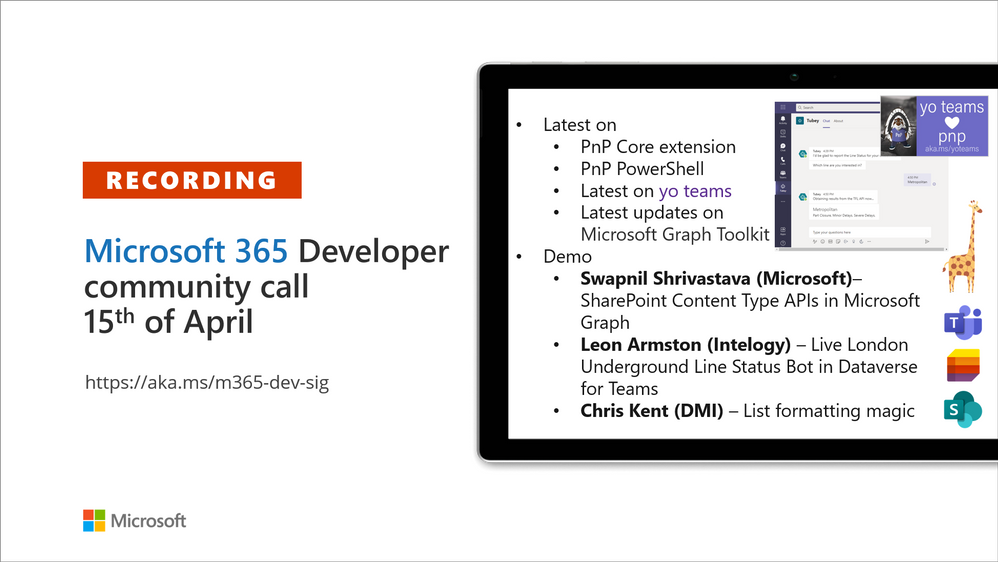
Recording of the Microsoft 365 – General M365 development Special Interest Group (SIG) community call from April 15, 2021.
Call Summary
Latest news from Microsoft 365 engineering and updates on open-source projects: PnP .NET libraries, PnP PowerShell, modernization tooling, on yo Teams, on Microsoft Graph Toolkit, and on Microsoft Teams Samples.
The Microsoft 365 developer community survey is now open, visit the Microsoft Teams samples gallery to get started with Microsoft Teams development, preview the new Microsoft 365 Extensibility look book gallery, and register now for April trainings on Sharing-is-caring. Recent PnP project updates include – PnP .NET Libraries – PnP Framework v1.4.0 and PnP Core SDK v1.1.0 and PnP PowerShell v1.5.0 (new commandlets for Microsoft Viva Connections and Syntex). yo Teams generator-teams (apps generator) v3.0.3 GA and 3.1.0 Preview, yo teams-build-core (gulp tasks) v1.0.1 + v1.1.0 Preview, and msteams-react-base-component (React UI helpers) v3.1.0, have been released. Microsoft Graph Toolkit try out the new OneDrive file components (Preview). The host of this call was Vesa Juvonen (Microsoft) | @vesajuvonen. Q&A takes place in chat throughout the call.
Actions:
Microsoft Teams Development Samples: (https://aka.ms/TeamsSampleBrowser)

It’s together time – Super comfy seats!
Demos delivered in this session
SharePoint Content Type APIs in Microsoft Graph – Classic SharePoint APIs are now showing up in Microsoft Graph. In this demo, step through beta API methods, properties and responses for creating a content type (CT), adding CT to list, adding a column, copying to default location, updating a CT, publishing a CT, and associating CT to a hub site. API permission requirements are called out and differ slightly by API.
Live London Underground Line Status Bot in Dataverse for Teams – the next stage in the evolution of the presenter’s Tube Status solution. An interactive Tube bot in Power Virtual Agents, using Power Automate, and configuring your Azure environment for Azure API Management and Azure Functions. Dataverse for Teams allows users to leverage Azure API Management service using a custom connector in Power Platform. See solution architecture, execution triggers, rules, calls and more.
Microsoft list formatting with header and footer settings – we are reminded that there are layers of formatting options for lists and that there is sample code for each layer. Here we look at header and footer settings, for groups and entire list, beyond the vanilla capabilities delivered 2 weeks ago. This session looks at Collapsed Simple formatting used for Q&A. Uses groupProps, aggregates, hiding, tips on double nesting and more.
Thank you for your work. Samples are often showcased in Demos.
Topics covered in this call
Resources:
Additional resources around the covered topics and links from the slides.
General resources:
Upcoming Calls | Recurrent Invites:
General Microsoft 365 Dev Special Interest Group bi-weekly calls are targeted at anyone who’s interested in the general Microsoft 365 development topics. This includes Microsoft Teams, Bots, Microsoft Graph, CSOM, REST, site provisioning, PnP PowerShell, PnP Sites Core, Site Designs, Microsoft Flow, PowerApps, Column Formatting, list formatting, etc. topics. More details on the Microsoft 365 community from http://aka.ms/m365pnp. We also welcome community demos, if you are interested in doing a live demo in these calls!
You can download recurrent invite from http://aka.ms/m365-dev-sig. Welcome and join in the discussion. If you have any questions, comments, or feedback, feel free to provide your input as comments to this post as well. More details on the Microsoft 365 community and options to get involved are available from http://aka.ms/m365pnp.
“Sharing is caring”
Microsoft 365 PnP team, Microsoft – 16th of April 2021
by Contributed | Apr 16, 2021 | Technology
This article is contributed. See the original author and article here.
AzUpdate celebrates its first-year anniversary, and the team would like to thank all of you for supporting the show! News the team will be covering this week includes Log analytics workspace name uniqueness, Azure IoT Central new and updated features for March 2021, Surface Laptop 4 and Microsoft accessories announcements, Azure Blob storage supports objects up to 200 TB in size and our Microsoft Learn Module of the week.
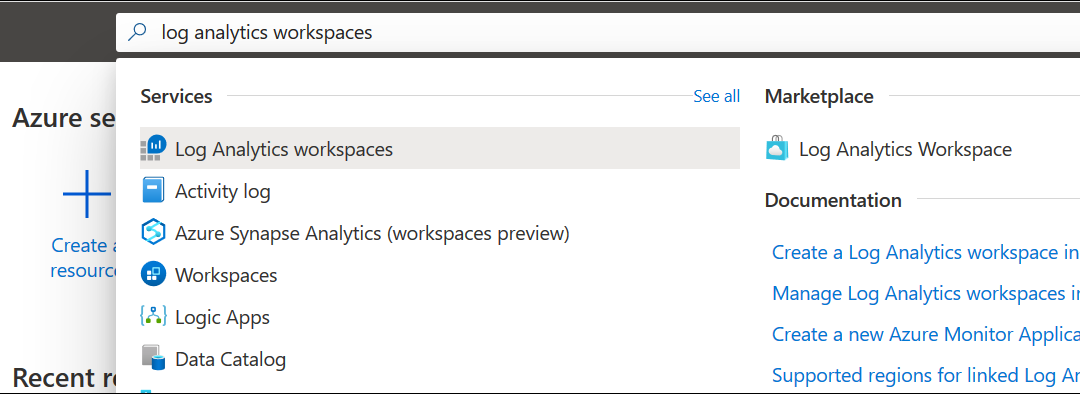
Log analytics workspace name uniqueness is now per resource group
When a workspace name was used by one customer or user in the same organization, it couldn’t be used again by others as Azure Monitor log analytics workspace name uniqueness was maintained within the subscription.
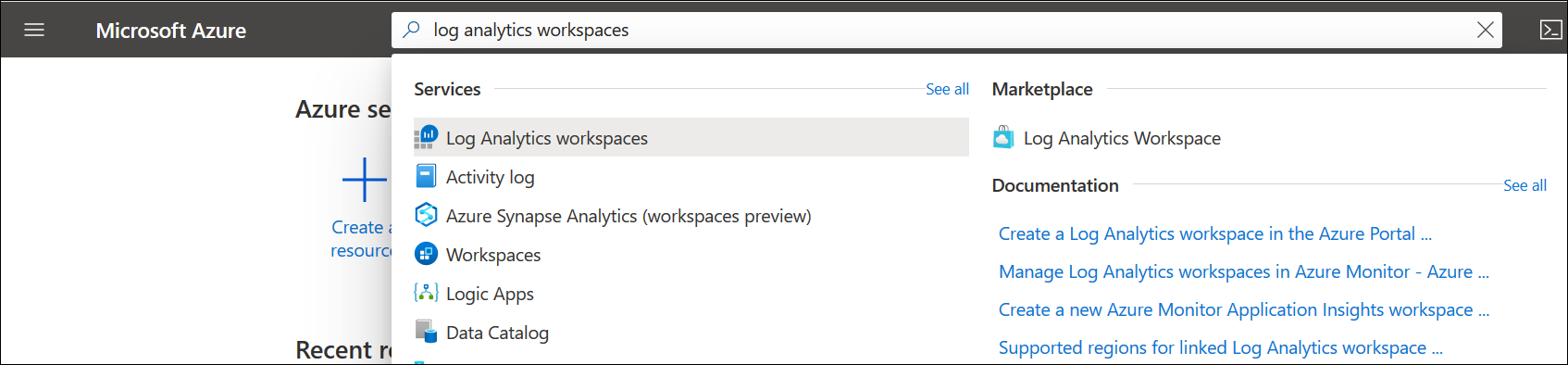
Microsoft has changed the way they enforce workspace name uniqueness and it’s now maintained inside of the resource group context and allows use of the same workspace name in deployments across multiple environments for consistency.
Workspace uniqueness is maintained as follow:
- Workspace ID – global uniqueness remained unchanged.
- Workspace resource ID – global uniqueness.
- Workspace name – per resource group
Learn More
Azure IoT Central new and updated features for March 2021
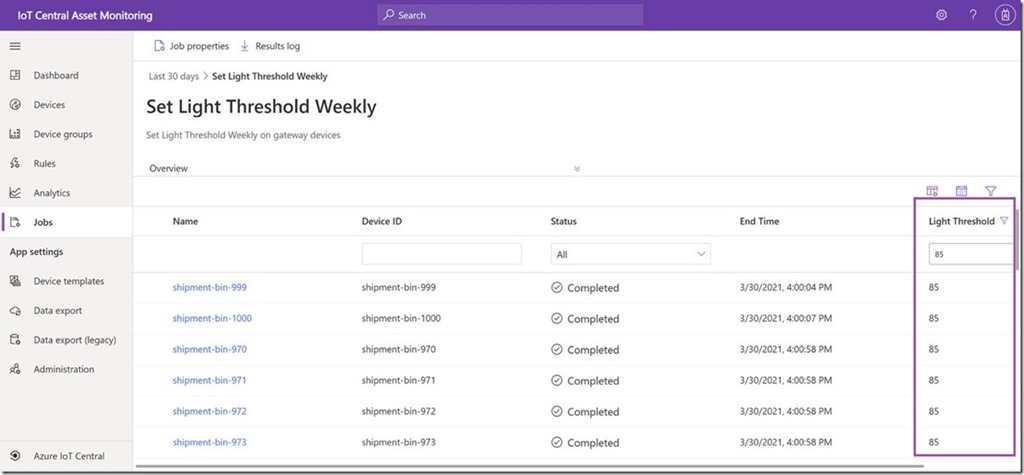
Filter jobs results on reported properties
IoT Central now supports filtering on reported properties in the jobs results grid which lets you view a subset of devices based device state for a current running job or a completed job and helps you view job metrics in production scenarios.
Export device lifecycle and device template events
New data export capabilities allow you export device lifecycle events and device template events. Export these new types of data and get notified when devices are registered or deleted, or when device templates are published or deleted. You can use filters and enrichments and export to the existing destinations. To learn more, see Export data from Azure IoT Central.
Application usage monitoring improvements
IoT Central metrics provided through Azure Monitor can now improve the ability to monitor and diagnose the health and usage of your IoT Central application and the devices connected to it. With the new set of metrics made available this month, it’s now easier to monitor and troubleshoot provisioned devices, device data usage, telemetry messages, commands, and more. For a complete list of available platform metrics, see Supported metrics with Azure Monitor.
IoT Central documentation improvements
Documentation content updates, including new overview articles for administrators and operators, and added more content about multi-component device models including a refresh of the Create and connect a client application tutorials.
New Surface Laptop 4 and Productivity Peripherals
Microsoft announced this week the latest forth generation Surface Laptop sporting your choice of a New Quad Core 11th Gen Intel® Core™ processors and Intel® Iris® Xe graphics or a Custom AMD Ryzen™ Microsoft Surface® Edition processor with 8 CPU cores. Models include either 13.5” or 15” PixelSense displays
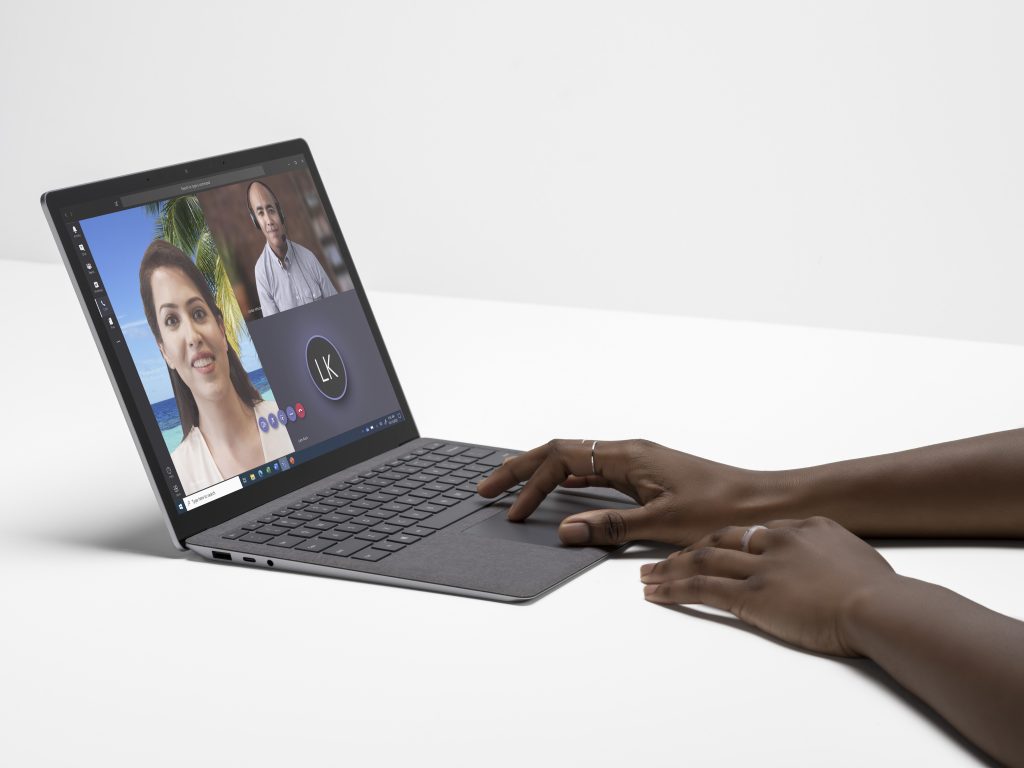
Microsoft also introduced the Surface Headphones 2+ carring over all of the features from the existing Surface Headphones customers; 13 levels of active noise cancellation, innovative earcup dials, an advanced 8-microphone system for incredible voice clarity, 18.5 hours of music listening time or up to 15 hours of voice calling time, and the all-day comfort to help you through the day’s virtual meetings.
More information on the plethora of devices that were announced can be found here: Introducing Surface Laptop 4 and new accessories for enhanced meeting experiences
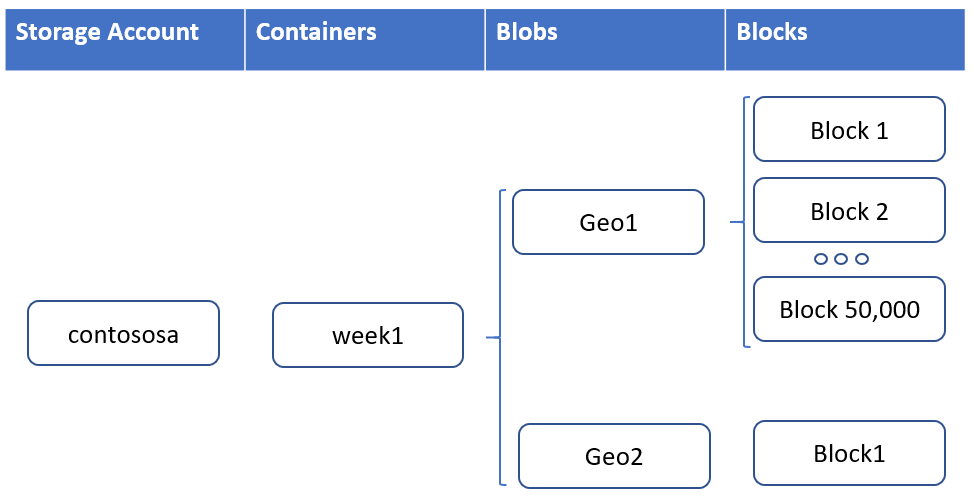
Azure Blob storage supports objects up to 200 TB in size
Workloads that utilize larger file sizes such as backups, media, and seismic analysis can now utilize Azure Blob storage and ADLS Gen2 without breaking these large files into separate blobs. Each blob is made up of up to 50,000 blocks. Each block can now be 4GBin size for a total of 200 TB per blob or ADLS Gen2 file.
Learn more
Community Events
- Global Azure 2021 – April 15th to 17th, communities around the world are organizing localized live streams for everyone around the world to join and learn about Azure from the best-in-class community leaders.
- Hello World – Special guests, content challenges, upcoming events, and daily updates.
- Patch and Switch – It has been a fortnight and Patch and Switch are back to share the stories they have amassed over the past two weeks.
MS Learn Module of the Week

Architect storage infrastructure in Azure
Learn how to architect storage solutions for your applications in Azure.

Modules include:
- Choose a data storage approach in Azure
- Create an Azure Storage account
- Upload, download, and manage data with Azure Storage Explorer
- Connect an app to Azure Storage
- Make you application storage highly available with read-access geo-redundant storage
- Secure your Azure Storage account
- Store and share files in your app with Azure Files
- Choose the right disk storage for your virtual machine workload
- Monitor, diagnose, and troubleshoot your Azure storage
Learn more here: Architect storage infrastructure in Azure

Let us know in the comments below if there are any news items you would like to see covered in the next show. Be sure to catch the next AzUpdate episode and join us in the live chat.


Recent Comments