by Scott Muniz | Jan 27, 2021 | Security, Technology
This article is contributed. See the original author and article here.
Mozilla has released security updates to address vulnerabilities in Firefox, Firefox ESR, and Thunderbird. An attacker could exploit some of these vulnerabilities to take control of an affected system.
CISA encourages users and administrators to review Mozilla Security Advisories for Firefox 85, Firefox ESR 78.7, and Thunderbird 78.7 and apply the necessary updates.

by Scott Muniz | Jan 27, 2021 | Security, Technology
This article is contributed. See the original author and article here.
Official websites use .gov
A .gov website belongs to an official government organization in the United States.

Secure .gov websites use HTTPS A
lock ( )
) or
https:// means you’ve safely connected to the .gov website. Share sensitive information only on official, secure websites.
by Scott Muniz | Jan 27, 2021 | Security
This article was originally posted by the FTC. See the original article here.
With every passing day, the news on COVID-19 vaccine distribution seems to change. One reason is that distribution varies by state and territory. And scammers, always at the ready, are taking advantage of the confusion.
Brought to you by Dr. Ware, Microsoft Office 365 Silver Partner, Charleston SC.
by Scott Muniz | Jan 27, 2021 | Security, Technology
This article is contributed. See the original author and article here.
Original release date: January 27, 2021
CISA has released a malware analysis report on Supernova malware affecting unpatched SolarWinds Orion software. The report contains indicators of compromise (IOCs) and analyzes several malicious artifacts. Supernova is not part of the SolarWinds supply chain attack described in Alert AA20-352A.
CISA encourages users and administrators to review Malware Analysis Report MAR-10319053-1.v1 and the SolarWinds advisory for more information on Supernova.
This product is provided subject to this Notification and this Privacy & Use policy.
by Scott Muniz | Jan 26, 2021 | Security, Technology
This article is contributed. See the original author and article here.
Original release date: January 26, 2021
The Federal Trade Commission (FTC) has released information on scammers attempting to impersonate the FTC. The scammers operate an FTC-spoofed website that claims to provide instant cash payments and tries to trick consumers into disclosing their financial information. The real FTC does not require such information and scammers can use this information to steal consumers’ money and identities.
CISA encourages consumers to review the FTC blog post and CISA’s Security Tips on Avoiding Social Engineering and Phishing Attacks and Preventing and Responding to Identity Theft.
This product is provided subject to this Notification and this Privacy & Use policy.
by Scott Muniz | Jan 25, 2021 | Security
This article was originally posted by the FTC. See the original article here.
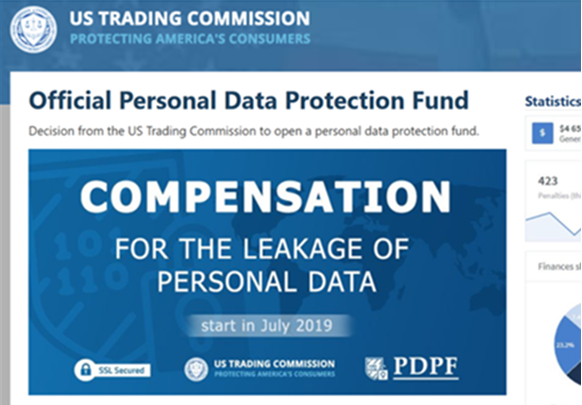
It’s often said that imitation is the sincerest form of flattery, but we are not flattered at all by a scam website designed to look like a Federal Trade Commission site and steal your money.
The imposter calls itself the US Trading Commission and uses the FTC’s seal and address. It claims it operates a “personal data protection fund” to compensate people whose personal information ha
s been exposed on the web. The site says you can “instantly receive” a cash payment by clicking on some links and giving the site your personal data and bank account or electronic wallet information. Of course, if you do that, your money will be gone, you may download malware onto your device, and scammers can misuse your personal information to steal your identity.
The site pops up as a YouTube link and has used several different URLs. It promises that payment “is available to residents of all countries of the world.” People as far away as Russia, Ukraine, Belarus, Kazakhstan, and Latvia have reported the site to the FTC, and several have reported losing money.
Here’s what you need to know. The FTC does shut down scams and return money to people who lost it to dishonest or unfair business practices. But we will never ask for money, or for your bank account, credit card, or Social Security number so that you can get a refund. If the FTC needs to get money to you, we usually send a check through the mail. You can learn about our refund programs at
FTC.gov/refunds.
If you’ve encountered this scam or any other, tell us at
ReportFraud.ftc.gov so we can warn others. If you’ve given your personal information to someone you don’t know, you may be at risk for identity theft. Visit
identitytheft.gov to learn what to do. And, to learn more about imposter scams of all sorts, visit
ftc.gov/imposters.
Brought to you by Dr. Ware, Microsoft Office 365 Silver Partner, Charleston SC.


Recent Comments