by Contributed | Mar 22, 2021 | Technology
This article is contributed. See the original author and article here.
This document is provided “as is.” MICROSOFT MAKES NO WARRANTIES, EXPRESS OR IMPLIED, IN THIS DOCUMENT. This document does not provide you with any legal rights to any intellectual property in any Microsoft product. You may copy and use this document for your internal, reference purposes.
|
As announced at Ignite 2021, Azure Defender for DNS is available in Public Preview. This new Azure Defender plan provides threat detection for azure resources connected to the Azure DNS, the intent is to detect malicious communication from an Azure resource and malicious DNS servers trying to compromise with an Azure resource. To learn more about Azure Defender for DNS, read our official documentation. During the public preview time you can enable Azure Defender for DNS without any additional charge, just go to Price & settings, select the subscription, change the plan to ON (as shown below) and click Save to commit the change.

Now that you have this plan set to ON, you can use the steps below to validate this threat detection:
- Provision a new VM and keep the default TCP/IP configuration (by default all VMs will connect to Azure DNS).
- Connect to this machine using RDP.
- Create a file on this machine called DNSAlertSim.ps1 and paste the content below in this file:
Resolve-DnsName bbcnewsv2vjtpsuy.onion.to
Resolve-DnsName all.mainnet.ethdisco.net
Resolve-DnsName micros0ft.com
Resolve-DnsName 164e9408d12a701d91d206c6ab192994.info

For($i=0; $i -le 150; $i++) {
$rand = -join ((97..122) | Get-Random -Count 32 | % {[char]$_})
Resolve-DnsName "$rand.com"
}

$rand = -join ((97..122) | Get-Random -Count 63 | % {[char]$_})
Resolve-DnsName "$rand.contoso.com"

For($i=0; $i -le 1000; $i++) {

$rand = -join ((97..122) | Get-Random -Count 63 | % {[char]$_})
Resolve-DnsName "$rand.contoso.com"
}

Resolve-DnsName reseed.i2p-projekt.de

Write-Host -NoNewLine 'Press any key to continue...';
$null = $Host.UI.RawUI.ReadKey('NoEcho,IncludeKeyDown');
- Save this file
- Execute DNSAlertSim.ps1
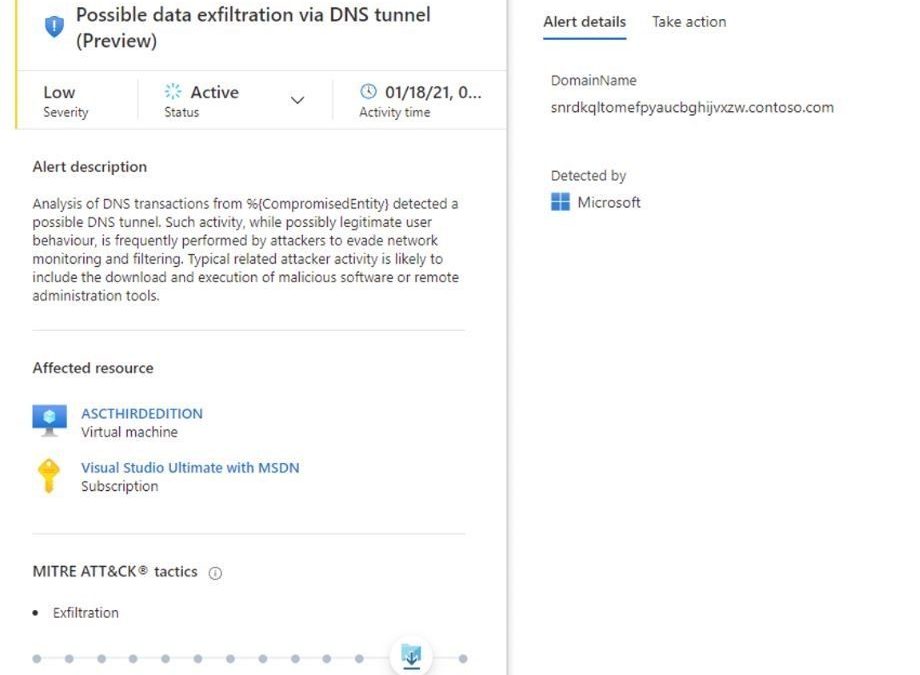
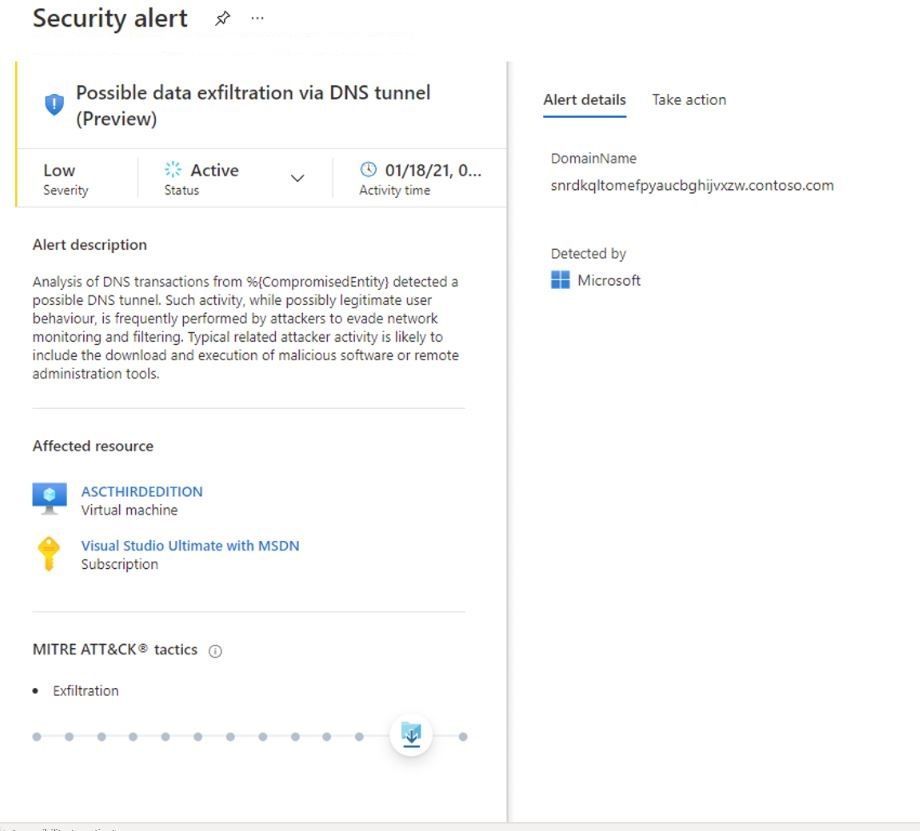
After some minutes you should see Azure Defender for DNS alerts showing up on your dashboard, similar to the one below:
For a complete list of all analytics available for Azure Defender for DNS, read this documentation.
Reviewers
Tal Rosler, Program Manager
Script by John Booth, Senior Software Engineer
by Contributed | Mar 22, 2021 | Technology
This article is contributed. See the original author and article here.
At Microsoft, we recognize the need to easily and securely collaborate with people outside of your business. Organizations need to engage with vendors, partners, customers, consultants and other stakeholders while adhering to privacy and security policies and protocols that keep your business running smoothly. In December, we announced a preview for Azure AD business-to-business (B2B) guest support in Yammer and today, we are excited to announce that Guest Access in Yammer powered by Azure B2B is now generally available.
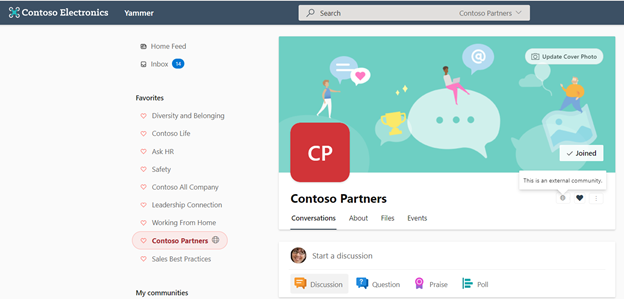
Communities with external members are denoted by a globe icon.
What is Azure Active Directory B2B?
Azure B2B collaboration enables you to share your company’s applications and services with guest users from any other organization, while maintaining control over your own corporate data. Work safely and securely with external partners, large or small, even if they don’t have Azure AD or an IT department.
How can you enable the Azure AD B2B guest functionality in your Yammer network?
If your Yammer network is provisioned after December 15th, 2020 then Azure AD B2B guest functionality is already enabled by default for you. Community admins in your Yammer network can add guests to their communities. Note: Yammer network should be aligned to Native Mode to enable Azure AD B2B guest functionality.
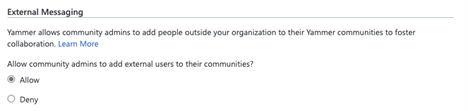
The functionality is now available to all existing Yammer networks but disabled by default. Yammer network admins can enable guest access on their networks from Yammer admin center > Security Settings > External messaging settings.
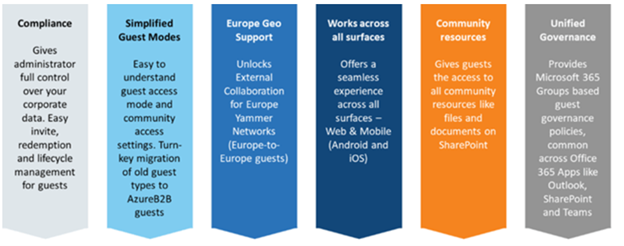
Azure AD B2B guest support in Yammer brings the following capabilities:
- Robust policies for guest invitations and providing access give administrators full control over who can invite guests, which organizations guests can be invited from, and which communities they can be invited to.
- Simplification of guest modes in Yammer with community level guests. A guest can be added to any specific Yammer community based on the admin policy instead of the entire network.
- Easy and compliant external collaboration (within Europe networks) for Yammer networks with data based in the EU geo.
- Parity between participation in Yammer communities across all Yammer experiences (web, mobile (Android / iOS).
- Guests access to community resources like files stored in SharePoint.
- Ability to review guest membership and block unauthorized guest access through Azure AD access reviews and track the guest lifecycle through Azure AD audit logs.
Learn more about Guest Access in Yammer here. We’re continuing to invest in features and capabilities that foster engagement and deliver value to businesses. Stay tuned for updates soon.
Nagaraj Venkatesh
Nagaraj is a PM on the Yammer engineering team
Resources:
Business-to-business (B2B) Guest support in Yammer Preview – Customer Terms and FAQ – Yammer
Microsoft 365 guest sharing settings reference | Microsoft Docs
by Contributed | Mar 22, 2021 | Technology
This article is contributed. See the original author and article here.
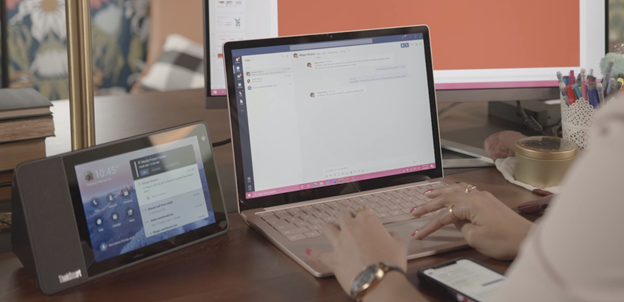
The Teams display experience was built from the roots up knowing that the modern worker needs to balance getting individual work done while engaging in multiple forms of collaboration. To help streamline communications, stay on top of tasks, and save users time we created the ultimate second screen that is dedicated to productivity. This experience running on the Lenovo Thinksmart View, pairs easily with your PC in BetterTogether mode, and uses the power of Teams and AI to keep you in the flow of work.
In this update to theTeams display experience, we are excited to bring enhancements to Cortana, and new capabilities in meetings and chat .
Get your facts fast with Cortana + Bing
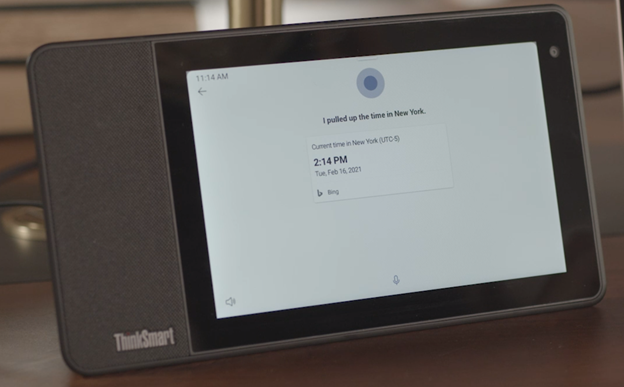
In one of our best demonstrations of collaboration, the voice activated AI capabilities in Cortana now leverage Bing to fetch information from the internet and present to users. Imagine you are collaborating with someone in a different time zone, use commands like:
“Hey Cortana, what time is it in New York?”
“Hey Cortana, what’s the weather in New York?”
“Hey Cortana, how much does a flight to New York cost?”
When Cortana and Bing work together they help you stay in the know with relevant facts and information just when you need them, at the sound of your voice.
Get ready Canada, Australia, UK, and India, Cortana is coming!
With this app update, users in select English speaking markets will be able to access Cortana and the Bing skills mentioned above. Have Cortana show you your schedule, send messages, make calls, and more in additional geographies starting now.
Swap out your background for the occasion
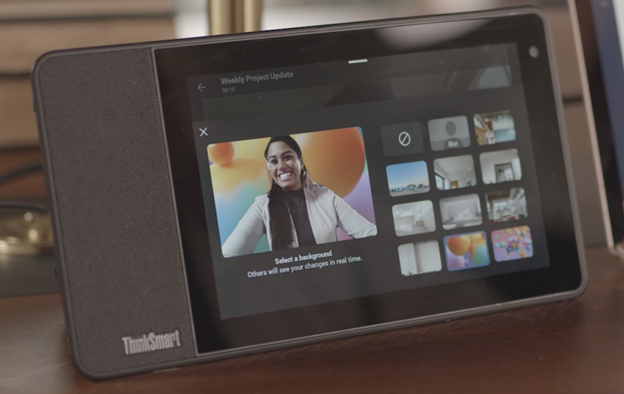
We knew users loved being able to change their backgrounds in Teams meetings and calls on their PC and are thrilled to bring this experience to the display. With a few taps of a finger users can not only blur what’s going on behind them, but upload any of our Teams backgrounds to suit their mood or occasion. A messy room, housemates’ motion, or even weather can be distracting in a meeting. In order for users to present themselves with confidence, we believe this feature will be helpful and fun. Is there a team celebration? Try the balloon background! Virtual happy hour? A trip to the beach can set the scene.
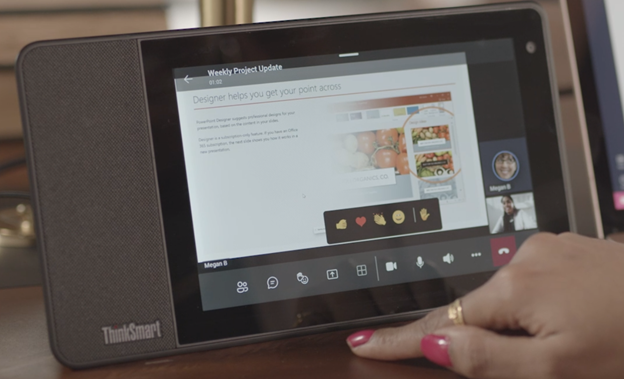
A round of applause goes to…live reactions in meetings!
Did your teammate say something impressive that you want to agree with? Is your manager highlighting a colleague’s achievement that you want to support? Or maybe the new hire on the team is sharing their excitement to start work with you? All these situations elicit genuine human emotions like enthusiasm, happiness, and empathy. While where we work has changed, the desire to express these emotions hasn’t. Now in the Teams display experience users can show emotions like support, applause, love and laughter during a meeting. Additionally, you can see what your meeting members are thinking without disrupting an ongoing meeting. Consider asking a question and asking participants to submit their thoughts via live reactions to get a quick survey on participant sentiment. The possibilities are endless and we are excited about this new way to stay engaged during meetings!
When “read” receipts aren’t enough, send quick responses!
Now on the ambient screen users have the ability to press and hold incoming chats for a variety of options. Like, love, laughter, surprise, disappointment and frustration can all be expressed easily for a quick display of reaction to new information. Additionally, using the power of AI, quick responses are generated that a user can choose from. Suppose you get the following message:
“I will send the file over later today.”
The display experience will suggest appropriate responses like:
“Thank you” “I understand” “Looking forward to it”
The user can easily select what’s appropriate for the context and send away without context switching or missing any beats.
With every update we are excited to bring new and innovative experiences that both help users maximize productivity and bring delight to the way they work. We hope these enhancements will make you more productive, save you time, and help you bring your best self to work, from wherever you may be!
by Contributed | Mar 22, 2021 | Technology
This article is contributed. See the original author and article here.
Posted originally May 20, 2020, and updated March 22, 2021
Whether you’re a professional developer or you write code for fun, developing with Microsoft Azure puts the latest cloud technology and best-in-class developer tools at your fingertips. You can even use your preferred language to build for the cloud. How do you prove to the world that you have these modern skills?
The Azure Developer Associate certification validates that you have what it takes to design, build, test, and maintain cloud applications and services on Azure. You earn it by passing Exam AZ-204: Developing Solutions for Microsoft Azure.
If your responsibilities include all phases of cloud development—from requirements definition and design, to development, deployment, and maintenance, performance tuning, and monitoring—this is the certification for you.
What kind of knowledge and experience should you have?
As a candidate for this certification, you should have one or two years of professional development experience, including experience with Azure. Other requirements include the ability to program in a language supported by Azure. Proficiency in Azure SDKs, Azure PowerShell, Azure CLI, data storage options, data connections, and APIs is also important, along with experience in app authentication and authorization, compute and container deployment, debugging, performance tuning, and monitoring.
How can you get ready?
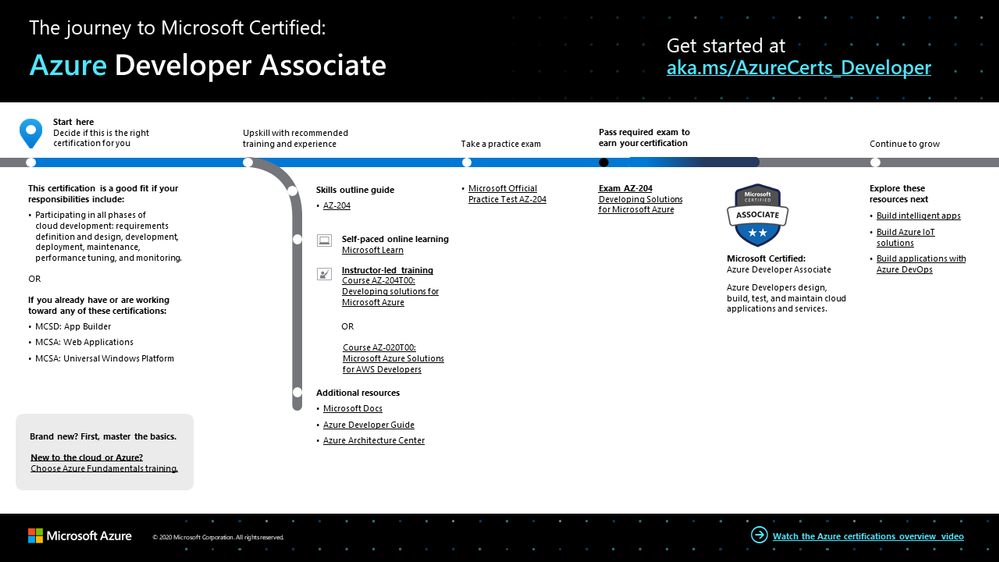
To help you plan your journey, check out our infographic, The journey to Microsoft Certified: Azure Developer Associate. You can also find it in the resources section on the certification and exam pages, which contains other valuable help for Azure developers.
Azure Developer Associate certification journey
To map out your journey, follow the sequence in the infographic. First, decide whether this is the right certification for you.
Next, to understand what you’ll be measured on, review the Exam AZ-204 skills outline guide on the exam page.
Sign up for training that fits your learning style and experience:
Complement your training with additional resources, like Microsoft Docs, the Developer’s Guide to Azure, or the Azure Architecture Center.
Then take a trial run with Microsoft Official Practice Test AZ-204: Developing Solutions for Microsoft Azure. All objectives of the exam are covered in depth, so you’ll find what you need to be ready for any question.
After you pass the exam and earn your certification, check out the many other certification opportunities. Want to add to your toolkit? Consider skilling up on AI apps or in DevOps.
Note: Remember that Microsoft Certifications assess how well you apply what you know to solve real business challenges. Our training resources are useful for reinforcing your knowledge, but you’ll always need experience in the role and with the platform.
Celebrate your Azure talents with the world
When you earn a certification or learn a new skill, it’s an accomplishment worth celebrating with your network. It often takes less than a minute to update your LinkedIn profile and share your achievements, highlight your skills, and help boost your career potential. Here’s how:
- If you’ve earned a certification already, follow the instructions in the congratulations email you received. Or find your badge on your Certification Dashboard, and follow the instructions there to share it. (You’ll be transferred to the Acclaim website.)
- To add specific skills, visit your LinkedIn profile and update the Skills and endorsements section. Tip: We recommend that you choose skills listed in the skills outline guide for your certification.
Keep your certification up to date
If you’ve already earned your Azure Developer Associate certification, but it’s expiring in the near future, we’ve got good news. You can now renew your current certifications by passing a free renewal assessment on Microsoft Learn—anytime within six months before your certification expires. For more details, please read our blog post Is your certification expiring soon? Renew it for free today!
Plus, effective June 2021, a certification is valid for one year from the date you earned it. This shift aligns with the rapid evolution of cloud technology and skills. Get more information in our blog post Stay current with in-demand skills through free certification renewals.
It’s time to level up!
As a developer, when you grow your Azure skills, you can take advantage of more than 200 services to build, deploy, and manage applications—in the cloud, on-premises, and at the edge—using the tools and frameworks of your choice. Earn your certification, and open up new possibilities for your career and for turning your ideas into solutions on Azure.
Related announcements
Understanding Microsoft Azure certifications
Finding the right Microsoft Azure certification for you
Master the basics with Microsoft Certified: Azure Fundamentals
by Contributed | Mar 22, 2021 | Technology
This article is contributed. See the original author and article here.
Tour the newest updates to Azure Communications Services (ACS). Microsoft CVP, Scott Van Vliet, joins host Jeremy Chapman to give you the details, from core capabilities generally available this month, to new capabilities available in preview, including interoperability with Microsoft Teams and using the Azure Bot Framework to enable Intelligent Voice Response.
If you’re new to Azure Communications Services, it’s a new platform for building rich custom communication experiences that leverage the same enterprise-grade services that back Microsoft Teams all through Azure.
Generally available later in March 2021:
- Foundational capabilities with voice, video chat, SMS and PSTN calling
- Bring your own existing phone numbers via direct routing with your own SIP trunks.
Public preview:
- ACS’s interoperability with Microsoft Teams
- Integration with Azure bot framework for IVR scenarios.
- UI controls: starting with react controls for video calls and expanding controls available on GitHub
- To automate, use a no-code approach in ACS with Logic App Designer
QUICK LINKS:
01:17 — Updates to foundational capabilities: voice, video chat, SMS and PSTN calling
02:49 — Public preview: interoperability with Teams, bot framework, UI controls
03:26 — Demo: see Communication Services in action
07:02 — How to get it working
08:05 — No-code approach using Logic App Designer
10:28 — What’s next for ACS?
10:45 — Wrap Up
Link References:
Find out more and get started at https://aka.ms/GetStartedWithACS
For the public preview of new features for Azure Communications Services, go to https://aka.ms/ACSPreview
Unfamiliar with Microsoft Mechanics?
We are Microsoft’s official video series for IT. You can watch and share valuable content and demos of current and upcoming tech from the people who build it at Microsoft.
Video Transcript:
– Up next on this special edition of Microsoft Mechanics we’re joined once again by Microsoft CVP Scott Van Vliet to take a look at the latest updates to Azure Communication Services. From core capabilities generally available this month for your production workloads and new capabilities available in preview, such as interoperability with Microsoft Teams, integration with the Azure Bot Framework for intelligent voice response, and new UI controls and much more. So Scott, welcome back to the show.
– Great to be back Jeremy, thanks for having me.
– And thanks so much for joining us from home today. So last time you were on the show about six months ago, we introduced Azure Communication Services. In fact, to catch everyone up if you’re new to the service, it’s a new platform for building rich custom communication experiences that leverage the same enterprise-grade services that back Microsoft Teams all through Azure. Now these are exposed via a selection of APIs and SDKs, and this allows you to hook in the capabilities like voice and video calling over IP, one-to-one and group chat, text messages for SMS, telephony calling with PSTN and deliver authenticated experiences over your identity service of choice to any app, browser, PC and mobile platform, as well as IoT devices on the Edge via Azure, one of the fastest real-time communication networks in the world. So Scott, how have things evolved since the last time you were on Mechanics?
– Well, We have been busy and I’m happy to tell you that the foundational capabilities you mentioned with voice, video, chat, SMS and PSTN calling are generally available this month. As part of this, while you can access ACS anywhere in the world, we are expanding our global telephony coverage beyond toll-free numbers in the US, starting with phone numbers available in the UK and Ireland next month, with dozens more countries coming by the end of the year. You’ll also be able to bring your own existing phone numbers via direct routing with your own SIP trunks.
– That’s really great news, especially given the interest that we’ve seen in the service from our last show. But how are you seeing this then being leveraged?
– There’s been an amazing response to Azure Communication Services across various industries. And this translates to millions of voice and video minutes and tens of millions of chat and SMS messages as many of you experiment with custom app communication experiences. And one of my favorite use cases is from Norwegian company Laerdal Medical, who provide training and education products for life-saving and emergency medical care. They developed a TCPR link app that uses Azure Communication Services to connect their volunteers administering CPR with medical dispatchers via video streaming. So they can get in-the-moment, just-in-time expert feedback as they perform CPR to improve the quality of treatment and patient survival rates. Now they estimate the app will reduce CPR error and save thousands of lives every year.
– And that’s really a great example of real-time communications. And I’m sure we’ll see even more examples now with the general availability of core services coming soon. But there’s more for everyone to look forward to that you’ve just launched today as part of the public preview.
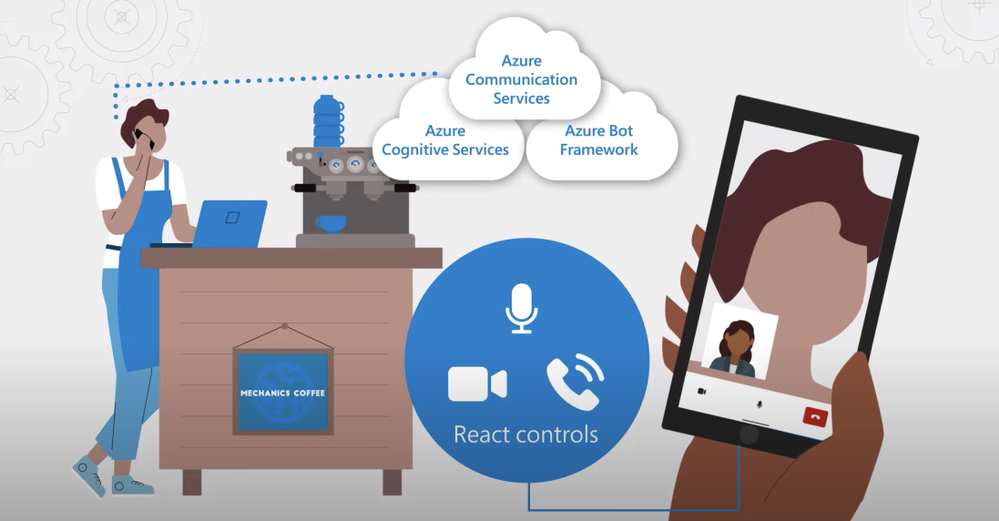
– We have, and this is actually what I’m going to be demonstrating today in the next few minutes. This includes Azure Communication Services interoperability with Microsoft Teams and integration with Azure Bot Framework to connect chat bots to traditional telephone numbers so that the bot can speak responses via natural language processing from Azure Cognitive Services for interactive voice response or IVR scenarios. And lastly, an overwhelming number of you have requested UI controls. So we’ve started with react controls for video calls and we’ll be expanding to controls available on GitHub over the next few months.
– Can we see how this would work in action?
– Well, of course. So Jeremy, last time we talked I was having trouble with my refrigerator and I showed you how we could build a simple customer support video chat application using Azure Communication Services. I thought we could revisit that customer support scenario, but this time take a look at some of the awesome integrations we made into Office and Azure with a Microsoft Teams meeting, Microsoft Graph, and the Bot Framework. So I’m having trouble with my car and I couldn’t resist visiting the Microsoft Mechanics.
– That’s why we’re here.
– So I’m going to contact the Microsoft Mechanics by dialing the 1800 number on their website. And I’ll be greeted by a bot. As we go through this you’ll be able to see the logic behind the bot with the decision tree, for its responses on the side. So I’ll dial the number and wait for the bot to pick up.
– [Bot] Hello and welcome to the Microsoft Mechanics customer support bot. Am I speaking with Scott?
– Yes.
– [Bot] Hi Scott. I see you recently purchased a vehicle from us. How can I help you today?
– Well, I’m having a mechanical issue.
– [Bot] Okay. Can you tell me more about the issue?
– My car is making a rattling noise coming from inside.
– [Bot] Let me transfer you to someone. Would you like to continue on a voice call or a video call.
– Lets do a video call.
– [Bot] I’ve set up an appointment with a technician. Look out for an SMS message at this number with a direct link to the video call. Is there anything else I can help you with today?
– No, that’s it. Thank you so much. So at this stage, once I receive and tap into the SMS I’ll be in a video call with the technician who is on Teams. In this case, that’s you Jeremy. So I’m going to tap in on my phone and be on hold on while I’m waiting for you.
– Okay Scott. So why don’t you head over to your car and we’re going to take the call from there. Okay. So now if we switch over to my screen, I’m in the support channel in Microsoft Teams and I can see a message from the bot. Now it’s already checked my calendar. It knows that I’m free and it’s letting me know that Scott is waiting for a technician. And it’s even provided a description of the issue that he’s facing. So I’ve got now all the contexts I need. And from here I can join the video call. So I’ll go ahead and admit Scott into the meeting. Okay, so I can see you now Scott. And I understand that you’ve got a noise coming from the interior of your car. So why don’t we troubleshoot this a bit further? Can you tell me about the noise, when you hear it, What it sounds?
– Sure, let me flip the camera here so you can see what I’m looking at. So the noise is kind of this plasticky rattling sound coming from the center of car. And it kind of happens when I go over bumps. And so I’ve checked the vents. I’ve also checked the center console here. I’ve also checked the cup holders and even I’ve checked the glove box and I can’t find out what’s going on.
– Are you sure you’ve checked all the compartments?
– I think so.
– What about the overhead console there?
– Oh, here yeah. I usually keep my sunglasses in here. Let me take a look.
– All right so I think I just saw the problem. There’s a little man that’s in your sunglass holder.
– This guy? Oh man, my kids keep coming into my truck and they’ve got to stop doing this.
– So I have a feeling this is going to take care of your rattle. Is there anything else I can help you with?
– No, I think you’ve solved the problem. Thank you so much.
– Perfect. No problem. So while Scott heads back, just a quick recap. So we just saw IVR integration with escalation to Microsoft Teams, adding a video feed for the caller. And the UI controls that were on Scott’s phone: those are also part of the new public preview. So I’ll go ahead and admit Scott.
– Yeah, this is the next chapter in building rich real-time communication experiences with Azure Communication Services.
– And the great thing is it feels like a super high-touch experience from the conversational, intelligent virtual assistant all the way up to the various escalations that we saw to a human expert, in this case it was me. So how did you get all of this working?
– Well, let me show you the code. First, I can use the Bot Framer Composer to quickly visualize the flow of my interactive voice bot. And here’s the decision tree that the bot goes through with each interaction. I can test and debug this flow as a text-based chat bot that uses LUIS and Azure Cognitive Services for natural language understanding. And I can also publish to Azure, right from the composer. You can see here on the flow, where the bot made a decision: when I asked it to talk to an agent. It could have connected directly via PST into a phone number and I would have started talking immediately to a live person. Or it can follow the path I’ve demoed here where it used Microsoft Graph and Azure Communication Services to set up a Microsoft Teams meeting with the technician and send a join link to the customer via SMS message.
– So what did you use then to navigate the logic and flow that was needed to automate all those steps?
– Well, I could write this in native code using the Azure Communication Services STKs for .net or JavaScript, for example. But there is a much easier, no code path using a logic app. So here I am in the logic app designer. First, I’m going to create an HTTP request. This is the HTTP endpoint that my IVR bot will call to send the SMS message. I’m going to paste in an example JSON payload that I would send. The designer automatically parses that data and builds a schema for me with the customer’s name, the meeting join link and the phone number. Now I can add an Azure Communication Service step to send an SMS message. The phone number I have for my Azure Communication Services resource is available from the dropdown, and the parameters from the HTTP request are already available for me to use as inputs to the send SMS connector. So I’ll put in a phone number here, and I’ll create a custom message with the customer’s name and a link to join that Microsoft Teams meeting. Now I can take this URL and paste it back into the Bot Composer.
– Okay, so now we have the bot connected to the service. We’re creating Teams meetings and sending SMS text messages. But what did you have to do then to get this all working with the phone number?
– So from the Azure Portal, I can connect the bot to a PSTN phone number. I’ve already connected this bot to the direct line speech and web chat channels. I can now also connect the bot to the PSTN phone number using Azure Communication Services. I’ll click on the Telephony channel down here and add in the phone number, the end point information and the access key from my Azure Communication Services resource.
– With those pieces in place, how did you then set up the inter-op between Microsoft Teams and your app?
– Well, that’s the next step. My service backend can call Microsoft Graph APIs and set up the meeting. Here from Microsoft Graph Explorer, I can test out the query I want to use. I’ll post to the online meetings create or get API with the meeting information. This returns a boatload of metadata about the meeting. For my Azure Communication Services app to connect to the Teams call, I’ll need the tenant ID and the thread ID. I just pass this information into the Communication Services APIs when I join a group meeting. The Microsoft Mechanics mobile web app uses all the same APIs that are available to all Azure Communication Services apps to join and connect and interact with the video call.
– Awesome. So this looked pretty straight forward to recreate all those different steps. And it’s really great to see the latest round of functionality, but I know you and the team are never done. So what are you working on next?
– We really appreciate getting all the feedback from you. In fact, we’re working on connecting several cool capabilities, such as call recording and live transcription to Azure Cognitive Services so that you can do things like sentiment analysis. And there’s a lot more coming that I’ll share with you next time.
– Okay. So if you want to get started building out some of this stuff, what do you recommend?
– Well, you can start kicking the tires now with the core features of voice, video, chat, SMS and PSTN calling generally available this month. And you can find out more at aka.ms/GetStartedWithACS. For the public preview of the next features for Azure Communication Services, you can find more information at aka.ms/ACSPreview and that includes the interoperability with Microsoft Teams.
– Awesome stuff. Thanks again so much for joining us today, Scott. And hopefully we answered all of your questions about Azure Communication Services and let us know what you think. And also keep watching Microsoft Mechanics for the latest tech updates. Subscribe if you haven’t already and we’ll see you next time.


Recent Comments