by Scott Muniz | Aug 5, 2021 | Security
This article was originally posted by the FTC. See the original article here.
Last year, the Centers for Disease Control and Prevention (CDC) issued a temporary order to stop evictions due to the COVID-19 pandemic. Since then, this federal eviction moratorium has been extended several times, and on August 3, the CDC extended it again for counties where COVID cases are rapidly spreading. But renters in counties where the order does not apply now face the possibility of eviction if they still owe back rent. And on top of that, scammers can take advantage of the panic caused by this situation.
How might they do that? Scammers reach out to renters facing eviction, promising rental assistance and pretending to be with the government. When they contact renters, they ask for bank account and other personal information, saying that they need this information so they can transfer emergency rental assistance money directly into these accounts. But instead of depositing much-needed funds, they use the information to withdraw the little that’s left.
If you’re a renter facing eviction, there are several sites and services available to you:
- Connect with state and local organizations that are distributing federal rental assistance in their communities by visiting the Consumer Financial Protection Bureau’s (CFPB’s) new Rental Assistance Finder.
- Check with your local court system for more details about the eviction process and your rights as a tenant. You may also qualify for free legal services through your local legal aid organization.
Remember, never give out financial or personal information to anyone who contacts you, even if they’re promising to help you. Federal aid for emergency rental assistance was distributed to states, territories, and other localities. If someone contacts you saying they’re from the federal government and they can help you with back rent, it’s a sign of a scam.
These government services aren’t just for tenants. If you’re a landlord facing a loss of rental income, the CFPB also has useful information on their Help for landlords page.
And if you spot a rental assistance scam or any other type of scam, tell your state attorney general’s office right away, and then report it to the FTC at ReportFraud.ftc.gov.
Brought to you by Dr. Ware, Microsoft Office 365 Silver Partner, Charleston SC.
by Scott Muniz | Aug 5, 2021 | Security, Technology
This article is contributed. See the original author and article here.
CISA has released an Industrial Control Systems (ICS) advisory detailing multiple vulnerabilities in InterNiche products. An attacker could exploit some of these vulnerabilities to take control of an affected system.
CISA encourages users and administrators to review the ICS Advisory ICSA-21-217-01 HCC Embedded InterNiche TCP/IP Stack NicheLite and apply the necessary updates and mitigations.
by Scott Muniz | Aug 5, 2021 | Security, Technology
This article is contributed. See the original author and article here.
VMware has released security updates to address vulnerabilities in multiple products. An attacker could exploit these vulnerabilities to gain access to confidential information.
CISA encourages users and administrators to review VMware Security Advisory VMSA-2021-0016 and apply the necessary updates or workaround.

by Scott Muniz | Aug 5, 2021 | Security, Technology
This article is contributed. See the original author and article here.
Official websites use .gov
A .gov website belongs to an official government organization in the United States.

Secure .gov websites use HTTPS A
lock ( )
) or
https:// means you’ve safely connected to the .gov website. Share sensitive information only on official, secure websites.
by Scott Muniz | Aug 4, 2021 | Security
This article was originally posted by the FTC. See the original article here.
Have you gotten an alarming text message about your unemployment insurance benefits from what seems to be your state workforce agency? You’re not alone. Identity thieves are targeting millions of people nationwide with scam phishing texts aimed at stealing personal information, unemployment benefits, or both.
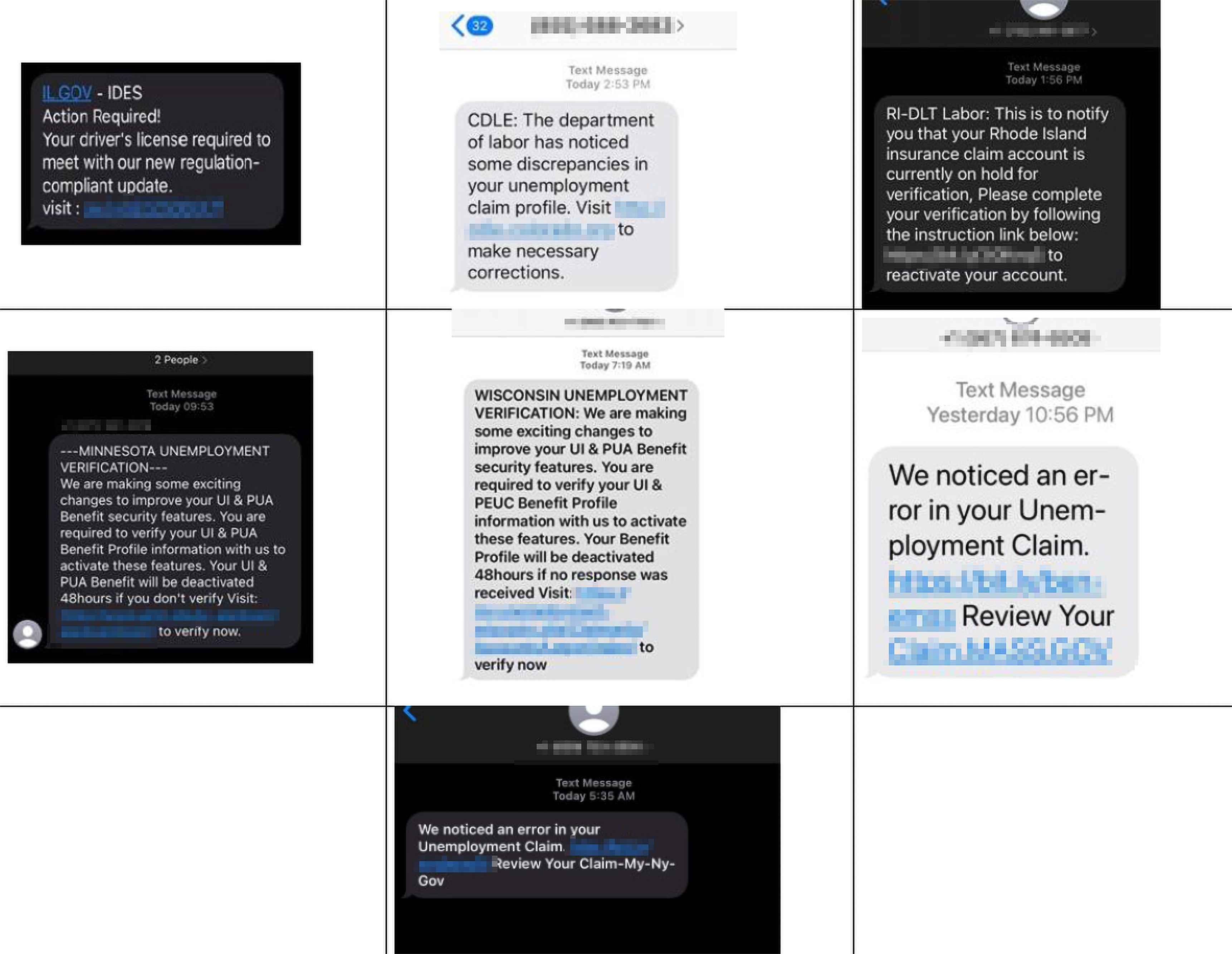
The phishing texts try to dupe you to click a link to “make necessary corrections” to your unemployment insurance (UI) claim, “verify” your personal information, or “reactivate” your UI benefits account. The link takes you to a fake state workforce agency (SWA) website that may look very real. There, you’re asked to input your website credentials and personal information, like your Social Security number. Fraudsters can use the information to file fraudulent UI benefits claims or for other identity theft.
Here are examples of some of the phishing texts. (Click image to enlarge.)
Protect yourself. Know that state agencies do not send text messages asking for personal information. If you get an unsolicited text or email message that looks like it’s from an SWA, don’t reply or click any link. If you’re not sure, contact the SWA directly using the State Directory for Reporting Unemployment Identity Theft at the bottom of this United States Department of Labor webpage.
If you think you may have entered your personal information into a fraudulent website, visit IdentityTheft.gov to find out how to make it harder for an identity thief to misuse your information.
You can report a suspicious text message or email claiming to be from an SWA to the National Center for Disaster Fraud (NCDF) by completing an NCDF Complaint Form or by calling (866) 720-5721. Tell us too at ReportFraud.ftc.gov. And, tell a friend. By sharing your experience and knowledge about the fraud, you can help someone else avoid the trap.
Brought to you by Dr. Ware, Microsoft Office 365 Silver Partner, Charleston SC.
by Scott Muniz | Aug 4, 2021 | Security, Technology
This article is contributed. See the original author and article here.
Google has released Chrome version 92.0.4515.131 for Windows, Mac, and Linux. This version addresses vulnerabilities that an attacker could exploit to take control of an affected system.
CISA encourages users and administrators to review the Chrome Release Note and apply the necessary updates.


Recent Comments